Who Is the Right Candidate for Endoscopic Spine Surgery? Tests, MRI Findings and Eligibility Explained
Medicine Made Simple Summary
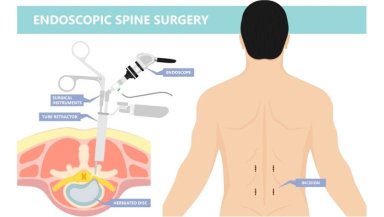
Endoscopic spine surgery is a minimally invasive procedure used to treat certain spine conditions that cause nerve compression, such as slipped discs or spinal stenosis. In this surgery, doctors use a thin tube with a small camera called an endoscope to reach the spine through a very small incision and remove the tissue pressing on a nerve. However, not every patient with back pain needs this surgery. Doctors carefully evaluate symptoms, physical examination findings, and imaging tests such as MRI scans to determine whether a patient is a suitable candidate for endoscopic spine surgery.
Understanding Why Patient Selection Is Important
Back pain is one of the most common health problems worldwide. Many people experience discomfort in their lower back due to muscle strain, poor posture, or long hours of sitting.
In most cases, back pain improves with rest, physiotherapy, and medication, and doctors often explore options for slipped disc treatment without surgery before considering any surgical approach. Surgery is usually considered only when these treatments fail to relieve symptoms.
Endoscopic spine surgery has become a widely discussed treatment because it allows surgeons to treat certain spine problems using very small incisions. However, this procedure is not suitable for every spine condition.
Choosing the right patients for this surgery is extremely important. When the correct candidate is selected, the procedure can effectively relieve nerve pressure and improve symptoms.
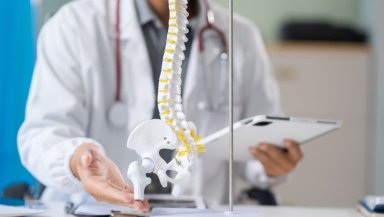
Suggested Image: Diagram showing the structure of the spine with vertebrae, discs, and spinal nerves.
Spine Problems That May Require Surgical Treatment
The spine is made up of bones called vertebrae that are stacked on top of each other. Between these bones are flexible cushions known as intervertebral discs.
These discs help absorb shock and allow the spine to move smoothly.
Sometimes the discs can bulge or rupture. When this happens, the disc may press against nearby nerves. This pressure can cause symptoms such as back pain, leg pain, numbness, or weakness.
Other spine conditions can also compress nerves. For example, spinal stenosis occurs when the space inside the spine becomes narrow and squeezes the nerves.
When nerve compression continues for a long time and symptoms do not improve with conservative treatments, surgery may be considered.
Suggested Image: Illustration showing herniated disc pressing on a spinal nerve.
Common Conditions Treated With Endoscopic Spine Surgery
Endoscopic spine surgery is commonly used for specific spine conditions that involve localized nerve compression.
One of the most common conditions treated with this procedure is a herniated or slipped disc in the lower back. In this situation, part of the disc presses on a nerve and causes sciatica.
Sciatica is characterized by pain that travels from the lower back down the buttock and leg.
Endoscopic surgery may also be used in certain cases of spinal stenosis where bone or ligament tissue compresses the nerves.
In some patients, nerve root compression caused by degenerative changes in the spine may also be treated using this minimally invasive approach.
However, the suitability of the procedure depends on the exact location and severity of the problem.
Suggested Image: Diagram showing sciatic nerve compression from disc herniation.
Symptoms That May Indicate the Need for Evaluation
Doctors may consider surgical treatment when certain symptoms persist despite non-surgical care.
Persistent lower back pain that lasts for several weeks or months may indicate a deeper problem in the spine.
Pain that travels down the leg, especially when accompanied by numbness or tingling, may suggest nerve compression.
Some patients may also experience muscle weakness in the leg or difficulty walking.
These symptoms may indicate that the nerve is under significant pressure.
When symptoms begin to interfere with daily activities and do not improve with physiotherapy or medication, doctors may recommend further evaluation.
The Role of MRI Scans in Diagnosis
Magnetic resonance imaging, commonly called MRI, is one of the most important tools used to diagnose spine problems.
MRI scans produce detailed images of the spine, including discs, nerves, and surrounding tissues.
These images help doctors identify whether a disc has bulged or ruptured and whether it is pressing on a nerve.
MRI scans can also reveal conditions such as spinal stenosis or nerve root compression.
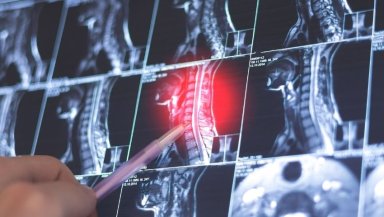
The information obtained from MRI imaging helps doctors determine whether minimally invasive surgery such as endoscopic spine surgery may be appropriate.
Suggested Image: MRI scan highlighting a herniated disc pressing on a nerve.
Other Tests Doctors May Use
In addition to MRI scans, doctors may perform several other tests to evaluate spine conditions.
A physical examination is usually the first step. During this examination, the doctor checks muscle strength, reflexes, and sensation in the legs or arms.
Certain movements may reproduce nerve pain and help identify the affected nerve.
In some cases, nerve conduction studies may be used to evaluate how well nerves are transmitting signals.
X-rays may also be taken to examine the alignment of the spine and detect structural problems.
These tests help doctors understand the full picture of the patient’s condition before recommending surgery.
Characteristics of a Good Candidate for Endoscopic Spine Surgery
Not every patient with a slipped disc requires surgery. However, certain characteristics may indicate that endoscopic spine surgery could be beneficial.
Patients with clearly identified nerve compression on MRI scans are often good candidates.
Individuals with persistent sciatica that has not improved after several weeks or months of conservative treatment may also benefit from surgical intervention.
Patients who experience significant pain that interferes with daily activities may be considered for this procedure.
In some cases, progressive muscle weakness caused by nerve compression may also lead doctors to recommend surgery.
Suggested Image: Illustration showing nerve decompression during endoscopic spine surgery.
When Endoscopic Surgery May Not Be Suitable
Although endoscopic spine surgery offers many advantages, it may not be appropriate for all patients.
Certain complex spine conditions may require traditional open surgery, and doctors may evaluate factors such as endoscopic spine surgery vs traditional spine surgery before deciding the most appropriate treatment.
For example, severe spinal instability or advanced spinal deformities may require different surgical techniques.
Patients with multiple spine problems affecting several levels of the spine may also need more extensive procedures.
Doctors carefully review imaging tests and medical history to determine whether minimally invasive surgery is the best option.
Choosing the appropriate treatment approach helps ensure the best possible outcome.
Benefits of Choosing the Right Surgical Approach
When the right patient is selected for endoscopic spine surgery, the procedure can offer several advantages.
The surgery is performed through a very small incision, which means less damage to muscles and surrounding tissues.
Many patients experience less postoperative pain compared with traditional surgery.
Hospital stays are often shorter, and endoscopic spine surgery recovery time may be faster.
Because the procedure focuses on relieving nerve compression, patients often experience significant improvement in symptoms such as leg pain and numbness.
However, successful outcomes depend on accurate diagnosis and careful surgical planning.
Preparing for a Consultation With a Spine Specialist
If back pain or nerve symptoms persist despite treatment, consulting a spine specialist can help determine the next steps.
During the consultation, the doctor will review symptoms, examine the spine, and discuss imaging results such as MRI scans.
Patients may be asked about how the pain affects daily activities and whether previous treatments have provided relief.
This information helps doctors decide whether continued conservative treatment or surgical intervention is the best option.
Open communication with the medical team helps patients understand their condition and treatment choices.
The Importance of Early Evaluation
Persistent back pain and nerve symptoms should not be ignored.
Early diagnosis allows doctors to identify the cause of the problem and recommend appropriate treatment.
When nerve compression is treated early, it can prevent long-term nerve damage and improve recovery outcomes.
For some patients, minimally invasive procedures such as endoscopic spine surgery may provide effective relief with shorter endoscopic spine surgery recovery.
Understanding the eligibility criteria for surgery helps patients make informed decisions about their treatment.
Conclusion
If you are experiencing persistent back pain, sciatica, or symptoms of nerve compression that do not improve with rest or physiotherapy, consulting a spine specialist can help identify the underlying cause. A thorough evaluation including imaging tests can determine whether treatments such as endoscopic spine surgery may help relieve nerve pressure and restore comfortable movement.
References and Sources