Success Rates of Endoscopic Spine Surgery for Slipped Disc and Sciatica: What Patients Should Know
Medicine Made Simple Summary
Endoscopic spine surgery is a minimally invasive procedure used to treat certain spine problems such as slipped discs and sciatica. In this surgery, doctors use a thin tube with a tiny camera called an endoscope to reach the affected area of the spine through a very small incision. The surgeon removes the part of the disc or tissue pressing on the nerve, relieving pressure and reducing pain. Because the surgery causes minimal disruption to muscles and surrounding tissues, many patients recover faster. Success rates for this procedure are generally high when the correct patient is selected and the surgery is performed by experienced specialists.
Understanding What Success Means in Spine Surgery
When people are advised to consider spine surgery, one of the first questions they ask is about the chances of success. Patients want to know whether the surgery will actually relieve their pain and allow them to return to normal activities.
In medical terms, the success of spine surgery is usually measured by several factors. Doctors evaluate whether the surgery successfully relieves nerve compression, reduces pain, restores movement, and improves quality of life.
For procedures such as endoscopic spine surgery, success also includes shorter recovery time, minimal complications, and long-term relief from symptoms.
Understanding what success means helps patients set realistic expectations and make informed decisions about treatment.
Why Slipped Discs and Sciatica Cause Severe Pain
To understand how surgery helps, it is important to know how conditions like slipped discs and sciatica affect the body.
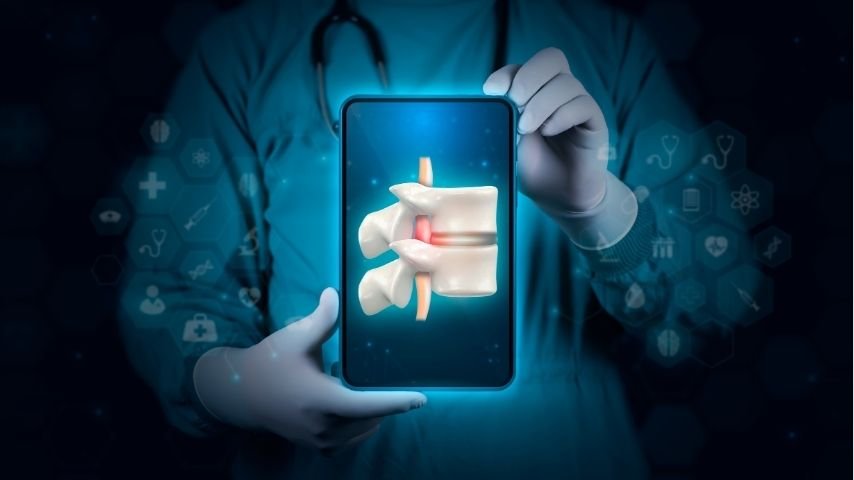
The spine contains a series of bones called vertebrae, separated by soft cushions known as intervertebral discs. These discs absorb shock and allow the spine to move freely.
Sometimes the outer layer of a disc weakens or tears, allowing the inner gel-like material to bulge outward. This condition is known as a slipped disc or herniated disc, and many patients first explore slipped disc treatment without surgery before considering surgical options.
If the bulging disc presses on nearby nerves, it can cause pain that travels along the nerve pathway.
In the lower back, this often affects the sciatic nerve, which runs from the spine through the buttocks and down the legs. When the nerve becomes compressed, it can produce sharp or burning pain known as sciatica.
Suggested Image: Diagram showing herniated disc pressing on the sciatic nerve.
How Endoscopic Spine Surgery Relieves Nerve Compression
Endoscopic spine surgery focuses on removing the specific structure that is pressing on the nerve.
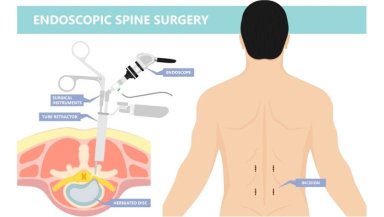
During the endoscopic spine surgery procedure, surgeons insert a thin tube with a camera through a small incision in the skin. The camera allows them to see the affected area of the spine clearly on a monitor.
Using specialized instruments, the surgeon removes the portion of the disc or tissue that is causing nerve compression.
Once the pressure on the nerve is relieved, the symptoms of pain, numbness, or weakness often improve.
Because the surgery uses a minimally invasive approach, the surrounding muscles and tissues are disturbed much less than in traditional open spine surgery.
Suggested Image: Step-by-step illustration of endoscopic spine surgery.
Reported Success Rates of Endoscopic Spine Surgery
Research studies and clinical data have shown that endoscopic spine surgery can be highly effective for carefully selected patients.
Success rates for treating slipped discs and sciatica with this procedure are often reported to be between 80 and 95 percent.
Success generally means that patients experience significant reduction in leg pain, improved mobility, and better ability to perform daily activities.
Many patients also report improved quality of life because they can return to normal routines with less discomfort.
However, these success rates depend on several important factors, including proper diagnosis and surgical expertise.
Suggested Image: Chart showing improvement in pain levels after surgery.
Factors That Influence Surgical Success
Several factors influence how successful endoscopic spine surgery will be for a patient.
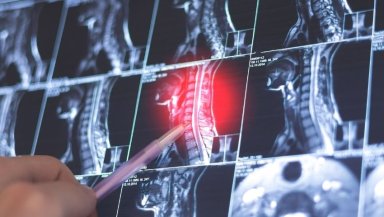
One of the most important factors is accurate diagnosis. Imaging tests such as MRI scans help doctors identify the exact location of nerve compression.
Patients with clearly defined disc herniation pressing on a nerve are often ideal candidates for this procedure.
The experience of the surgeon also plays an important role. Surgeons who regularly perform endoscopic spine procedures may achieve better outcomes.
Patient health and lifestyle can also affect recovery. Individuals who follow post-surgery instructions and participate in rehabilitation programs often experience better results.
Suggested Image: MRI scan highlighting disc herniation compressing a nerve.
How Soon Patients Notice Improvement
Many patients experience relief from leg pain soon after surgery.
Because the procedure removes the structure compressing the nerve, symptoms such as shooting pain down the leg may improve quickly.
However, nerve healing can take time. If the nerve was compressed for a long period, some symptoms such as numbness or tingling may take weeks or months to fully resolve.
Gradual improvement is usually a normal part of the healing process.
Doctors monitor endoscopic spine surgery recovery through follow-up visits and may recommend physiotherapy to support nerve and muscle recovery.
Advantages Compared With Traditional Surgery
Endoscopic spine surgery offers several advantages compared with traditional open spine surgery.
The procedure uses a much smaller incision, which reduces damage to muscles and surrounding tissues.
Because less tissue is disturbed, patients often experience less postoperative pain.
Hospital stays are usually shorter, and some patients are able to return home on the same day.
Recovery time is often faster, allowing patients to return to daily activities sooner.
These benefits contribute to the high satisfaction rates reported by many patients who undergo this procedure.
Suggested Image: Comparison illustration showing incision size in open versus endoscopic surgery.
Understanding Possible Limitations
Although success rates are high, it is important to understand that no surgery guarantees perfect results.
In some cases, symptoms may not completely disappear, especially if nerve compression existed for a long time before treatment.
A small percentage of patients may experience recurrence of disc herniation in the future.
Complications such as infection or bleeding are rare but possible with any surgical procedure.
Careful evaluation by an experienced spine specialist helps reduce these risks and improves the chances of successful treatment.
The Importance of Proper Patient Selection
Endoscopic spine surgery is most successful when it is performed on the right patient for the right condition.
Doctors carefully review imaging tests and evaluate symptoms before recommending surgery.
Patients whose symptoms are clearly caused by disc herniation pressing on a nerve usually benefit most from this procedure.
Individuals with more complex spine problems may require other surgical approaches.
Selecting the appropriate treatment ensures the best possible outcome.
Long-Term Results After Surgery
Many patients who undergo endoscopic spine surgery experience long-term relief from symptoms.
Once the pressure on the nerve is removed, the nerve can gradually recover and function normally again.
Patients who maintain healthy habits such as regular exercise, proper posture, and safe lifting techniques may reduce the risk of future spine problems.
Follow-up care and rehabilitation programs also play an important role in maintaining long-term spine health.
Suggested Image: Illustration showing healthy spine alignment after surgery.
When to Consider Speaking With a Spine Specialist
Persistent back pain or sciatica should not be ignored, especially if symptoms interfere with daily activities.
If conservative treatments such as medication and physiotherapy do not provide relief, consulting a spine specialist can help determine the cause.
Advanced imaging tests such as MRI scans can identify the exact source of nerve compression.
Based on the findings, doctors can recommend appropriate treatment options, including minimally invasive procedures such as endoscopic spine surgery.
Conclusion
If you are experiencing persistent back pain, sciatica, or symptoms of nerve compression that do not improve with conservative treatment, consulting a spine specialist can help identify the underlying cause. A thorough evaluation can determine whether endoscopic spine surgery may provide effective relief and help restore comfortable movement.
References and Sources