Laparoscopic Gallbladder Surgery: What Patients Wish They Knew Before the Operation
Medicine Made Simple Summary
Laparoscopic gallbladder surgery, medically called laparoscopic cholecystectomy, is a commonly performed procedure to remove the gallbladder, usually because gallstones are causing pain, inflammation or other complications. The surgery is performed under general anaesthesia through a few small cuts in the abdomen. Most patients can go home on the same day or after an overnight stay. Before surgery, it is important to understand fasting, medicines, anaesthesia, possible risks, recovery, diet and activity restrictions. Knowing what to expect can make the experience less stressful and help you prepare for recovery with confidence.
What Is Laparoscopic Gallbladder Surgery?
If you have been diagnosed with gallstones and your doctor has recommended surgery, you may have many questions.
- Will the surgery hurt?
- How long will I be in the hospital?
- Will I be able to eat normally afterward?
- How quickly can I return to work?
- And perhaps the biggest question is, “What actually happens during the operation?”
Laparoscopic gallbladder surgery is a procedure used to remove the gallbladder through a few small cuts in the abdomen. The medical name for the procedure is laparoscopic cholecystectomy.
The gallbladder is a small, pear-shaped organ located underneath the liver. It stores bile, a digestive fluid produced by the liver. Bile helps the body digest fats.
Gallstones can develop inside the gallbladder. Many people have gallstones without ever experiencing symptoms. However, when gallstones cause repeated pain, inflammation, blockage or other complications, removing the gallbladder may be recommended.
Laparoscopic cholecystectomy is now the most common approach to gallbladder removal for patients who are suitable for minimally invasive surgery.
Instead of making one large cut in the abdomen, the surgeon uses several small openings and specialised instruments.
This usually means smaller wounds, less postoperative discomfort and a faster return to normal activities compared with traditional open surgery.
Why Does the Gallbladder Need to Be Removed?
A common question is, “If the problem is gallstones, why can't the surgeon just remove the stones?”
The reason is that gallstones form inside the gallbladder.
Removing only the existing stones would leave the gallbladder in place, which means there is still a possibility of new stones forming.
During a cholecystectomy, the entire gallbladder is removed.
This does not mean your body will stop producing bile.
Your liver continues to make bile after surgery. The difference is that the bile is no longer stored and concentrated in the gallbladder. Instead, it flows directly into the small intestine.
This is why most people can live normally without a gallbladder.
The purpose of the surgery is to remove the organ responsible for storing the stones and prevent further gallbladder-related problems.
Does Everyone With Gallstones Need Surgery?
No.
This is an important distinction.
Gallstones are common, and many people have them without any symptoms.
If gallstones are discovered accidentally during an ultrasound or scan and you have never experienced typical gallstone symptoms, your doctor may recommend observation rather than surgery.
The situation is different when gallstones are causing symptoms.
Typical gallstone symptoms can include:
- Severe pain in the upper right or upper middle part of the abdomen
- Nausea and vomiting
- Pain that may last for several hours
- Pain that can sometimes occur after a heavy meal
Repeated attacks may indicate symptomatic gallstone disease.
Gallstones can also cause complications such as:
- Inflammation of the gallbladder
- Blockage of the bile ducts
- Pancreatitis
In these situations, gallbladder removal may be recommended.
The decision should always be based on your symptoms, scan findings, medical history and overall health.
What Happens Before the Surgery?
Your preparation begins well before you enter the operating room.
You will usually have a pre-operative assessment where your healthcare team reviews your medical history and general health.
You may be asked about:
- Previous surgeries
- Allergies
- Medicines
- Existing health conditions
Depending on your age and medical history, you may need:
- Blood tests
- An ECG
- Other investigations before surgery
This assessment helps the medical team determine whether you are fit for general anaesthesia and surgery.
It is also an important opportunity to ask questions.
Tell your doctor about all the medicines you take.
This includes:
- Prescription medicines
- Painkillers
- Vitamins
- Herbal supplements
- Over-the-counter products
Some medicines, particularly blood thinners and certain supplements, may need to be stopped or adjusted before surgery.
Never stop a prescribed medicine on your own.
Your surgeon or anaesthetist will tell you exactly what needs to be changed.
What About Fasting Before Surgery?
You will be given specific instructions about when to stop eating and drinking before the operation.
Fasting is important because you will be under general anaesthesia.
Your hospital may allow certain clear fluids until a particular time, while solid food may need to be stopped earlier.
The instructions can vary depending on your hospital and medical circumstances.
Do not follow fasting advice from someone else's surgery.
Follow the instructions given by your own surgical and anaesthetic team.
If you are unsure about whether you can drink water or take your morning medicines, contact your hospital before arriving for surgery.
Will I Be Awake During the Operation?
No.
Laparoscopic cholecystectomy is performed under general anaesthesia.
You will be asleep throughout the procedure and will not feel the operation.
The anaesthetist monitors you throughout the surgery.
Once the operation is completed, you will gradually wake up in a recovery area.
You may initially feel sleepy, groggy or slightly confused.
Some people experience nausea after anaesthesia.
You may also have a sore throat because a breathing tube is usually used during general anaesthesia.
These effects generally improve as the anaesthetic wears off.
Your healthcare team will monitor you and provide medication if you experience pain or nausea.
What Actually Happens During Laparoscopic Cholecystectomy?
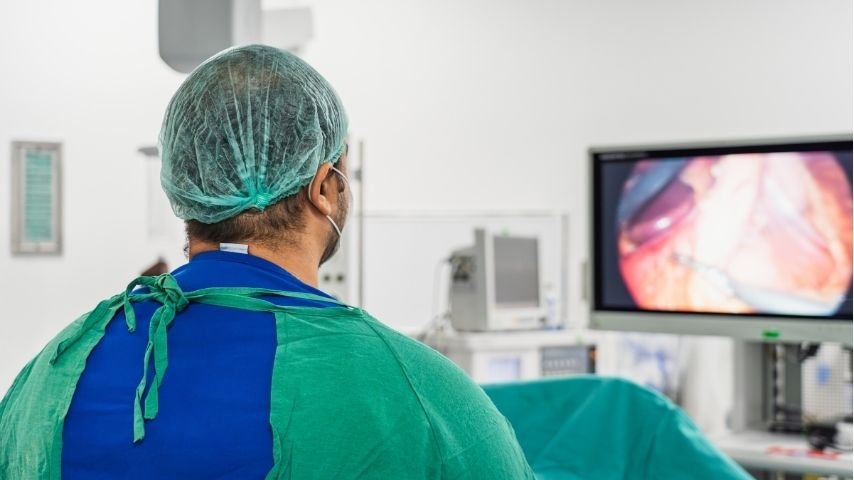
Once you are asleep, the surgeon makes a small incision, usually near the belly button.
A thin instrument called a laparoscope is inserted through this opening.
The laparoscope has a camera at its tip and allows the surgeon to see the organs inside your abdomen on a monitor.
The abdomen is gently inflated with carbon dioxide gas.
This creates space between the abdominal wall and the internal organs, allowing the surgeon to see and operate safely.
The surgeon then makes additional small openings through which specialised surgical instruments are inserted.
Using these instruments, the surgeon carefully separates the gallbladder from the surrounding structures.
The gallbladder is then removed through one of the small incisions.
The instruments are removed, the gas is released and the small wounds are closed.
Most laparoscopic gallbladder operations require three or four small incisions, although the exact number can vary.
The operation commonly takes around an hour, although the duration depends on the complexity of the individual case.
Will I Have Stitches?
You will have small wounds where the instruments were inserted.
These may be closed using:
- Dissolvable stitches
- Surgical glue
- Adhesive strips
- Staples
If dissolvable stitches are used, they usually do not need to be removed.
Your surgical team will tell you how to care for the wounds.
You may have small scars after the surgery.
Over time, these scars generally become less noticeable.
The appearance of scars varies between individuals depending on skin type, healing and other factors.
What If the Surgeon Finds Something Unexpected?
Sometimes the surgeon may discover that the gallbladder is more inflamed or damaged than expected.
There may also be scar tissue from previous operations.
In these situations, the surgeon may decide that continuing with keyhole surgery is not the safest option.
They may convert the operation to open surgery.
This means making a larger incision to safely complete the procedure.
Patients sometimes worry that conversion to open surgery means something has gone seriously wrong.
That is not necessarily the case.
The decision is usually made because the surgeon believes open surgery is safer in that particular situation.
Severe inflammation, scarring, bleeding or difficulty identifying important structures can make open surgery the safer choice.
Your surgeon should explain this possibility before you sign the consent form.
Is Open Surgery the Same as Laparoscopic Surgery?
The purpose is the same.
Both procedures remove the gallbladder.
The main difference is how the surgeon reaches the gallbladder.
- Laparoscopic surgery uses several small incisions.
- Open surgery uses one larger abdominal incision.
Because the incision is larger, recovery after open surgery generally takes longer.
You may need to remain in the hospital for several days and may need several weeks before returning to full physical activity.
Laparoscopic surgery generally allows a faster recovery.
This is one of the main reasons it is preferred when it can be performed safely.
What Will I Feel When I Wake Up?
You should expect some discomfort.
The most common discomfort is around the small abdominal incisions.
Your abdomen may feel sore, tight or bloated.
You may also experience shoulder pain.
This shoulder pain can seem strange because your shoulder was not operated on.
It happens because the gas used to inflate the abdomen during laparoscopic surgery can irritate the diaphragm. The resulting discomfort can be felt in the shoulder.
This usually improves as the gas is absorbed by the body.
Gentle walking can help.
You may also feel tired or slightly nauseated during the first day or two.
These symptoms usually improve as your body recovers from the anaesthesia and surgery.
Will I Need Strong Painkillers?
Some pain after surgery is expected.
Many patients can control their discomfort with simple pain medicines.
Some patients may need stronger prescription pain relief for a short period.
Your surgeon will decide which pain medicines are appropriate for you based on your health and the type of surgery.
Do not take additional medicines without checking whether they are safe to combine with your prescribed treatment.
Your pain should gradually improve rather than become progressively worse.
If pain becomes severe or is not controlled by the medicines prescribed to you, contact your healthcare team.
Can I Go Home the Same Day?
Many patients can.
Uncomplicated laparoscopic cholecystectomy is often performed as day surgery.
This means that you may go home several hours after the operation once you have recovered sufficiently from anaesthesia, are able to drink fluids and your pain and nausea are under control.
Some people stay overnight.
This may depend on:
- Your general health
- The complexity of the surgery
- Pain control
- Other factors
Going home on the same day does not mean that you are completely recovered.
It simply means that you are medically stable enough to continue your recovery at home.
You will need someone to take you home.
It is also sensible to have someone stay with you during the first night.
What Should I Expect During the First Week?
The first week is mainly about gradual recovery.
You may feel tired for several days.
Your abdomen may remain slightly sore.
You may notice some bloating.
Your appetite may be lower than normal initially.
You should generally begin moving around as soon as you are comfortable.
Gentle walking is encouraged.
You do not need to stay in bed all day.
Short walks around the house can help you regain your energy and reduce stiffness.
At the same time, avoid heavy lifting and strenuous exercise until your surgeon tells you that it is safe.
Your body may feel better before the deeper tissues have completely healed.
Do not use the absence of pain as your only guide for returning to intense physical activity.
When Can I Return to Work?
This depends largely on the type of work you do.
If you have a desk-based job, you may be able to return within one to two weeks after an uncomplicated laparoscopic cholecystectomy.
Some people may return earlier if they feel comfortable.
Physically demanding work is different.
If your job involves:
- Lifting
- Construction
- Manual labour
- Prolonged physical activity
you may need more time.
Ask your surgeon for advice based on your actual job responsibilities.
A person working at a computer should not be expected to have the same recovery timeline as someone who lifts heavy objects throughout the day.
When Can I Drive Again?
You should not drive immediately after surgery.
You need to be fully recovered from the effects of anaesthesia and able to control the vehicle safely.
You should also be able to perform an emergency stop without significant pain.
If you are taking strong prescription painkillers that can affect alertness or reaction time, you should not drive.
Check your insurance requirements as well.
The exact timing varies between patients.
Your surgeon can tell you when you are medically ready based on your recovery.
What Can I Eat After Gallbladder Removal?
You do not need a permanent special diet simply because your gallbladder has been removed.
The liver continues to produce bile.
However, your digestive system may need some time to adjust during the early recovery period.
Large, fatty meals may cause bloating or loose stools in some people.
For the first few days, smaller meals may feel more comfortable.
You can gradually return to a normal, balanced diet as your appetite and digestion improve.
You do not necessarily need to avoid all fat forever.
Your body still needs dietary fat.
The goal is to find a balanced eating pattern that you tolerate comfortably.
If a particular food consistently causes problems, reduce it temporarily and discuss persistent symptoms with your healthcare professional.
Can I Drink Coffee After Surgery?
Many people can eventually return to drinking coffee.
However, caffeine can stimulate bowel activity and may worsen diarrhoea in some people.
If you experience loose stools after surgery, reducing coffee temporarily may help.
The same applies to strong tea and other caffeinated beverages.
There is generally no reason to assume that you can never drink coffee again simply because you have undergone cholecystectomy.
Your tolerance is what matters.
What About Diarrhoea After Surgery?
Some people experience loose stools after gallbladder removal.
This can happen because bile flows continuously into the intestine rather than being stored in the gallbladder.
For many people, this is temporary.
If diarrhoea:
- Continues for several weeks
- Becomes severe
- Interferes with your daily life
speak with your doctor.
Persistent diarrhoea can sometimes be related to bile acid diarrhoea, but other digestive conditions can also cause similar symptoms.
Do not assume that long-term diarrhoea is something you simply have to accept after gallbladder surgery.
There may be treatment options once the cause is identified.
What Are the Risks of Laparoscopic Gallbladder Surgery?
Laparoscopic cholecystectomy is a common procedure, but like every operation, it carries some risks.
These can include:
- Bleeding
- Infection
- Blood clots
- Injury to nearby organs
- Injury to the bile ducts
- Bile leakage
- Stones remaining in the bile duct that may require additional treatment
Serious complications are uncommon, but they are important to understand before giving consent.
Your individual risk depends on your general health, the reason for surgery and how complicated your gallbladder disease is.
Your surgeon should explain the risks that are particularly relevant to you.
What Warning Signs Should I Watch For After Surgery?
Knowing what is normal after surgery is important.
Knowing when to seek help is equally important.
Mild abdominal soreness is expected.
Increasing or severe abdominal pain is not something to ignore.
Contact your doctor if you develop:
- A high fever
- Worsening redness or swelling around an incision
- Pus or blood from the wound
- Persistent vomiting
- Pain that is not controlled by your prescribed medicines
- Yellowing of the skin or eyes
Breathing difficulties or significant chest symptoms require urgent medical attention.
If you are worried about something after surgery, contact your surgical team rather than trying to determine the cause yourself.
What Patients Often Wish They Had Asked Their Surgeon
Many patients spend most of their consultation asking whether the operation is safe.
That is important, but there are several other questions that can make the experience easier.
Ask your surgeon:
- Why gallbladder removal is recommended in your case.
- Whether your gallstones are causing your symptoms.
- Whether there is any evidence of inflammation or bile duct stones.
- Whether laparoscopic surgery is suitable for you.
- About the possibility of conversion to open surgery.
- How long the operation is expected to take.
- Whether you are likely to go home the same day.
- What your recovery timeline is likely to be.
- When you can return to work.
- When you can drive.
- When you can exercise or lift weights.
- What you should eat during the first few days.
- Which medicines you should stop before surgery.
- What symptoms should make you contact the hospital.
Most importantly, ask:
“What should I realistically expect during the first two weeks after surgery?”
A clear answer can make recovery much easier to plan.
What Should You Arrange Before the Operation?
A little preparation can make the first few days at home much easier.
Before surgery, consider arranging:
- Someone to take you home after surgery.
- Someone to stay with you during the first night, if possible.
- Commonly used items within easy reach so that you do not have to bend or stretch unnecessarily.
- Simple meals before the operation.
- Enough drinking water.
- Your work schedule in advance.
- Help with children or dependants for the first few days, if necessary.
- Appropriate time off if your job involves physical work.
If your job involves physical work, discuss your likely recovery period with your employer.
The goal is not to prepare for weeks of bed rest.
Most people recover relatively quickly.
It is simply about making the transition from hospital to home more comfortable.
What If I Develop a Cold or Fever Before Surgery?
Tell your surgical team.
Even a seemingly minor illness can be relevant before anaesthesia.
Do not hide symptoms because you are worried that your surgery will be postponed.
The medical team can decide whether it is safe to proceed.
Your safety is more important than sticking rigidly to a planned date.
How Long Does Full Recovery Take?
There is no single recovery timeline that applies to everyone.
After uncomplicated laparoscopic surgery, many people can return to normal activities relatively quickly.
Some people feel substantially better within a few days.
Others need one or two weeks before they feel ready to resume their usual routine.
Physically demanding activities may require additional time.
If open surgery is required, recovery can take considerably longer.
Your surgeon will consider:
- The type of operation
- Your general health
- How the surgery went
when giving you individual advice.
Do not compare your recovery too closely with another patient's.
Two people can undergo the same operation and recover at different speeds.
The Key Takeaway
Laparoscopic gallbladder surgery is a common procedure, but knowing what to expect can make the experience much less stressful.
The surgery is performed under general anaesthesia through several small abdominal incisions.
A camera allows the surgeon to see inside the abdomen while specialised instruments are used to remove the gallbladder.
Most patients can go home on the same day or after an overnight stay.
The first few days may involve:
- Abdominal soreness
- Tiredness
- Bloating
- Shoulder discomfort
You can usually begin gentle walking early and gradually return to normal activities.
Your diet can generally return to normal over time, although smaller meals and reduced fatty foods may be easier during the early recovery period.
There are risks, including:
- Infection
- Bleeding
- Bile leakage
- Injury to nearby structures
although serious complications are uncommon.
In some cases, the surgeon may need to convert laparoscopic surgery to open surgery if that is considered safer.
This is not necessarily a failure of the procedure.
It is a decision made to protect the patient.
Conclusion
Laparoscopic gallbladder surgery may sound intimidating when you first hear that you need an operation.
But understanding the process can remove much of the uncertainty.
The surgery is performed under general anaesthesia.
You will not feel the operation.
The surgeon uses several small abdominal openings rather than one large incision.
The gallbladder is carefully separated and removed.
Your liver continues to make bile after surgery, so you can live normally without a gallbladder.
The first few days are usually focused on:
- Rest
- Pain control
- Hydration
- Gentle movement
You may feel tired.
You may have abdominal soreness.
You may experience shoulder pain from the gas used during the operation.
These symptoms generally improve as recovery progresses.
Most patients can gradually return to work, exercise and normal activities.
The most important thing before surgery is to understand your own situation.
Ask:
- Why the operation has been recommended.
- What your scan shows.
- Whether your symptoms are definitely related to gallstones.
- About the risks.
- About the possibility of open surgery.
- About recovery.
- What warning signs you should watch for after going home.
A well-informed patient is better prepared for both the operation and recovery.
Laparoscopic cholecystectomy is not simply about removing an organ.
For someone with symptomatic gallstone disease, it is about removing the source of recurrent gallbladder problems and helping them return to a more comfortable and predictable daily life.
Suggested Call to Action
Planning laparoscopic gallbladder surgery and want to understand whether it is right for you?
Consult an experienced general surgeon to discuss your diagnosis, surgical options, expected recovery, possible risks and what you should do before and after laparoscopic cholecystectomy.
References and Sources
NHS – Gallbladder Removal: What It Is and Why It Is Done
NHS – How Gallbladder Removal Is Done
Society of American Gastrointestinal and Endoscopic Surgeons (SAGES) – Gallbladder Removal Surgery