How Long Does Hernia Surgery Recovery Really Take? A Week-by-Week Guide

Medicine Made Simple Summary
Hernia surgery is usually followed by a gradual recovery rather than an overnight return to normal life. Most people can walk and perform light daily activities within a few days, but complete recovery takes longer. During the first week, pain, swelling and tiredness are common. By the second and third weeks, many people feel considerably better and can return to routine activities or work, depending on their job. Heavy lifting and strenuous exercise usually require more time. This week-by-week guide explains what recovery may feel like, what activities you can resume and when to seek medical advice.
What Happens After Hernia Surgery?
Having hernia surgery can feel like the end of the problem, but your body still needs time to heal after the operation.
During surgery, the surgeon repairs the weak area in the abdominal wall. Depending on the type of hernia and the surgical technique, this may involve stitches, mesh or both. The repair may be performed through a larger incision using open surgery or through smaller incisions using laparoscopic or keyhole surgery.
Even when the operation itself takes less than an hour and you are able to go home on the same day, healing continues for several weeks.
This is why it is important not to judge your recovery only by how you feel immediately after surgery.
You may feel surprisingly well after a few days and still need to avoid heavy lifting or strenuous exercise. The tissues underneath the skin are continuing to heal even when the external wound looks almost normal.
For many people, recovery is gradual. You start with simple movements, slowly return to normal daily activities and then progressively increase physical activity.
Current patient guidance from Guy's and St Thomas' NHS Foundation Trust states that most people can return to normal daily activities within a few days, while restrictions on heavy lifting and strenuous exercise depend on whether the operation was keyhole or open surgery.
Is Hernia Surgery Recovery the Same for Everyone?
No.
This is one of the most important things to understand before surgery.
A young, otherwise healthy person having a small uncomplicated inguinal hernia repaired may recover differently from someone having a large abdominal wall hernia repaired after previous abdominal surgery.
The surgical technique also matters. Laparoscopic surgery generally involves smaller incisions and may allow a faster early recovery for suitable patients. Open surgery involves a larger incision and may require a longer period before strenuous activity is comfortable.
Your job matters too.
Someone working from home may be able to return to work relatively quickly. Someone working in construction, nursing, warehouse operations or another physically demanding occupation may need considerably longer.
Your general health, pain control, wound healing and any complications can also affect the timeline.
Therefore, the week-by-week guide below should be viewed as a general framework rather than a strict timetable. Your surgeon's instructions should always take priority.
The First 24 to 48 Hours: Rest, Short Walks and Getting Comfortable
The first couple of days are mainly about allowing your body to recover from the anaesthetic and operation.
If you had general anaesthesia, you may feel tired, dizzy or slightly confused for a while. Guy's and St Thomas' NHS Foundation Trust notes that it can take around 24 to 48 hours for the effects of general anaesthesia to wear off completely.
You do not usually need to remain in bed all day. In fact, gentle movement is encouraged. Walking around your home for short periods can help circulation and reduce the risk of blood clots.
Pain and discomfort around the surgical area are expected.
You may notice swelling or bruising around the incision. Depending on the type of hernia repair, swelling can sometimes extend into the groin or nearby areas.
Do not be alarmed by every change you notice during these first few days. The body has just undergone surgery.
At the same time, severe or rapidly increasing pain is not something you should simply tolerate. Your surgical team should give you instructions about pain medication and when to contact them if pain is difficult to control.
You should also have someone accompany you home and stay with you for the first 24 hours if you have had a general anaesthetic, according to current NHS hospital guidance.
Week 1: Walking, Wound Care and Managing Discomfort
The first week is usually about getting back on your feet without trying to do too much too soon.
Walking should gradually become easier. You can move around your home and slowly increase the amount of activity as you feel able.
You may still experience soreness when getting out of bed, sitting down, coughing, sneezing or changing position. Some people notice a pulling or tight sensation around the repair.
This does not necessarily mean that something has gone wrong.
The wound may also look bruised or slightly swollen. A hard or lumpy feeling underneath the wound can occur as scar tissue begins to form. Current NHS guidance describes tingling, numbness, itching and a hard lumpy sensation around the wound as possible parts of normal healing.
You should keep the wound clean and follow the instructions given by your surgical team.
Constipation can also be a problem during the first week, particularly if you are taking strong painkillers. Straining during bowel movements can be uncomfortable and can put pressure on the healing abdominal wall. Staying hydrated and maintaining an appropriate fibre intake can help, while your doctor or pharmacist can advise if you need a laxative.
Driving is usually not appropriate immediately after surgery. You need to be comfortable, alert and able to perform an emergency stop safely before returning to driving. Some NHS guidance suggests this is often around one to two weeks, although individual recovery varies.
During this first week, the goal is simple: move regularly, rest when you need to and allow the repair to heal.
Week 2: Feeling More Like Yourself
By the second week, many people notice a significant improvement.
The soreness is usually less intense. Walking becomes easier. You may be able to perform most basic household activities without thinking constantly about the operation.
This is also the stage when many patients make a common mistake.
They start feeling better and assume that the repair must therefore be completely healed.
It is important to remember that feeling better does not mean that the tissues have finished healing.
You can gradually increase your normal activities, but heavy lifting and strenuous exercise may still be restricted.
For inguinal hernia repair, Guy's and St Thomas' currently advises avoiding heavy lifting or strenuous exercise for two weeks after keyhole surgery and four weeks after open surgery. These are general guidelines, and the surgeon's instructions take priority.
Some hospitals recommend avoiding strenuous activity for longer. Frimley Health NHS Foundation Trust, for example, advises avoiding heavy lifting and strenuous activity for six weeks after inguinal hernia repair.
This difference illustrates why there is no universal recovery calendar.
Your surgeon may give you different advice based on the type and complexity of your repair.
Week 3: Returning to Routine
By the third week, many patients feel much closer to their normal routine.
If your work is desk-based, you may already have returned to work or be preparing to do so.
If your work involves physical activity, lifting, prolonged standing or repetitive movement, you may need additional time.
The important thing is to judge your activity by how your body responds rather than trying to meet an arbitrary deadline.
If an activity causes significant pain, stop and allow more time before trying again.
A mild pulling sensation may occur as the tissues continue to heal, but steadily increasing pain, swelling or a new bulge should be assessed.
This is also a good time to start thinking about gradually rebuilding your fitness.
Walking can be increased in duration and pace as tolerated. Other low-impact activities may be introduced if your surgeon has cleared them.
Heavy gym workouts should not be resumed simply because the incision looks healed.
The internal repair still needs time to strengthen.
Week 4: Gradually Increasing Physical Activity
Around the fourth week, many people are able to do considerably more than they could during the first few days.
For some patients after open inguinal hernia repair, this is around the point when restrictions on heavy lifting may begin to ease, depending on the surgeon's advice.
For patients who have undergone laparoscopic repair, the return to strenuous activity may happen earlier in some cases.
However, the type of hernia matters.
An uncomplicated small inguinal hernia is not the same as a large ventral or incisional hernia.
If you had a more complex repair, your surgeon may recommend a longer period of restricted activity.
Do not use a week-four milestone as permission to immediately return to your previous maximum weights.
A better approach is to increase activity progressively.
If you were previously a regular gym-goer, start well below your previous level and see how your body responds.
If you experience significant pain or swelling, reduce the activity and speak with your surgical team.
Weeks 5 and 6: Returning Towards Normal Activity
By five to six weeks, many patients are approaching their normal level of activity.
Some may already be back at work and participating in exercise.
Others may still have occasional discomfort, especially after more demanding activity.
There is considerable variation at this stage.
Current NHS patient information describes full recovery from some inguinal hernia repairs as taking around four to six weeks, while individual activity restrictions vary.
For some patients, especially those undergoing more complex abdominal wall repairs, recovery can take longer.
If your surgeon has advised six weeks before heavy lifting, follow that advice even if you feel completely normal at week four.
The objective is not simply to get through the first month.
It is to allow the repair to heal properly and reduce the risk of complications.
When Can You Return to Work?
The answer depends largely on the type of work you do.
If you have a desk job, you may be able to return within one to two weeks, sometimes earlier depending on your comfort and the nature of your surgery.
Guy's and St Thomas' advises that many people can return to work after one to two weeks, although manual workers may need additional time.
Frimley Health similarly notes that many patients need around two to three weeks away from work, while those with physically demanding jobs may require up to six weeks or a temporary adjustment in duties.
The important factor is not simply the job title.
Consider what your work actually requires.
If you spend most of the day sitting at a computer, your physical demands are very different from someone who regularly lifts heavy equipment.
If possible, a gradual return or temporary modification of duties can make the transition easier.
When Can You Drive After Hernia Surgery?
Driving is not determined simply by the number of days since surgery.
You need to be physically and mentally ready to drive safely.
You should be free from significant pain and should not be affected by medicines that make you sleepy or slow your reactions.
You also need to be able to turn, move comfortably and perform an emergency stop without hesitation.
Guy's and St Thomas' advises that this is usually around one to two weeks after inguinal hernia repair, although this varies between individuals and patients should also check their insurance requirements.
Some hospitals recommend waiting at least seven to ten days.
The safest approach is to follow your surgical team's advice and make sure you are genuinely capable of controlling the vehicle safely.
When Can You Exercise After Hernia Surgery?
Walking is generally encouraged early in recovery.
The more difficult question is when you can return to running, gym workouts, abdominal exercises or heavy lifting.
There is no single answer.
The timing depends on your surgery and your surgeon's instructions.
For uncomplicated inguinal hernia repair, some NHS guidance advises avoiding heavy lifting and strenuous exercise for two weeks after keyhole surgery and four weeks after open surgery. Other centres recommend six weeks before strenuous activity.
This does not mean that you should remain inactive during the entire period.
Gentle movement is usually encouraged.
As recovery progresses, you can gradually increase activity.
When you return to resistance training, begin with lighter loads rather than immediately attempting your previous weights.
Pain is an important guide. If an activity causes significant discomfort, stop and discuss it with your healthcare professional.
Is Pain Normal During Recovery?
Some pain after hernia surgery is expected.
The incision and tissues around the repair need time to heal. You may notice soreness when moving, coughing or getting up from a chair.
NIDDK states that pain after inguinal hernia surgery is typically mild and generally improves within about two weeks.
The important distinction is between expected discomfort that gradually improves and pain that becomes increasingly severe.
If your pain is steadily worsening rather than improving, you should contact your surgical team.
The same applies if pain is accompanied by increasing swelling, redness, discharge, fever, persistent vomiting or difficulty passing urine.
These symptoms may indicate a complication and should not be ignored.
What About Swelling or a New Lump After Surgery?
Swelling and bruising around the surgical site can be normal during early recovery.
You may also notice a firm or lumpy area as scar tissue develops.
This can sometimes make patients worry that the hernia has already returned.
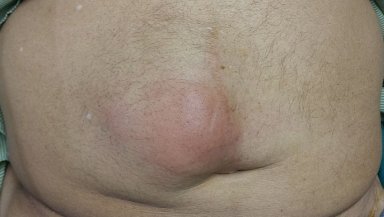
A postoperative fluid collection called a seroma can also develop at the site of the repair. These often settle without additional treatment.
However, a new or increasing bulge should be assessed, particularly if it is accompanied by pain.
Do not assume that every lump is a recurrence, but do not ignore a persistent or changing lump either.
Your surgeon can examine the area and determine whether it represents normal healing, fluid collection, scar tissue or a recurrent hernia.
When Should You Contact Your Doctor?
Recovery should generally move in the direction of improvement.
If your wound becomes increasingly red, swollen, painful or starts producing discharge, contact your healthcare team.
You should also seek medical advice if you develop:
- Fever
- Persistent nausea or vomiting
- Increasing abdominal pain or swelling
- Significant bleeding
- Difficulty passing urine
These are recognised warning signs after hernia repair.
Severe or rapidly worsening symptoms require prompt medical assessment.
Do not assume that because you have recently had surgery, every new symptom is simply part of healing.
At the same time, do not panic about every minor change.
The best approach is to monitor the overall pattern and contact your surgical team when something appears unusual or is getting worse rather than better.
What Can Help You Recover Better?
Recovery is not only about waiting for the calendar to reach six weeks.
Your everyday habits can also make a difference.
Follow the medication instructions provided by your surgical team and stay adequately hydrated. Pay attention to bowel movements because constipation can make recovery more uncomfortable and may cause straining around the repair. Eating enough fibre and following your healthcare professional's advice about laxatives can help when constipation occurs.
Gentle walking is usually preferable to complete bed rest.
Avoid smoking because it can affect wound healing and coughing can put additional stress on the repair. Guy's and St Thomas' specifically advises patients to remain smoke-free after surgery.
Most importantly, do not rush the return to heavy physical activity simply because you feel better.
Recovery is a process rather than a competition.
The Key Takeaway
Hernia surgery recovery usually happens in stages.
During the first few days, the focus is on pain control, rest, gentle movement and wound care. During the first week, walking and basic activities gradually become easier. By the second and third weeks, many people are returning to routine activities and, depending on their job and procedure, may return to work.
By four to six weeks, many patients are approaching normal activity, although heavy lifting and strenuous exercise may require a longer restriction depending on the operation and the surgeon's advice.
There is no single recovery timeline that applies to everyone.
Laparoscopic and open surgery can have different recovery recommendations. The type and size of your hernia, your overall health and the physical demands of your work also matter.
The safest approach is to gradually increase activity and use your symptoms as a guide while following the instructions given by your surgical team.
Conclusion
Hernia surgery is often a day-care procedure, but healing does not finish when you leave the hospital.
The first few days are mainly about resting, controlling discomfort and moving gently. During the first week, walking and simple daily activities usually become easier. By the second and third weeks, many patients begin returning to work and normal routines, depending on their surgery and occupation.
More demanding activities take longer.
Some patients can avoid heavy lifting for two to four weeks after uncomplicated inguinal repair, while other surgical teams recommend six weeks before strenuous activity. This variation reflects differences in surgical technique, the type of hernia and individual recovery.
Do not compare your recovery with another patient's.
A person who had a small laparoscopic inguinal hernia repaired may have a very different recovery from someone who underwent open surgery for a larger or more complex abdominal hernia.
If your pain, swelling or wound is getting worse rather than better, contact your surgical team.
If you are planning hernia surgery, ask your surgeon about your expected recovery timeline before the operation. Knowing when you can return to work, drive, exercise and lift weights can help you plan your recovery realistically.
Suggested Call to Action
Planning hernia surgery and wondering when you can return to work, exercise or your normal routine?
Speak with an experienced general or hernia surgeon about your individual recovery timeline and the activity restrictions that will apply to your specific procedure.
References and Sources
Guy's and St Thomas' – Recovery After Inguinal Hernia Repair