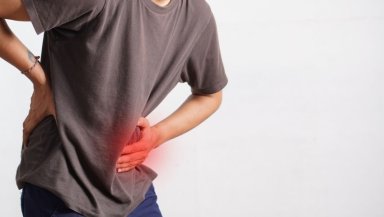
Why Does My Hernia Hurt More When I Cough, Bend or Lift?
Medicine Made Simple Summary
Hernia pain often becomes more noticeable when you cough, bend, lift or strain because these activities increase pressure inside your abdomen. If there is a weak area in the abdominal wall, tissue can push through it and create or increase a bulge. This can cause pulling, pressure, burning or aching discomfort. The pain may improve when you rest or lie down. However, sudden severe pain, a hard or trapped lump, vomiting or skin colour changes can signal a serious complication. Understanding why symptoms change can help you know when to seek medical advice.
What Is a Hernia?
To understand why a hernia can hurt during coughing, bending or lifting, it helps to first understand what happens inside your body.
Your abdominal wall is made up of muscles and connective tissues. It forms a protective layer around many of the organs inside your abdomen.
Sometimes, a weak area develops in this wall.
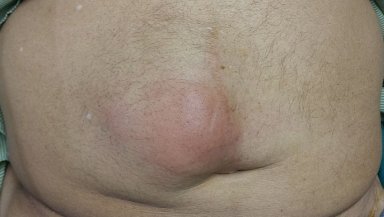
When pressure builds up inside the abdomen, fatty tissue or part of the intestine can push through that weak area. This creates a bulge underneath the skin.
That bulge is called a hernia.
An inguinal hernia is one of the most common types. It develops in the groin. Other types include umbilical hernias around the belly button and incisional hernias that develop around previous surgical scars.
Some hernias cause no symptoms at all.
Others cause discomfort, heaviness, burning or pain.
The symptoms may not remain the same throughout the day. You may feel almost normal while lying down but notice discomfort when standing, coughing or lifting.
There is a simple reason for this.
Why Does a Hernia Hurt More When You Cough?
When you cough, your abdominal muscles contract suddenly.
At the same time, pressure inside your abdomen increases.
This is part of the body's natural mechanism for producing a strong cough.
For most people, the abdominal wall handles this increase in pressure without a problem.
But if there is a weak area, the increased pressure can push tissue towards or through that opening.
If you already have a hernia, this can make the bulge more prominent.
It can also stretch or irritate tissues around the hernia and cause pain.
This is why some people notice a sharp, pulling or burning sensation when they cough.
Medical guidance recognises coughing as a common activity that can make inguinal hernia symptoms worse. NIDDK notes that discomfort, pain, heaviness or burning in the groin may worsen with coughing, lifting or straining and may improve with rest or lying down.
Recent patient discussions show the same concern. People with known or suspected inguinal hernias frequently describe pain or a pulling sensation that becomes more noticeable during coughing and sneezing.
This does not mean that every cough is damaging the hernia.
It means that coughing temporarily increases pressure in an area that is already weaker than normal.
Why Does Bending Make a Hernia Hurt?
Bending changes the position and tension of your abdominal muscles.
When you bend forward, particularly if you are also lifting or reaching for something, your abdominal muscles and surrounding tissues work together to stabilise your body.
This can increase pressure around the abdominal wall.
If you have a hernia, the movement may place additional tension on the area.
You may feel pulling, aching or pressure in the groin or abdomen.
Some people describe it as a small pinch. Others describe it as a burning sensation or a feeling that something is being pulled from inside.
The discomfort may disappear when you straighten up or lie down.
This pattern is common enough that patient information from NHS services specifically describes hernia discomfort as something that may occur when bending, stretching or lifting.
However, pain while bending does not automatically prove that the pain is coming from a hernia.
Muscle strains, nerve irritation and other conditions can cause similar symptoms.
That is why persistent or unexplained groin or abdominal pain should be assessed rather than diagnosed based only on the movement that triggers it.
Why Does Lifting Make Hernia Pain Worse?
Lifting is one of the activities most commonly associated with hernia symptoms.
The reason is straightforward.
When you lift something heavy, your abdominal muscles contract to stabilise your trunk.
You may also hold your breath or brace your abdominal muscles without realising it.
These actions can increase pressure inside your abdomen.
If there is a weak point in the abdominal wall, that pressure can push the hernia outward.
You may notice that the lump becomes larger.
You may also feel pressure, pulling or pain around the area.
NIDDK identifies repeated activities that increase abdominal pressure, including heavy lifting, as factors associated with inguinal hernias.
This is one reason patients often notice their hernia for the first time while lifting something.
However, lifting does not necessarily mean that the activity suddenly “created” the hernia.
The weakness may have existed before the symptoms became noticeable.
The lifting activity may simply have increased pressure enough to make the bulge or discomfort obvious.
Does Pain Mean the Hernia Is Getting Bigger?
Not necessarily.
Pain and hernia size do not always increase together.
A small hernia can sometimes be painful.
A larger hernia may cause surprisingly little pain.
This may seem strange, but there is a simple explanation.
A larger opening can sometimes allow tissue to move through more easily. A smaller opening may put more pressure on the tissue passing through it.
NHS patient guidance also notes that large hernias may not necessarily be painful, while pain can sometimes occur with smaller hernias.
Therefore, you cannot judge the seriousness of a hernia simply by asking how much it hurts.
What matters is the overall pattern.
- Is the pain new?
- Is it becoming more frequent?
- Is the lump getting larger?
- Is it interfering with your daily activities?
- Has the lump become difficult to push back?
These questions provide more useful information than pain intensity alone.
Why Does the Pain Sometimes Improve When You Lie Down?
This is another common feature of hernias.
You may notice a lump or discomfort while standing, walking or exercising.
Then you lie down and the symptoms become much better.
Why does this happen?
When you lie down, gravity is no longer pulling the abdominal contents downward in the same way.
Pressure inside the abdomen may also decrease.
The tissue that has pushed through the weak area may move back into the abdomen.
As a result, the bulge becomes smaller or disappears.
The discomfort may also improve.
This is particularly common with reducible hernias.
However, the disappearance of the lump does not mean that the underlying weakness has been repaired.
The hernia can return when you stand, cough, bend or strain again.
Is Pain During Coughing Always a Sign of a Hernia?
No.
This is an important distinction.
Coughing can cause pain for many reasons.
A strong or prolonged cough can strain the muscles between the ribs and around the abdomen. It can also irritate nerves or muscles.
A person may therefore experience pain while coughing even without having a hernia.
A hernia becomes more likely when the pain occurs together with a lump or bulge that changes with coughing, standing or straining.
For example, you may notice a small groin swelling that becomes prominent when you cough.
You may also notice a heavy or dragging feeling in the groin.
These features are worth discussing with a doctor.
A physical examination can often identify an inguinal hernia. If the diagnosis is unclear, imaging such as an ultrasound, CT scan or MRI may sometimes be used.
Why Does the Pain Sometimes Feel Like Burning or Pulling?
Hernia discomfort does not always feel like traditional pain.
Patients may describe it as burning, pulling, aching, pressure, heaviness or a sharp pinching sensation.
This happens because a hernia can put pressure on the tissues around the abdominal wall.
The nerves in the area can also contribute to the way the pain is experienced.
For an inguinal hernia, discomfort may be felt in the groin.
In some men, symptoms can extend towards the scrotum.
The exact sensation varies between individuals.
This is why telling your doctor exactly what the pain feels like can be useful.
Instead of simply saying “it hurts”, describe whether the sensation is sharp, burning, aching, heavy or pulling.
Also explain what triggers it.
- Does it happen when you cough?
- Does it appear when you lift?
- Does it get worse after standing for several hours?
- Does it improve when you lie down?
These details can help the doctor understand the pattern.
Can Chronic Cough Make Hernia Symptoms Worse?
A persistent cough can repeatedly increase pressure inside the abdomen.
This does not mean that every person with a chronic cough will develop a hernia.
However, chronic coughing is recognised as a factor that can increase pressure within the abdomen and contribute to the development or symptoms of an inguinal hernia.
For someone who already has a hernia, repeated coughing can make symptoms more noticeable.
This creates a difficult cycle.
The cough increases abdominal pressure.
The pressure aggravates the hernia.
The hernia becomes more uncomfortable.
If you have a persistent cough and a hernia, managing the underlying cause of the cough is therefore important.
Do not simply accept a chronic cough as something you have to live with.
Discuss it with your doctor.
Should You Stop Lifting If Your Hernia Hurts?
If lifting consistently causes pain, you should not simply push through it.
The first step is to reduce or stop the activity that triggers significant symptoms and get medical advice.
This does not necessarily mean that you can never lift anything again.
The appropriate level of activity depends on your hernia, its size and location, your symptoms and whether surgery has been recommended.
For some people, lighter activities may remain comfortable.
For others, heavy lifting may need to be avoided until the hernia has been treated.
NHS guidance for people with inguinal hernias recommends staying active but avoiding activities that cause pain or discomfort.
The goal is not complete inactivity.
It is sensible activity that does not repeatedly provoke symptoms.
Can a Hernia Become More Serious After Sudden Pain?
Sudden pain deserves attention because it can sometimes indicate that the hernia has become trapped.
A hernia can become incarcerated.
This means the tissue inside the hernia can no longer move back into the abdomen.
If the blood supply to the trapped tissue becomes restricted, the hernia can become strangulated.
This is a medical emergency.
Warning signs include:
- A hernia that suddenly becomes larger
- A lump that previously went back inside but no longer does
- Sudden or severe pain
- Tenderness
- Redness over the area
- Fever
- Abdominal pain
- Bloating
- Nausea or vomiting
If these symptoms appear, do not wait for the pain to settle.
Seek urgent medical attention.
When Should You See a Doctor About Hernia Pain?
You should arrange a medical evaluation if you have a new lump or swelling in your groin or abdomen.
You should also seek medical advice if a known hernia is becoming more painful, increasing in size or interfering with your normal activities.
Pain that repeatedly appears when coughing, bending or lifting should not simply be accepted as normal.
The doctor can determine whether the symptoms are actually coming from a hernia.
This is particularly important if you do not have a visible lump.
Some people have small hernias that are difficult to see.
Other conditions can also cause similar groin or abdominal pain.
A proper examination can help distinguish between them.
When Is Hernia Pain an Emergency?
Not every episode of hernia pain is an emergency.
But certain symptoms require immediate attention.
If the hernia suddenly becomes very painful, hard or swollen, or if a lump that normally goes back inside becomes stuck, you should seek urgent medical care.
The same applies if you develop:
- Redness over the hernia
- Fever
- Nausea
- Vomiting
- Significant abdominal swelling
- Difficulty passing stool or gas
These symptoms can occur when a hernia becomes incarcerated or strangulated.
A strangulated hernia can cut off the blood supply to the trapped tissue and can become life-threatening.
The key difference is a sudden change.
A stable, mild discomfort is different from rapidly increasing pain associated with a change in the lump.
Do not ignore a sudden change.
How Is Hernia Pain Diagnosed?
Diagnosis usually starts with your medical history and a physical examination.
The doctor may ask when the pain started and what makes it better or worse.
You may be asked to stand, cough or strain during the examination.
This can make the hernia easier to detect.
The doctor may also check whether the bulge can move back into the abdomen.
If the diagnosis is uncertain, imaging may be recommended.
An ultrasound can help identify a hernia in some situations.
CT or MRI may be used when more detailed information is needed.
The important point is that the diagnosis should be based on medical assessment rather than symptoms alone.
Does Hernia Pain Mean You Need Surgery?
Not necessarily.
Some hernias cause little or no discomfort and can sometimes be monitored under medical guidance.
For selected men with minimally symptomatic inguinal hernias, watchful waiting can be appropriate. However, symptoms can develop over time and may eventually lead to surgery. NIDDK reports that about 70% of men who delay surgery develop new or worsening symptoms requiring surgery within five years.
If the hernia becomes painful or begins interfering with your daily activities, surgery may become a more appropriate option.
Emergency surgery is required if the hernia becomes trapped and strangulated.
The decision should therefore be based on the type of hernia, your symptoms, your health and the risk of complications.
The Key Takeaway
A hernia often hurts more when you cough, bend or lift because these activities increase pressure inside your abdomen.
If there is a weak area in the abdominal wall, this pressure can push tissue further towards or through the opening.
This can make the lump more prominent and cause pulling, burning, aching or pressure.
Pain that improves when you rest or lie down can also occur with a reducible hernia.
However, not every pain triggered by coughing or bending is caused by a hernia.
A muscle strain, nerve irritation or another condition can create similar symptoms.
If you have a new or persistent lump, recurring pain or symptoms that are becoming worse, a medical examination is important.
Most importantly, pay attention to sudden changes.
A rapidly enlarging lump, severe pain, tenderness, redness, fever, vomiting or a hernia that becomes stuck can indicate a serious complication.
Do not wait in such situations.
Conclusion
Hernia pain during coughing, bending or lifting is usually linked to increased pressure inside the abdomen.
The pressure can push tissue against the weak area in the abdominal wall, making the bulge more prominent and causing discomfort.
This does not automatically mean that the hernia is becoming dangerous.
However, repeated or worsening pain should not be ignored.
If your hernia is affecting exercise, work, lifting or everyday activities, speak with a qualified general surgeon. A proper examination can determine whether continued observation is appropriate or whether surgical repair should be considered.
If you experience sudden severe pain, a hard or trapped lump, redness, fever, nausea or vomiting, seek urgent medical attention.
Understanding why your hernia hurts is the first step.
Knowing when that pain needs medical attention is even more important.
Suggested Call to Action
Does your hernia hurt when you cough, bend or lift?
Consult a qualified general surgeon to understand what is causing your symptoms and whether your hernia can be safely monitored or needs treatment.