Pain After Hernia Surgery: What’s Normal and When Could It Mean a Recurrence?

Medicine Made Simple Summary
Pain after hernia surgery is common, particularly during the first few days while the tissues begin to heal. Soreness, tightness, bruising, swelling and occasional pulling sensations can gradually improve over the following weeks. However, pain that persists, becomes worse or starts interfering with everyday activities needs medical assessment. Importantly, ongoing pain does not automatically mean that the hernia has returned. It can have several causes, including nerve irritation, scar tissue or the healing process. A new bulge, increasing swelling or symptoms similar to the original hernia may suggest recurrence and should be checked.
Why Does Hernia Surgery Cause Pain?
Hernia surgery repairs a weak area in the abdominal wall, but the repair itself involves cutting, moving and sometimes reinforcing tissues. It is therefore normal to experience some pain or discomfort after the operation.
The amount of pain varies from person to person. It also depends on the type and location of the hernia, whether the surgery was open or laparoscopic, the size of the repair and the individual's sensitivity to pain.
You may feel soreness around the incision. You may experience tightness when you stand up or change position. Coughing, sneezing or getting out of bed may temporarily make the area uncomfortable.
If mesh has been used, the surrounding tissues also need time to heal and incorporate the repair.
These sensations usually become less noticeable as recovery progresses. NHS guidance states that pain around the wound for the first few days, along with bruising or swelling for a couple of weeks, can be part of normal recovery after inguinal hernia surgery.
The important question is not simply whether you have pain.
It is whether the pain is gradually improving or moving in the opposite direction.
What Does Normal Pain After Hernia Surgery Feel Like?
Normal postoperative pain is usually related to the surgical area and tends to improve over time.
During the first few days, you may feel soreness when walking, sitting down, standing up or coughing. You may also notice a pulling or tight sensation around the repair.
The wound itself may be tender.
Bruising and swelling can also make the area feel uncomfortable.
After laparoscopic surgery, some people experience temporary abdominal bloating or shoulder discomfort because gas is used to create space inside the abdomen during the operation. This generally settles as the gas is absorbed.
As the days pass, the pain should generally become easier to manage.
You may still have occasional discomfort when you become more active, but the overall trend should be towards improvement.
A useful way to think about recovery is this: pain should gradually become less frequent, less intense and less disruptive to your everyday activities.
How Long Should Pain Last After Hernia Surgery?
There is no single number of days that applies to everyone.
For many people, the most noticeable pain occurs during the first few days. The discomfort generally reduces as the wound and deeper tissues heal.
The NHS states that recovery after inguinal hernia repair usually takes around four to six weeks, although it can take longer for some people.
This does not mean you will be in pain for four to six weeks.
It means that the body may need several weeks to return fully to normal.
The American College of Surgeons notes that pain after surgery is usually mild and that most patients experience little or no severe pain within several days.
If your pain is steadily improving, that is generally reassuring.
If it remains severe, becomes worse or continues to interfere significantly with daily life, you should speak with your surgeon.
What Is Chronic Pain After Hernia Surgery?
Chronic pain is different from the ordinary soreness experienced during early recovery.
International HerniaSurge guidelines define chronic postoperative inguinal pain as bothersome moderate pain that affects daily activities and continues for at least three months after surgery.
This does not mean that every sensation lasting beyond three months is automatically considered a complication.
Some patients may have mild occasional sensitivity that does not interfere with their lives.
The concern is persistent and bothersome pain that affects normal activities.
You may find it uncomfortable to walk, exercise, sit for long periods or wear certain clothing. Some people describe burning, stabbing, shooting or electric-like pain rather than ordinary soreness.
Numbness or altered sensation may also occur.
Guy's and St Thomas' NHS Foundation Trust reports that around one in ten people may develop long-term pain or numbness in the groin following inguinal hernia surgery.
The good news is that chronic pain can often be evaluated and managed. Having persistent pain does not automatically mean that the surgery has failed.
Why Can Pain Continue After the Hernia Has Been Repaired?
There are several possible explanations.
- One possibility is nerve irritation. Small nerves run through the groin and abdominal wall, and they can be irritated during surgery or affected by scar tissue, sutures or mesh fixation.
- This can produce burning, tingling, numbness or sharp pain.
- Another possibility is scar tissue. As the body heals, scar tissue develops around the surgical area. In some people, this can contribute to tightness or discomfort.
- The repair itself can also create a sensation of tension while the tissues adapt.
The American College of Surgeons notes that nerve pain can result from pressure, staples, stitches or a trapped nerve in the surgical area. It also reports that chronic pain can be associated with factors such as recurrent hernia repair, emergency surgery, younger age, preoperative or early postoperative pain and open repair.
This is why persistent pain needs a proper assessment rather than an immediate assumption that the hernia has returned.
Does Pain After Surgery Mean the Hernia Has Come Back?
Not necessarily.
This is one of the most common fears after hernia surgery.
A patient may feel pain in the same area where the hernia used to be and immediately think, “The hernia is back.”
Pain alone does not prove recurrence.
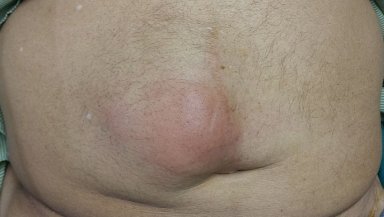
A recurrence is more likely to cause a new or returning bulge, particularly one that becomes more noticeable when standing, coughing or straining.
However, a recurrent hernia does not always produce an obvious lump, especially in the early stages.
This is why persistent symptoms should be examined rather than diagnosed at home.
Your surgeon may perform a physical examination and, if necessary, recommend imaging such as an ultrasound or CT scan.
What Symptoms Could Suggest a Hernia Recurrence?
The most noticeable sign is often a new bulge in or near the original surgical area.
You may notice that the lump appears when you stand and becomes smaller when you lie down.
It may become more prominent when you cough, sneeze, bend or lift.
You may also experience pressure, heaviness or discomfort similar to the symptoms you had before the original surgery.
Sometimes the change is subtle.
You may simply feel that the area looks or feels different from the way it did after recovery.
A recurrence can happen months or even years after surgery. The risk varies depending on the type of hernia, surgical technique, patient factors and other circumstances. The American College of Surgeons reports recurrence after inguinal hernia repair in a range of patients and notes that recurrence is less common with mesh repair than with non-mesh repair.
If you notice a new lump or persistent change at the repair site, arrange a review.
What If There Is a Lump but No Pain?
A lump after hernia surgery does not automatically mean recurrence.
This is important because several other things can cause swelling around the surgical site.
A seroma is a collection of clear fluid that can develop where the hernia used to be. It may feel like a soft or firm swelling and can sometimes remain for weeks or months before gradually settling.
A haematoma is a collection of blood and can cause swelling and bruising.
Scar tissue can also create a firm or lumpy feeling around the wound.
The American College of Surgeons identifies seroma and haematoma as recognised complications after inguinal hernia repair.
Your surgeon can usually distinguish these possibilities through examination and, when necessary, imaging.
Therefore, do not panic if you notice a lump.
But do not assume that it is harmless either.
A new or persistent lump should be assessed.
When Is Pain After Hernia Surgery Not Normal?
Pain becomes more concerning when it is getting worse rather than better.
You should contact your surgical team if the pain is severe, persistent or increasingly difficult to control.
The same applies if pain is accompanied by:
- Increasing swelling
- Redness
- Warmth
- Discharge from the wound
- A fever
- Persistent nausea or vomiting
- Significant abdominal swelling
- Difficulty passing urine
NHS guidance specifically lists worsening pain, wound changes, fever, increasing abdominal swelling and persistent sickness among symptoms that should prompt medical advice after inguinal hernia surgery.
Severe or rapidly worsening abdominal or groin pain should not be ignored.
These symptoms may indicate infection, bleeding, bowel problems or another complication that requires prompt assessment.
What Does Nerve Pain Feel Like?
Nerve-related pain can feel different from ordinary postoperative soreness.
Instead of a dull ache, you may experience:
- Burning
- Tingling
- Electric-shock sensations
- Stabbing pain
- Increased sensitivity to touch
Some people describe numbness around the surgical area.
These symptoms can occur because nerves in the groin or abdominal wall can be affected during surgery or during the healing process.
The American College of Surgeons reports that neuralgia, or nerve pain causing tingling or numbness, can occur after inguinal hernia repair.
If you experience persistent nerve-like pain, tell your surgeon exactly what it feels like.
The description can help the doctor determine whether the pain is likely to be nerve-related and whether further evaluation or specialist treatment is needed.
Can Chronic Pain Be Treated?
Yes.
Persistent pain after hernia surgery should not simply be accepted as something you have to live with.
The first step is to identify the likely cause.
Depending on the situation, treatment may involve:
- Medication
- Physical therapy
- Nerve-related treatments
- Other approaches
The international HerniaSurge guidelines recommend a multidisciplinary approach for chronic postoperative groin pain. They describe pharmacological and interventional treatments, including diagnostic and therapeutic nerve blocks, before selected patients are considered for more invasive procedures.
In carefully selected cases, surgery such as neurectomy or mesh removal may be considered.
These are not first-line solutions for every patient.
The appropriate treatment depends on the cause of the pain, the original repair and the individual patient's symptoms.
This is why specialist assessment is important before considering another operation.
When Could Pain Mean the Hernia Has Become an Emergency?
A recurrence is not necessarily an emergency.
However, a hernia that becomes trapped or strangulated can require urgent surgery.
Watch for:
- Sudden severe pain associated with a firm or painful lump that cannot be reduced
- Vomiting
- Significant abdominal swelling
- Severe abdominal pain
The American College of Surgeons explains that sharp abdominal pain and vomiting can indicate that intestine has become trapped and strangulated within the hernia, which is a surgical emergency.
If these symptoms occur, do not wait for a routine appointment.
Seek emergency medical attention.
How Can You Tell the Difference Between Healing Pain and Recurrence?
There is no reliable way to make this distinction at home.
However, the pattern can provide useful clues.
- Pain that gradually improves during the first few weeks is generally more consistent with normal recovery.
- Pain that persists for months, particularly if it affects everyday activities, deserves evaluation for chronic postoperative pain.
- Pain accompanied by a new or returning bulge may raise concern about recurrence.
- A sudden change involving severe pain, swelling, vomiting or a trapped lump requires urgent assessment.
The most important point is that these are patterns, not diagnoses.
Only a healthcare professional can determine what is actually happening.
What Should You Do If You Are Still in Pain Months After Surgery?
Do not simply wait indefinitely.
If you still have significant pain three months or more after surgery, especially if it affects walking, exercise, work, sleep or other daily activities, arrange an appointment with your surgeon.
Tell them:
- When the pain started
- Where it is located
- What it feels like
- Whether it is burning, sharp, aching, pulling or numb
- Whether you have noticed a new bulge
Your doctor may examine the repair and decide whether imaging or referral to a specialist pain or hernia service is appropriate.
The aim should be to identify the cause rather than simply suppress the symptom.
The Key Takeaway
Some pain after hernia surgery is expected.
During the first few days and weeks, soreness, swelling, bruising, tightness and pulling sensations can occur as the tissues heal. These symptoms should generally improve over time.
Persistent pain is different.
If pain continues beyond three months and is bothersome enough to affect everyday activities, it may be considered chronic postoperative pain. This does not automatically mean that the hernia has returned or that the mesh has caused a problem.
A recurrence is more likely when a new or returning bulge develops, particularly if it becomes more prominent when coughing, standing or straining.
However, pain without a bulge can have several causes, including nerve irritation and scar tissue.
If you experience worsening pain, a new lump, increasing swelling or symptoms such as fever and vomiting, seek medical assessment.
Conclusion
Pain after hernia surgery can be worrying, particularly when it occurs in the same area where you previously had a hernia.
The important thing is to understand that not all postoperative pain means something has gone wrong.
Soreness and tightness during the early recovery period are common. These symptoms generally improve as the tissues heal.
Pain that continues for months or interferes with normal activities deserves further assessment. It may be related to nerves, scar tissue or other changes around the repair. It may also occasionally be associated with recurrence.
A new or returning bulge is an important sign to report to your surgeon.
If the pain suddenly becomes severe or is accompanied by vomiting, significant swelling or a trapped painful lump, seek urgent medical attention.
Do not diagnose yourself based only on how the pain feels.
If you are concerned about pain after hernia surgery, a review by an experienced hernia surgeon can help determine whether you are experiencing normal healing, chronic postoperative pain, recurrence or another condition.
Suggested Call to Action
Still experiencing pain after hernia surgery or worried that your hernia has returned?
Consult an experienced general or hernia surgeon for an examination and appropriate evaluation to understand the cause of your symptoms and the next step in treatment.
References and Sources
American College of Surgeons – Inguinal and Femoral Hernia Repair