Can You Live With Gallstones Without Surgery? What Happens If You Keep Waiting?
Medicine Made Simple Summary
Not everyone with gallstones needs a cholecystectomy, or gallbladder removal surgery. Many people have gallstones without any symptoms and can live with them without treatment. The situation is different when gallstones cause repeated abdominal pain, inflammation, bile duct blockage or complications such as pancreatitis. In these cases, surgery may be recommended even if you currently feel well. Understanding the difference between silent and symptomatic gallstones, what can happen if you wait, and when surgery becomes necessary can help you make a more informed decision with your doctor.
What Are Gallstones?
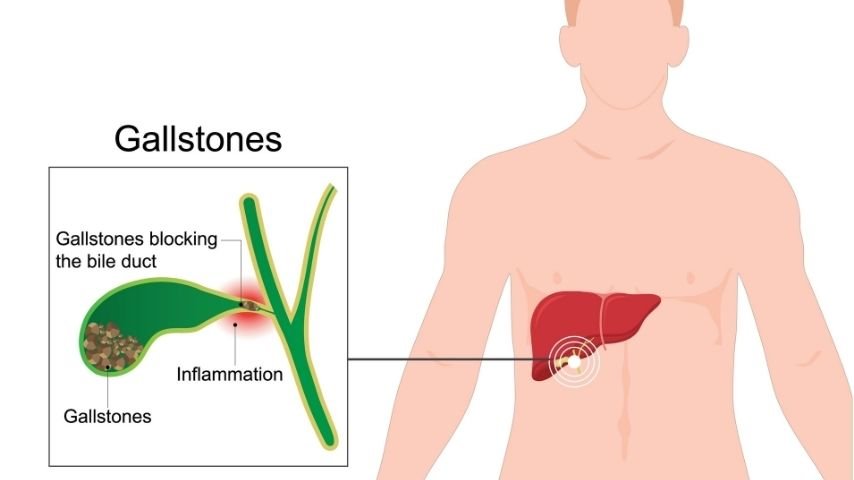
Gallstones are hard pieces of material that form inside the gallbladder. They can be as small as grains or considerably larger, and a person may have one stone or many.
The gallbladder is a small, pear-shaped organ located underneath the liver on the upper right side of the abdomen. Its main job is to store and concentrate bile, a digestive fluid produced by the liver. When you eat, particularly when a meal contains fat, the gallbladder contracts and releases bile into the small intestine to help with digestion.
Most people who have gallstones do not develop symptoms. These are often called silent gallstones. They may be discovered accidentally during an ultrasound or scan performed for another reason. In people with asymptomatic gallstones and a normal gallbladder and bile duct system, treatment is generally not required unless symptoms develop.
The situation changes when a gallstone blocks the normal flow of bile.
That is when pain and other problems can occur.
Why Do Gallstones Cause Pain?
Gallstones themselves do not always cause pain. The problem usually begins when a stone moves and temporarily blocks a bile duct.
After you eat, the gallbladder contracts to release bile. If a stone is blocking the exit, the gallbladder may contract against that obstruction. This can create pressure and cause what is commonly called a gallbladder attack or biliary colic.
The pain is often felt in the upper right or upper middle part of the abdomen. It may be severe and constant rather than coming and going like ordinary stomach cramps. It can last for more than 30 minutes and sometimes several hours. Some people also experience nausea or vomiting.
The stone may eventually move away from the duct.
The blockage then clears.
The pain settles.
You may feel completely normal again.
This is one of the reasons people sometimes wonder whether they really need treatment.
Can You Have Gallstones and Feel Completely Fine?
Yes.
In fact, this is very common.
Finding gallstones on an ultrasound does not automatically mean that you need surgery. If you have never had typical gallstone symptoms and the gallbladder and bile ducts are otherwise normal, your doctor may recommend simply monitoring the situation.
This is known as asymptomatic or silent gallstone disease.
You may never develop a problem from the stones.
NICE guidance specifically recommends reassuring people with asymptomatic gallbladder stones found in a normal gallbladder and normal biliary tree that they do not need treatment unless symptoms develop.
This distinction is important because patients sometimes see the word “stones” on their scan report and immediately assume that surgery is unavoidable.
It is not.
The important question is not simply whether you have gallstones.
It is whether the gallstones are causing problems.
What If You Have Already Had a Gallbladder Attack?
This changes the conversation.
Suppose you suddenly develop severe pain under your right ribs after dinner. The pain lasts for several hours and may spread towards your back. You feel nauseated and eventually go to a hospital. An ultrasound shows gallstones.
The following morning, the pain is gone.
A week later, you feel completely normal.
It is understandable to think that perhaps you can simply forget about the problem.
However, a previous attack may indicate that the gallstones are symptomatic.
NIDDK notes that although gallstone symptoms can disappear, they may return, and people who have experienced a gallbladder attack may need treatment.
This does not mean that every person with one episode automatically needs emergency surgery.
It means that you should discuss the episode with a doctor rather than assuming that the problem has permanently resolved.
What Happens If You Keep Waiting?
Waiting can mean different things depending on your situation.
If you have silent gallstones and no symptoms, your doctor may reasonably recommend observation.
If you have symptomatic gallstones, continued waiting may mean experiencing another attack.
Some people have another episode after weeks or months. Others may have several attacks over a shorter period.
There is also a possibility, although not everyone develops complications, that a stone can block a bile duct for longer and cause inflammation or infection.
Gallstones can cause acute inflammation of the gallbladder, known as acute cholecystitis. They can also obstruct the common bile duct and cause jaundice or contribute to pancreatitis if a stone blocks the pancreatic drainage pathway.
This is why symptomatic gallstones are treated differently from silent gallstones.
Can Diet Help You Avoid Surgery?
Changing your diet can help some people manage symptoms.
Many patients notice that large or fatty meals trigger discomfort. Reducing foods that clearly trigger symptoms may make attacks less frequent or less intense.
This can be useful while you are waiting for further evaluation or planned treatment.
But there is an important difference between controlling symptoms and treating the underlying cause.
Diet does not normally dissolve existing gallstones.
You may avoid fried foods, rich gravies and other high-fat meals and feel completely normal. However, the stones may still be inside the gallbladder.
This means that feeling better after changing your diet does not necessarily mean that the underlying gallstone disease has disappeared.
If your symptoms keep returning, speak with your doctor rather than continually restricting your diet without finding out what is happening.
Can You Wait If You Have Only Had One Attack?
This is one of the most common questions patients ask.
There is no single answer for everyone.
Your doctor will consider how typical the attack was, what the ultrasound showed, whether there was inflammation, whether the bile ducts were affected and whether you have other health conditions.
A single mild episode with uncertain cause is different from a classic gallbladder attack confirmed by imaging.
If the diagnosis is symptomatic gallstone disease, treatment may be recommended even if you currently feel fine.
NICE recommends offering laparoscopic cholecystectomy to people diagnosed with symptomatic gallbladder stones.
That recommendation does not mean every person with abdominal pain and gallstones needs surgery.
Your doctor first needs to establish whether the stones are actually responsible for the symptoms.
This is important because gallstones can exist alongside other digestive conditions.
What Is Cholecystectomy?
If gallstones are causing symptoms or complications, your doctor may recommend a procedure called cholecystectomy.
Cholecystectomy simply means surgical removal of the gallbladder.
The most common approach is laparoscopic cholecystectomy, also called keyhole gallbladder surgery.
During the procedure, the surgeon makes several small openings in the abdomen. A thin camera is inserted through one opening, while specialised surgical instruments are inserted through the others. The surgeon identifies and separates the gallbladder and then removes it.
The operation is usually performed under general anaesthesia.
The NHS states that most people who need gallbladder removal have keyhole surgery and that the operation usually takes about an hour, although individual circumstances vary.
Open surgery may sometimes be necessary, particularly when the gallbladder is severely inflamed or when keyhole surgery cannot be performed safely. Open surgery involves a larger incision and generally has a longer recovery period.
Why Remove the Gallbladder Instead of Just Removing the Stones?
A common question is, “Why can't the surgeon simply remove the stones and leave the gallbladder?”
The reason is that the gallbladder is where the stones formed.
If only the existing stones were removed, the gallbladder would remain and new stones could potentially form.
Removing the gallbladder removes the place where the stones are developing.
Importantly, the gallbladder is not an essential organ.
Your liver continues to produce bile after surgery. The bile simply flows directly from the liver through the bile ducts into the small intestine rather than being stored in the gallbladder.
This is why people can live normally without a gallbladder.
Do You Have to Have Surgery Immediately?
Not always.
The urgency depends on what is happening.
For someone with silent gallstones, there may be no need for surgery at all.
For someone with symptomatic gallstones, planned laparoscopic cholecystectomy is commonly recommended.
For someone with acute cholecystitis, the timing becomes more important. NICE recommends early laparoscopic cholecystectomy within one week of diagnosis for acute cholecystitis.
SAGES also identifies symptomatic gallstones, acute cholecystitis and certain gallstone-related complications as indications for laparoscopic surgery.
This is why you should not compare your situation with another person's.
Two people may both have “gallstones,” but their treatment recommendations can be completely different.
What If You Keep Having Attacks but They Always Settle?
This is a situation where it is particularly easy to delay treatment.
You may have an attack on a Sunday, recover by Monday and feel completely normal for several weeks.
Then it happens again.
Each time, the pain settles.
You may start thinking that because every attack eventually stops, there is no reason to consider surgery.
But repeated attacks are evidence that the gallstones are causing symptoms.
NIDDK notes that gallbladder attacks can recur after the first episode.
The fact that an attack settles does not guarantee that the next episode will be identical.
A future stone may remain trapped for longer or enter another part of the biliary system.
That is why recurrent attacks should be discussed with a healthcare professional.
Can Gallstones Suddenly Become an Emergency?
Yes.
Most gallstone-related symptoms are not immediately life-threatening, but complications can occur.
A stone can remain trapped and cause inflammation of the gallbladder. It can also block the common bile duct or contribute to pancreatitis.
Watch for symptoms that are more serious than your usual attack.
Severe or persistent abdominal pain, fever or chills, repeated vomiting, yellowing of the eyes or skin, dark urine or unusually pale stools require prompt medical assessment. These symptoms may indicate inflammation, infection or obstruction.
If you have severe abdominal pain with vomiting or jaundice, do not wait for your normal appointment.
Seek urgent medical attention.
Is Planned Surgery Better Than Emergency Surgery?
When surgery is appropriate, planned treatment can offer a more controlled setting for preparation and recovery.
Emergency surgery may be required when a complication develops.
SAGES notes that early laparoscopic cholecystectomy is preferred for many patients with acute cholecystitis who can safely undergo surgery and can reduce symptom relapse and hospital stay compared with delayed approaches.
This does not mean that everyone who delays surgery will eventually require an emergency operation.
It means that complications can change the situation.
If your surgeon has recommended planned cholecystectomy because your gallstones are symptomatic, ask what the risks and benefits of waiting are in your specific case.
That conversation is more useful than trying to decide based on how you feel on any particular day.
What Should You Ask Your Doctor Before Deciding?
If you are uncertain about surgery, start by asking whether your gallstones are actually causing your symptoms.
Ask what your ultrasound shows.
Ask whether there is any evidence of gallbladder inflammation or bile duct obstruction.
Ask what could happen if you continue to wait.
Ask whether dietary changes are a reasonable short-term approach in your case.
If surgery is recommended, ask why cholecystectomy is appropriate and whether laparoscopic surgery is suitable.
You can also ask about recovery, possible complications, your expected return to work and when you can resume exercise and normal eating.
These questions can help you understand the decision rather than simply being told that you “need surgery.”
What If You Are Afraid of Living Without a Gallbladder?
This is a common fear.
People sometimes imagine that the gallbladder is essential for digestion and that removing it will permanently change the way they eat.
That is generally not the case.
The gallbladder stores bile, but the liver continues to make bile after the gallbladder is removed.
The NHS states that you can live without a gallbladder and continue to eat a normal, healthy diet.
Some people experience temporary digestive changes after surgery, including loose stools or difficulty tolerating certain foods during the early recovery period.
These symptoms often improve as the body adjusts.
Your surgeon can explain what to expect based on your particular situation.
The Key Takeaway
Having gallstones does not automatically mean that you need surgery.
If you have silent gallstones and no symptoms, observation may be appropriate.
If your gallstones cause repeated pain, inflammation, bile duct obstruction or other complications, the balance changes.
A pain-free period does not necessarily mean the stones have disappeared. A stone may simply have moved away from the bile duct, allowing the symptoms to settle.
Diet can sometimes reduce symptoms, but it does not remove existing gallstones.
When gallstones are causing problems, cholecystectomy, or removal of the gallbladder, is the usual definitive treatment. Laparoscopic cholecystectomy is the standard approach for most suitable patients.
The right decision depends on your symptoms, investigations, medical history and individual circumstances.
Conclusion
The decision to have gallbladder surgery should not be based simply on whether you feel well today.
If you have gallstones but have never experienced symptoms, you may not need treatment at all.
If you have already experienced typical gallbladder attacks, particularly if they are recurring, it is worth discussing the future risks and treatment options with your doctor.
The aim is not to remove every gallbladder that contains a stone.
The aim is to treat gallstones when they are causing problems or creating a significant risk of complications.
If surgery is recommended, cholecystectomy removes the gallbladder and therefore removes the source of gallstone formation. The liver continues producing bile, and most people can live normally without the gallbladder.
If you are considering waiting, ask your doctor exactly what waiting means for you.
Ask what symptoms should bring you back to the hospital.
Ask how likely another attack is.
Ask whether your current scan suggests any complication.
And if you develop severe or persistent pain, fever, vomiting, jaundice, dark urine or pale stools, seek medical attention promptly.
You do not need to make the decision based on fear.
You need to make it based on a clear understanding of your condition and the options available to you.
Suggested Call to Action
Have gallstones and are unsure whether you should wait or undergo gallbladder removal?
Consult an experienced gastroenterologist or general surgeon to understand whether your gallstones are symptomatic, your risk of future attacks and whether laparoscopic cholecystectomy is appropriate for you.
References and Sources
NIDDK – Treatment for Gallstones
NIDDK – Symptoms and Causes of Gallstones