Why Do Piles Keep Coming Back? The Constipation, Straining and Toilet Habits That May Be Keeping Hemorrhoids Alive
Medicine Made Simple Summary
Hemorrhoid treatment aims to reduce swollen hemorrhoidal tissue, control bleeding or prolapse, and restore comfortable bowel movements. However, treatment may not prevent future episodes if constipation, straining or unhealthy toilet habits continue. A high-fibre diet, adequate fluids, regular physical activity and avoiding prolonged toilet sitting can help reduce pressure during bowel movements. For persistent or recurrent hemorrhoids, doctors may recommend medicines, office procedures or surgery depending on severity. Understanding and correcting the underlying bowel habits is an important part of long-term hemorrhoid management and may reduce the chance of repeated symptoms.
Introduction
You treated your piles, felt better, and thought the problem was finally over. Then the bleeding started again. Perhaps there was another painful swelling, itching, discomfort or a feeling that something was coming out while passing stool. It can be frustrating because it may seem as though the treatment worked only temporarily.
A common question is, “Why do my piles keep coming back?”
The answer is often not simply that the treatment failed. Hemorrhoids can return when the factors that place repeated pressure on the veins and supporting tissues around the anus continue. Constipation, hard stools, straining, prolonged toilet sitting, low fibre intake and irregular bowel habits can all contribute to hemorrhoidal symptoms. Pregnancy, ageing, chronic diarrhoea and repeated heavy lifting can also play a role.
This means that treating recurrent piles involves two separate questions. First, how do we control the hemorrhoids that are causing symptoms now? Second, what can be changed to reduce the chances of the problem returning?
Understanding the second question is especially important.
What Are Piles?
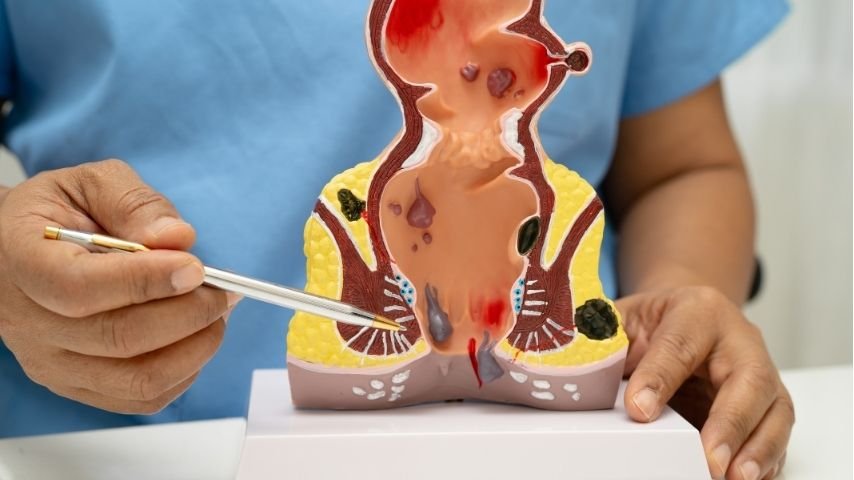
Piles, medically called hemorrhoids, are normal structures containing blood vessels and supporting tissue around the anus and lower rectum. They are part of the body's normal anatomy. Problems develop when these tissues become enlarged, swollen, irritated or displaced.
Hemorrhoids are broadly classified as internal or external.
Internal hemorrhoids develop inside the lower rectum. They commonly cause bright-red bleeding, particularly during or after a bowel movement. As they become larger, they may also protrude through the anus. External hemorrhoids develop beneath the skin around the anus and can cause swelling, itching and pain. A blood clot can sometimes form inside an external hemorrhoid and produce a painful lump.
This distinction matters because the symptoms and treatments can be different.
Why Do Hemorrhoids Keep Coming Back?
Hemorrhoids are often influenced by repeated pressure in the lower rectal and anal area. If you continue to strain during bowel movements, sit on the toilet for long periods or regularly pass hard stools, the same area can continue to experience stress even after an earlier episode has settled.
Think of it as repeatedly irritating an already sensitive area. The symptoms may disappear for a while, but if the trigger remains, they can return.
The American Society of Colon and Rectal Surgeons recommends assessing bowel habits, including stool consistency, frequency and ease of evacuation, because constipation can contribute to hemorrhoidal disease.
That is why long-term management should not focus only on creams or medicines. Your daily bowel routine matters too.
Constipation and Piles: What Is the Connection?
Constipation is more than simply going to the toilet less often.
A person may be constipated if stools are hard, dry or difficult to pass, if bowel movements require significant effort, or if there is a feeling that the bowel has not emptied completely.
When stool becomes hard, you are more likely to push harder to get it out. This increases pressure in the lower rectum and around the anal tissues.
If this happens occasionally, it may not create a major problem. But when it becomes a daily or weekly pattern, it can contribute to ongoing hemorrhoidal symptoms.
The cycle can look like this:
Low fibre or poor hydration → harder stool → straining → increased pressure → hemorrhoid irritation → bleeding or discomfort → fear of bowel movement → altered bowel habits → constipation again.
Breaking this cycle is one of the most useful things you can do to reduce recurrence.
Why Straining Is a Problem
Many people do not realise how much effort they use while passing stool.
When the stool does not pass easily, they may hold their breath and push forcefully. This increases pressure in the abdomen and pelvic region.
Repeated straining can aggravate hemorrhoids.
The solution is not to force the bowel movement harder. It is to make the stool easier to pass and allow the bowel to empty with less effort.
If you regularly need to strain despite making dietary and lifestyle changes, it is worth discussing the problem with a doctor. Persistent difficulty may sometimes be related to an underlying bowel or pelvic-floor problem rather than simply a lack of fibre.
The Toilet Habit That Could Be Making Things Worse
One of the most overlooked factors is prolonged toilet sitting.
For many people, the bathroom has become a place to use the phone. A person may sit down to pass stool and then spend another 10, 15 or even 20 minutes scrolling through messages or social media.
This is not ideal for people who are prone to hemorrhoids.
The longer you remain seated on the toilet, the longer the anal region remains exposed to pressure. The ASCRS has highlighted prolonged toilet time and straining as dysfunctional toileting behaviours that should be addressed in patients with hemorrhoids.
A simple change is to leave the phone outside the bathroom and avoid sitting longer than necessary.
Should You Ignore the Urge to Pass Stool?
No.
Your body gives you a natural signal when it is time to have a bowel movement. Repeatedly ignoring that signal can contribute to constipation.
This is particularly common among people who are busy at work, travelling or uncomfortable using public toilets.
When stool remains in the colon for longer, more water can be absorbed from it. The stool may become harder and more difficult to pass.
NIDDK recommends responding to the urge to have a bowel movement as part of healthy bowel habits.
This does not mean that you need to rush to the toilet every time you feel a minor sensation. It means you should avoid routinely postponing bowel movements for long periods.
Can Your Diet Cause Recurrent Piles?
Your diet can influence the consistency of your stool, which in turn can affect how much you strain.
A diet that contains enough fibre helps make stool softer and easier to pass. Fibre is found naturally in fruits, vegetables, whole grains, pulses, beans, nuts and seeds.
For people with hemorrhoids, increasing dietary fibre is one of the most consistently recommended measures.
The ASCRS guidelines recommend dietary and behavioural modifications as first-line treatment for symptomatic hemorrhoids, with increased fibre and adequate fluid intake forming an important part of this approach.
However, fibre should be increased gradually. Suddenly adding a large amount can cause bloating, gas and abdominal discomfort.
The goal is to make fibre a regular part of your diet rather than treating it as a temporary remedy during a flare-up.
What Foods Can Help?
There is no special “piles diet.” Instead, focus on foods that support regular, soft bowel movements.
Good choices include:
- Fruits such as papaya, pears, apples and oranges
- Vegetables and leafy greens
- Beans and pulses
- Whole grains
- Oats
- Nuts and seeds
- Other naturally fibre-rich foods
The exact amount of fibre you need depends on your overall diet and health. If you have persistent constipation, a doctor or dietitian can help you determine an appropriate fibre intake.
What About Water?
Fibre works better when you are adequately hydrated.
If you increase fibre significantly but do not drink enough fluids, you may experience bloating or harder stools rather than the improvement you expected.
NIDDK recommends drinking water and other liquids as advised by your healthcare professional, particularly when increasing fibre.
Your fluid needs are not identical to someone else's. Climate, activity level, diet and medical conditions all matter. People with certain heart or kidney conditions may have specific fluid restrictions, so they should follow their doctor's advice.
Can Exercise Help?
Regular physical activity can support normal bowel function and help reduce constipation.
You do not need an extreme exercise programme.
Walking, cycling, swimming and other regular activities can be useful. The important factor is consistency.
If your daily routine involves sitting at a desk for several hours, try to include movement throughout the day rather than remaining seated continuously.
Exercise can also help with maintaining a healthy body weight, which may have additional benefits for overall digestive and cardiovascular health.
Does Heavy Lifting Cause Piles?
Heavy lifting is sometimes associated with hemorrhoidal symptoms because it can increase pressure within the abdomen, particularly when a person holds their breath and strains while lifting.
This does not mean that everyone with piles must stop strength training.
If you exercise regularly, focus on proper technique and avoid unnecessary breath-holding and excessive straining. If you notice that particular exercises consistently trigger symptoms, discuss them with your doctor.
NIDDK lists frequent heavy lifting among factors that may increase the likelihood of developing hemorrhoids.
Can Diarrhoea Cause Hemorrhoids Too?
Yes.
Piles are often associated with constipation, but chronic diarrhoea and frequent bowel movements can also irritate the anal area.
Repeated bowel movements can increase irritation, while frequent wiping can make the skin around the anus sore.
If diarrhoea keeps occurring, treating the underlying cause becomes important. Simply treating the hemorrhoids without addressing chronic diarrhoea may not solve the problem.
Why Do Piles Return Even After Treatment?
Sometimes people assume that if hemorrhoids return, the previous treatment must have failed.
That is not necessarily true.
Hemorrhoidal disease can be influenced by several factors. Age can weaken the supporting tissues around the anus and rectum. Pregnancy can increase pressure in the pelvic region. Chronic constipation or diarrhoea can continue to irritate the area. Some people may also have anatomical or lifestyle factors that make them more prone to recurrence.
Another possibility is that the original symptoms were not entirely caused by hemorrhoids.
Rectal bleeding and anal discomfort can occur with other conditions as well. This is why persistent or recurrent symptoms should be reassessed rather than repeatedly self-treated.
Are Creams Enough to Prevent Recurrence?
Hemorrhoid creams can provide temporary relief from symptoms such as itching, irritation and swelling.
However, they generally do not correct the bowel habits that contribute to recurrent hemorrhoids.
If constipation and straining continue, symptoms may return after the effect of the treatment wears off.
NIDDK notes that home treatment can include dietary and bowel-habit changes, while medications may help relieve mild symptoms. Persistent or more severe hemorrhoids may require medical procedures.
This is why repeatedly buying another cream without understanding why the problem keeps returning may not be the best long-term strategy.
Can Lifestyle Changes Completely Cure Piles?
Not always.
Lifestyle changes can be very effective for many people, especially when symptoms are related to constipation and unhealthy bowel habits.
But hemorrhoids can become sufficiently enlarged or prolapsed that lifestyle changes alone may not resolve the problem.
In such cases, doctors may consider procedures such as rubber band ligation or other treatments. More advanced or persistent hemorrhoids may sometimes require hemorrhoidectomy or another surgical approach.
The correct treatment depends on the type, size, grade and symptoms of the hemorrhoids.
What If Piles Keep Coming Back Despite Good Habits?
This is an important point.
If you have improved your diet, increased fibre, maintained adequate hydration, stopped straining and reduced toilet time, but your hemorrhoids continue to bleed or prolapse, do not simply assume that you need to try another cream.
You may need a proper examination.
A doctor can assess the anus and rectum and determine whether hemorrhoids are actually responsible for your symptoms. Depending on the situation, an examination may include inspection, a digital rectal examination and sometimes anoscopy.
The evaluation may also identify another condition that requires different treatment.
When Should You See a Doctor?
Recurrent rectal bleeding should be evaluated, particularly when it continues despite home treatment.
You should seek medical advice if you have persistent bleeding, significant pain, hemorrhoids that repeatedly protrude, a persistent lump, or symptoms that interfere with daily activities.
It is particularly important not to assume that all rectal bleeding is caused by piles. NIDDK notes that rectal bleeding can also occur with other digestive conditions, including inflammatory bowel disease and colorectal cancer.
Urgent medical attention is appropriate when bleeding is heavy or associated with severe pain, abdominal symptoms, diarrhoea or fever.
A Practical Approach to Preventing Recurrent Piles
Preventing piles does not require an elaborate routine. It requires consistency.
Start by making bowel movements easier. Include adequate fibre in your regular diet and drink enough fluids according to your health needs. Stay physically active and avoid repeatedly delaying the urge to pass stool.
When you use the toilet, avoid prolonged sitting and excessive pushing. If the stool does not pass easily, do not keep straining for a long time.
If constipation remains a problem despite these changes, speak with a healthcare professional. You may need an appropriate stool-softening strategy or evaluation for another cause of constipation.
The Important Difference Between Prevention and Treatment
It is useful to understand that preventing recurrence and treating an existing hemorrhoid are not exactly the same thing.
If you currently have painful or bleeding hemorrhoids, lifestyle changes may reduce irritation and improve bowel movements, but they may not immediately eliminate enlarged hemorrhoidal tissue.
On the other hand, even after a procedure successfully treats the hemorrhoids, healthy bowel habits remain important.
This is why long-term care matters.
Treatment can address the current problem. Better bowel habits can help reduce the factors that contributed to it.
Final Thoughts
If your piles keep coming back, the answer may be sitting in your daily routine.
Repeated constipation, hard stools, straining and prolonged toilet sitting can all contribute to hemorrhoidal symptoms. A low-fibre diet, inadequate fluid intake, inactivity and repeatedly ignoring the urge to pass stool can also make constipation more likely.
The solution is not to blame yourself.
Instead, look at the pattern.
Are your stools hard? Do you strain every morning? Do you spend a long time on the toilet with your phone? Do you routinely postpone bowel movements? Are you eating enough fibre? Are you drinking enough fluids for your individual needs?
Changing these habits can make a meaningful difference.
But if bleeding, prolapse or pain continues despite these changes, it is time to move beyond repeated self-treatment. A specialist can determine the severity of the hemorrhoids and explain whether dietary measures, medication, an office procedure or surgery is appropriate.
The goal is not simply to stop today's bleeding.
It is to understand why the problem keeps returning and create a treatment plan that gives you lasting relief.
Call to Action
If you are experiencing recurrent piles despite improving your diet and bowel habits, consult a qualified colorectal or general surgeon with expertise in proctology. A proper evaluation can determine whether your symptoms are caused by hemorrhoids, assess their severity and help you understand whether conservative treatment, a minimally invasive procedure or surgery is appropriate for you.
References and Sources
American Society of Colon and Rectal Surgeons (ASCRS)
National Institute of Diabetes and Digestive and Kidney Diseases (NIDDK)