Can Piles Heal Without Surgery? What Happens If You Keep Delaying Hemorrhoid Treatment?
Medicine Made Simple Summary
Hemorrhoid treatment does not always require surgery. Many mild piles, particularly early internal hemorrhoids, can improve with fibre-rich foods, adequate fluids, stool-softening measures and healthier toilet habits that reduce constipation and straining. Some prolapsed hemorrhoids may also settle without an operation. When symptoms continue, doctors can use minimally invasive procedures such as rubber band ligation, sclerotherapy or infrared treatment. Surgery is generally considered when hemorrhoids are large, significantly prolapsed, repeatedly symptomatic or do not respond to other treatments. The right approach depends on the hemorrhoid type, severity, symptoms and response to treatment.
Introduction
The first reaction after being diagnosed with piles is often to ask, “Do I really need surgery?”
It is an understandable question. The word surgery can immediately bring concerns about pain, hospitalisation, recovery time, cost and time away from work or family.
The good news is that not every person with piles needs surgery.
Many hemorrhoids can improve with changes in diet and bowel habits. Some can be treated with medicines or simple office-based procedures that do not involve a major operation. Surgery is generally reserved for selected patients, particularly those with large, significantly prolapsed or persistent hemorrhoids that do not respond adequately to less-invasive treatment. (niddk.nih.gov)
However, there is another important question that patients sometimes overlook.
If the piles are not causing much trouble today, is it safe to keep delaying treatment?
The answer depends on what type of hemorrhoid you have, how advanced it is and what symptoms you are experiencing.
Understanding when piles can settle on their own and when they need medical treatment can help you avoid both unnecessary surgery and unnecessary delay.
What Are Piles?
Piles, medically known as hemorrhoids, are normal blood-vessel-containing structures around the anus and lower rectum.
Everyone has hemorrhoidal tissue.
It becomes a problem when these tissues become enlarged, swollen, irritated or displaced.
There are two broad types of hemorrhoids.
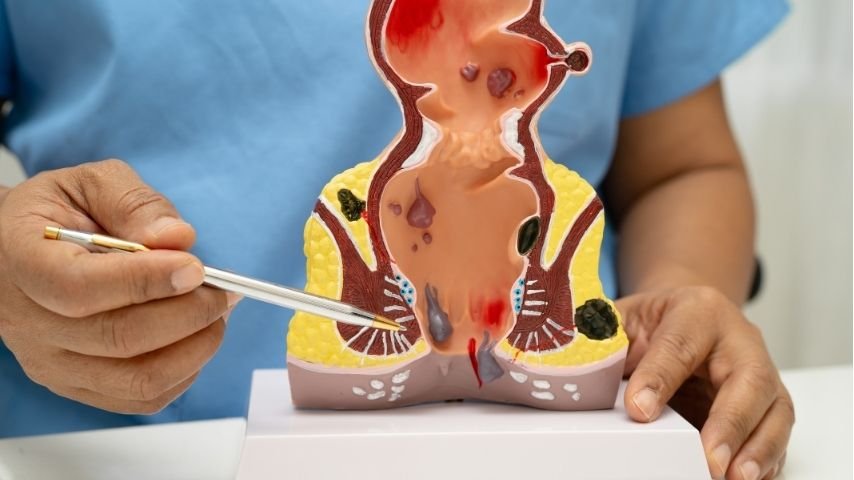
Internal hemorrhoids develop inside the anal canal and lower rectum. They commonly cause bright-red bleeding and may sometimes protrude through the anus.
External hemorrhoids develop underneath the skin around the anus. They may cause itching, swelling, discomfort or a painful lump, particularly if a blood clot develops inside the hemorrhoid. (niddk.nih.gov)
The treatment approach depends partly on which type you have.
Can Piles Actually Heal on Their Own?
Yes, in many cases.
This is especially true for mild hemorrhoidal symptoms.
NIDDK notes that hemorrhoids can often be managed at home with dietary and toilet-habit changes. It also states that most prolapsed internal hemorrhoids may go away without at-home treatment, although severely prolapsed or bleeding hemorrhoids may require medical treatment. (niddk.nih.gov)
This does not mean that every hemorrhoid will disappear permanently without treatment.
It means that mild symptoms can sometimes settle when the factors irritating the hemorrhoids are corrected.
For example, if constipation is causing repeated straining, improving stool consistency and reducing straining can allow the symptoms to settle.
Why Do Piles Sometimes Improve Without Surgery?
Hemorrhoids often become symptomatic because of pressure and irritation around the anal region.
Constipation can make stools hard and difficult to pass. Straining increases pressure. Sitting on the toilet for long periods can also contribute. A low-fibre diet, chronic diarrhoea and other bowel-habit problems can make symptoms worse. (niddk.nih.gov)
When these triggers are reduced, the swelling and irritation can settle.
The process is similar to many other problems in which removing the trigger allows the body to recover.
However, this does not mean that a large, permanently prolapsed hemorrhoid will necessarily return to completely normal anatomy simply because you improve your diet.
That distinction is important.
Which Piles Are More Likely to Improve Without Surgery?
Mild internal hemorrhoids are generally more likely to respond to conservative treatment.
Patients with early-stage hemorrhoids may experience bleeding or mild discomfort without significant prolapse. Improving fibre intake, maintaining adequate hydration and avoiding straining may be enough to control symptoms.
Small external hemorrhoids can also settle, particularly when they are caused by temporary irritation or a minor episode of swelling.
However, the situation changes when hemorrhoids become large, repeatedly prolapse or remain outside the anus.
At that point, lifestyle changes may still improve bowel habits, but they may not completely correct the underlying structural problem.
The Role of Fibre in Natural Recovery
Fibre is one of the most important parts of conservative hemorrhoid treatment.
When you eat enough fibre, stools generally become softer and easier to pass. This can reduce the amount of pushing required during bowel movements.
Good sources of fibre include fruits, vegetables, whole grains, beans, pulses, nuts and seeds.
NIDDK recommends increasing dietary fibre because it can make stools softer and easier to pass and can help treat and prevent hemorrhoids. (niddk.nih.gov)
The important point is consistency.
Adding fibre to your diet for two days and then returning to a low-fibre diet is unlikely to change a long-standing constipation problem.
The goal is to develop a bowel routine that reduces repeated pressure on the hemorrhoids.
Why Hydration Matters
Fibre works best when you are adequately hydrated.
When you increase fibre without drinking enough fluids, you may experience bloating or discomfort, and your stools may not become as easy to pass as expected.
Adequate fluid intake can help fibre work more effectively. However, the right amount varies between individuals based on factors such as activity, climate and medical conditions. (niddk.nih.gov)
People who have been advised to restrict fluids because of certain medical conditions should follow their healthcare professional's advice rather than increasing fluids independently.
Why Straining Needs to Stop
Straining is one of the most important habits to address if you want piles to settle and reduce the risk of recurrence.
When stool does not pass easily, many people instinctively push harder.
This can increase pressure around the hemorrhoidal tissues.
Repeated straining can keep the area irritated even when other aspects of your lifestyle are healthy.
Instead of forcing the bowel movement, the focus should be on making the stool easier to pass.
If constipation remains persistent despite dietary changes, a doctor can recommend appropriate measures to soften the stool and investigate whether another problem is contributing to constipation.
What About Sitting on the Toilet for Too Long?
This is a surprisingly common problem.
Many people take their phone into the bathroom and spend ten or twenty minutes sitting on the toilet.
They may not actually be passing stool for most of that time.
Prolonged toilet sitting can increase pressure around the anal area and is considered an unhealthy bowel habit for people prone to hemorrhoids.
NIDDK specifically recommends avoiding sitting on the toilet for long periods as part of hemorrhoid management and prevention. (niddk.nih.gov)
A simple habit change is to use the toilet when you need to pass stool and avoid staying there unnecessarily.
What Happens If You Keep Delaying Treatment?
This depends on the severity of the hemorrhoids.
If you have mild symptoms that are improving, a short period of conservative treatment may be reasonable.
But if you have persistent bleeding, repeated prolapse, significant pain or worsening symptoms, continuing to delay evaluation may allow the condition to remain untreated.
In some patients, the hemorrhoids may become increasingly difficult to manage.
A prolapsed hemorrhoid may become more swollen and irritated. Persistent bleeding can occasionally contribute to anaemia. In severe cases, a prolapsed internal hemorrhoid can become strangulated, which means its blood supply is compromised. (niddk.nih.gov)
This does not mean that every untreated hemorrhoid will become dangerous.
It means that persistent or worsening symptoms should not be ignored simply because piles are usually considered a minor condition.
Can Grade 1 Piles Heal Without Surgery?
Yes, many Grade 1 internal hemorrhoids can be managed without surgery.
Because Grade 1 hemorrhoids remain inside the anal canal, they are generally less advanced in terms of prolapse.
The first approach is usually to address constipation, increase fibre, maintain adequate fluid intake and avoid straining.
If bleeding continues despite these changes, a doctor may recommend an office procedure.
Surgery is generally not the first option for uncomplicated Grade 1 hemorrhoids.
Can Grade 2 Piles Heal Without Surgery?
Many Grade 2 hemorrhoids can also be managed without surgery.
Grade 2 hemorrhoids come out during bowel movements but return inside by themselves.
If symptoms are mild, dietary and bowel-habit changes may be sufficient.
If symptoms continue, a minimally invasive office procedure such as rubber band ligation may be considered. The procedure places a small band around the base of an internal hemorrhoid, reducing its blood supply so that the treated tissue shrinks and eventually falls away. (niddk.nih.gov)
The ASCRS guidelines identify office-based procedures as effective treatment for most symptomatic Grade I and Grade II hemorrhoids when conservative treatment is not enough. (fascrs.org)
Can Grade 3 Piles Heal Without Surgery?
Some Grade 3 hemorrhoids can be managed without a major operation, but the situation is more complicated.
Grade 3 hemorrhoids come out during bowel movements and need to be pushed back manually.
Selected patients may still benefit from office-based treatment, depending on the size and characteristics of the hemorrhoids.
However, if the hemorrhoids are large, repeatedly prolapsing, associated with external disease or causing significant symptoms, surgery may provide a more appropriate long-term solution.
The ASCRS guidelines specifically note that selected patients with Grade III hemorrhoids may be treated with office-based procedures. (fascrs.org)
This is why Grade 3 does not automatically equal surgery.
Can Grade 4 Piles Heal Without Surgery?
Grade 4 hemorrhoids are different.
They remain outside the anus and cannot be pushed back inside.
Lifestyle changes can still improve constipation and reduce straining, which may prevent further irritation. However, they are unlikely to completely reverse a permanently prolapsed hemorrhoid.
Large or persistently prolapsed hemorrhoids may require surgical treatment.
NIDDK notes that hemorrhoidectomy may be used for large external hemorrhoids and prolapsing internal hemorrhoids that do not respond to other treatments. (niddk.nih.gov)
Therefore, if a hemorrhoid remains outside continuously, it is better to have it assessed rather than assuming it will eventually disappear on its own.
Is Medicine Enough to Cure Piles?
Medicines can be useful, but they do not always eliminate the underlying hemorrhoid.
Creams, ointments and suppositories can help relieve symptoms such as itching, irritation and swelling.
They may be useful for short-term symptom control.
However, if constipation, straining or prolapse continues, medicines alone may not address the underlying problem.
NIDDK notes that over-the-counter hemorrhoid products may help mild symptoms, but recommends medical follow-up if symptoms do not improve after about one week of home treatment. (niddk.nih.gov)
This is why repeatedly applying creams without addressing persistent symptoms is not a good long-term strategy.
What Are Non-Surgical Procedures for Piles?
There is an important difference between non-surgical treatment and doing nothing.
If lifestyle changes are not enough, you may not necessarily need a major operation.
Doctors can treat suitable internal hemorrhoids using office-based procedures.
Common options include rubber band ligation, sclerotherapy, infrared coagulation and electrocoagulation. These treatments are generally performed without the type of major surgery associated with hemorrhoidectomy. (niddk.nih.gov)
The NHS also lists these procedures as hospital treatments that can be performed without surgery, depending on the individual patient's condition. (nhs.uk)
This gives patients an important middle option between simply waiting and undergoing surgery.
Rubber Band Ligation: A Common Non-Surgical Procedure
Rubber band ligation is commonly used for internal hemorrhoids that bleed or prolapse.
The doctor places a small rubber band around the base of the hemorrhoid.
The band cuts off its blood supply.
The treated tissue shrinks and eventually falls away.
Scar tissue forms in the area, which can help reduce further prolapse. (niddk.nih.gov)
The procedure is performed by a healthcare professional. Patients should never attempt to perform rubber band ligation themselves.
It is particularly useful for appropriately selected internal hemorrhoids and can often be performed without the need for a major operation.
Sclerotherapy and Other Office Treatments
Sclerotherapy involves injecting a solution into an internal hemorrhoid. The injection causes scar tissue to form, which can reduce blood flow and shrink the hemorrhoid.
Infrared coagulation uses infrared energy to create controlled tissue changes that reduce the blood supply to the hemorrhoid.
Electrocoagulation uses an electrical current for a similar purpose.
The choice depends on the hemorrhoid's characteristics and the doctor's assessment.
These procedures can be useful alternatives to surgery for selected patients.
When Does Surgery Become More Likely?
Surgery becomes more likely when hemorrhoids are large, significantly prolapsed, repeatedly symptomatic or do not respond adequately to conservative measures and office-based treatments.
A hemorrhoidectomy removes the problematic hemorrhoidal tissue.
According to NIDDK, hemorrhoidectomy may be considered for large external hemorrhoids and prolapsing internal hemorrhoids that have not responded to other treatments. (niddk.nih.gov)
The NHS similarly notes that surgery may be recommended when piles are large or when other treatments have not worked. (nhs.uk)
The important point is that surgery is not necessarily the first step.
It is one option within a treatment pathway.
Why Do Doctors Sometimes Recommend Surgery Even When Piles Are Not Very Painful?
Pain is not the only reason for treatment.
A patient may have little pain but experience frequent bleeding or significant prolapse.
Another patient may have difficulty keeping the area clean because hemorrhoids repeatedly come out.
Someone else may have large hemorrhoids that are not responding to office treatment.
In these situations, surgery may be recommended because the structural problem is significant, even if pain is not the main symptom.
This is why treatment decisions should not be based only on the question, “How much does it hurt?”
Can You Keep Living With Piles Without Treatment?
Some people can live with mild hemorrhoids for long periods without serious complications.
However, that does not mean persistent symptoms should automatically be ignored.
If you repeatedly experience bleeding, prolapse, pain or swelling, it is worth finding out exactly what is causing the symptoms and whether treatment could prevent them from becoming more troublesome.
The NHS recommends seeking medical advice if piles keep coming back or symptoms worsen or do not improve after home treatment. (nhs.uk)
A consultation does not automatically mean you will be advised to undergo surgery.
In many cases, the purpose of the consultation is simply to understand the condition and determine the least invasive treatment that is appropriate.
When Is Waiting Reasonable?
A short period of conservative management may be reasonable when symptoms are mild and improving.
For example, if you have a small hemorrhoid flare after a period of constipation and the bleeding or discomfort is settling after improving your bowel habits, you may not need immediate procedural treatment.
However, waiting becomes less appropriate when symptoms are persistent, recurrent or worsening.
The difference is the trend.
If the symptoms are improving, conservative treatment may be working.
If they keep returning or becoming more severe, the underlying problem needs assessment.
When Should You See a Doctor?
You should arrange a medical evaluation if you have rectal bleeding, particularly if it continues or returns repeatedly.
You should also seek medical advice if your piles are getting worse, keep coming back, remain prolapsed or are not improving after home treatment. (nhs.uk)
This is important because not all rectal bleeding is caused by hemorrhoids.
Bleeding can also occur with anal fissures, inflammatory bowel disease, polyps and colorectal cancer. (niddk.nih.gov)
You should seek urgent medical attention if you have severe anal pain with bleeding, particularly when accompanied by abdominal pain, diarrhoea or fever. Heavy or continuous rectal bleeding also requires urgent assessment. (niddk.nih.gov)
What Should You Do Before Seeing a Doctor?
There are several sensible steps you can take while arranging an evaluation.
Focus on making bowel movements easier rather than trying to force them.
Increase fibre gradually through foods such as fruits, vegetables, whole grains, pulses and beans. Maintain adequate fluid intake according to your individual health needs. Avoid prolonged toilet sitting and excessive straining.
If constipation is persistent, speak with a healthcare professional about appropriate stool-softening or laxative options rather than repeatedly taking medicines without guidance.
These measures can help reduce symptoms even if you eventually need a procedure.
The Biggest Mistake: Assuming “No Surgery” Means “No Treatment”
Some patients hear that their piles do not need surgery and conclude that they should simply ignore them.
That is not what it means.
There are several levels of treatment.
The first may be lifestyle and bowel-habit changes.
The next may involve medicines or stool-softening measures.
If symptoms continue, an office procedure may be appropriate.
Surgery may be considered when the hemorrhoids are large, advanced or resistant to other treatments.
This step-by-step approach allows doctors to use the least invasive treatment that is appropriate for the patient's condition.
The Second Biggest Mistake: Choosing Surgery Too Quickly
The opposite mistake is assuming that surgery is the only definitive solution.
Many patients with early-stage hemorrhoids can improve without surgery.
Some patients with Grade 2 and selected Grade 3 hemorrhoids may benefit from office-based procedures rather than a hemorrhoidectomy.
The goal is not to avoid surgery at all costs.
The goal is to use the right treatment for the right condition.
Final Thoughts
So, can piles heal without surgery?
Yes, many can.
Mild hemorrhoids may settle when constipation, straining and unhealthy toilet habits are corrected. Increasing fibre, maintaining adequate fluid intake, staying physically active and avoiding prolonged toilet sitting can all support healthier bowel movements. (niddk.nih.gov)
Some patients may need more than lifestyle changes but still may not need a major operation. Office-based treatments such as rubber band ligation, sclerotherapy, infrared coagulation and electrocoagulation can treat selected internal hemorrhoids. (niddk.nih.gov)
Surgery becomes more likely when hemorrhoids are large, significantly prolapsed, repeatedly symptomatic or resistant to other treatments.
The important thing is not to make the decision based on fear.
Do not assume that every pile needs surgery.
But also do not assume that every pile will disappear if you simply wait.
If symptoms are mild and improving, conservative treatment may be appropriate.
If symptoms are persistent, recurrent or worsening, get evaluated.
A specialist can determine whether you need no procedure, a minimally invasive treatment or surgery.
The best treatment is the one that matches the severity of your hemorrhoids and gives you meaningful, lasting relief.
Call to Action
If your piles are recurring, bleeding frequently, coming out during bowel movements or failing to improve despite dietary and lifestyle changes, consult a qualified colorectal or general surgeon with expertise in proctology. An evaluation can determine the type and severity of your hemorrhoids and help you understand whether conservative treatment, a minimally invasive office procedure or surgery is appropriate. Getting assessed does not mean you will automatically need an operation; it means you can choose treatment based on the actual condition rather than continuing to guess or delay.
References and Sources
National Institute of Diabetes and Digestive and Kidney Diseases (NIDDK)
National Institute of Diabetes and Digestive and Kidney Diseases (NIDDK)
National Institute of Diabetes and Digestive and Kidney Diseases (NIDDK)