What Spine Problems Can Endoscopic Surgery Actually Fix? — Herniated Discs, Stenosis, Nerve Compression Explained

Medicine Made Simple Summary
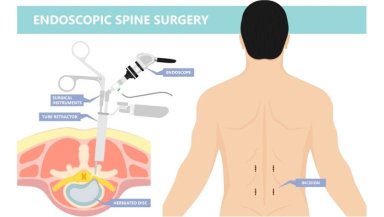
Endoscopic spine surgery treats many common causes of back or leg pain by removing pressure from irritated nerves through a tiny incision. It is especially helpful for slipped discs, nerve compression and spinal stenosis. Surgeons reach the problem area with a thin tube and camera instead of cutting through large amounts of muscle. This allows them to remove the exact tissue causing pain while keeping healthy structures intact. Endoscopic surgery works best for conditions where a specific disc fragment, bone spur or tight space is squeezing a nerve.
Many people hear about endoscopic spine surgery online or from friends and wonder whether it can help their condition. Forum discussions often include questions like:
- “Is my disc herniation treatable with the endoscope?”
- “Can stenosis really be fixed without open surgery?”
- “Does endoscopic surgery help nerve pain or only back pain?”
The truth is simple. Endoscopic spine surgery is powerful, but it is designed for specific structural problems in the spine. This article explains these problems in clear language so you can understand exactly what the surgery can and cannot fix.
Understanding How Spine Problems Cause Pain
Before exploring which conditions can be treated, it helps to understand why pain happens in the first place. The spine contains bones (vertebrae), cushions (discs) and nerves. When something pushes, rubs or squeezes a nerve, pain develops.
Pain may feel like
- Sharp shooting sensations
- Numbness
- Tingling
- Burning
- Weakness
- Deep aching
Endoscopic spine surgery works best when the source of this pressure is well-defined and reachable through a narrow path.
Condition 1 : Slipped Disc
What Is a slipped disc?
Between each vertebra is a disc that acts like a shock absorber. When part of the disc pushes out, it may pinch a nearby nerve. This is called a slipped disc or disc herniation.
Slipped discs can cause
- Sudden back or neck pain
- Pain shooting down the leg (sciatica)
- Pain shooting down the arm
- Numbness or tingling
- Weakness in a limb
How Endoscopic Surgery Helps
Many patients choose endoscopic surgery because it focuses on removing only the piece of disc causing the pressure.
What the surgeon can do with the endoscope:
- Remove the herniated fragment precisely
- Protect healthy disc tissue
- Avoid cutting large muscles
- Free the compressed nerve root gently
Who Benefits Most
Endoscopic surgery is especially effective when
- Leg pain is stronger than back pain
- MRI shows a clear single-level herniation
- Symptoms do not improve after physiotherapy or medicines
- Pain interferes with walking, sleeping or working
Suggested Image
Illustration of a herniated disc pressing on a nerve with a tool removing the fragment.
Condition 2: Foraminal Stenosis (Narrowing of the Nerve Exit Hole)
What Is Foraminal Stenosis?
Nerves exit the spine through small openings called foramina. Over time, these openings may narrow due to bone growth, disc collapse or ligament thickening.
This narrowing can cause
- Pain along the nerve path
- Weakness or numbness
- Difficulty standing or walking long distances
How Endoscopic Surgery Helps
The endoscope allows surgeons to reach the foramen — a tight space — without removing large amounts of bone or muscle.
Benefits include:
- A clear view of the narrowed foramen
- Ability to trim bone spurs precisely
- Ability to release trapped nerves
- Smaller wound and faster recovery
Who Benefits Most
Patients with
- Sciatica that worsens with standing
- Pain during walking but relief when sitting
- MRI showing nerve compression in the foramen
Suggested Image
Side-by-side comparison of a normal foramen vs a narrowed one.
Condition 3: Central Spinal Stenosis (Narrowing of the Main Spinal Canal)
What Is Spinal Stenosis?
Spinal stenosis happens when the central spinal canal becomes narrow. This canal carries nerves to the legs. When crowded, nerves become irritated.
Symptoms often include:
- Back pain
- Leg heaviness
- Cramping during walking
- Tingling or weakness
- Relief when bending forward
How Endoscopic Surgery Helps
Endoscopic tools can help remove thickened ligaments and small bone overgrowths that cause narrowing.
What can be corrected endoscopically:
- Tight ligaments compressing nerves
- Small bone spurs
- Localized narrowing
Limitations
Endoscopic surgery works best for mild to moderate stenosis or one-level stenosis. Very severe or multi-level narrowing may require more extensive surgery.
Suggested Image
Diagram showing stenosis with narrowed canal and post-surgery widened canal.
Condition 4: Recurrent Disc Herniation
What Is a Recurrent Herniation?
Some patients previously had spine surgery and the disc herniates again. Scar tissue from the first surgery may make traditional surgery riskier.
How Endoscopic Surgery Helps
The endoscope allows surgeons to reach the problem area while avoiding scar tissue.
Advantages include:
- Less risk of damage due to scar tissue
- Very small incision for repeat surgery
- Targeted removal of new disc fragment
Who Benefits Most
Patients who had microdiscectomy earlier and now feel a return of leg pain.
Suggested Image
Illustration comparing first-time herniation vs recurrent herniation.
Condition 5: Nerve Root Compression (Radiculopathy)
What Is Nerve Compression?
A nerve root can be compressed by
- A disc fragment
- A bone spur
- A cyst
- A thickened ligament
This leads to pain that follows a nerve pattern, such as
- Sciatica
- Arm pain
- Shoulder and hand symptoms
How Endoscopic Surgery Helps
Endoscopic tools allow gentle release of the nerve root through a very controlled approach. Surgeons can remove whatever is physically pressing on the nerve.
Typical improvements patients notice:
- Relief of leg or arm shooting pain
- Reduction in tingling
- Better leg or arm strength
Suggested Image
Nerve root diagram showing compression and release.
Condition 6: Disc Tears and Annular Tears
What Is a Disc Tear?
Sometimes the outer ring of the disc tears, causing inflammation. When pain persists and does not respond to therapy, removing loose fragments may help.
How Endoscopic Surgery Helps
The endoscope allows surgeons to remove painful tissue and clean the disc space without major disruption.
Helps when:
- Pain is localized
- MRI shows a contained disc tear
- Other treatments have failed
Conditions 7: Endoscopic Surgery Cannot Fix Well
Many patients online ask whether endoscopic spine surgery works for every problem. The answer is no.
It is not ideal for
- Instability of the spine
- Severe scoliosis
- Multiple level stenosis
- Large spinal tumors
- Severe infection
These require larger operations.
How Doctors Decide If Endoscopic Surgery Will Work for You
Doctors consider
- Symptoms
- Physical examination
- MRI or CT scan findings
- Your overall health
- Prior surgeries
- Severity of compression
A good candidate usually has a clear, focused area of compression.
Why Endoscopic Surgery Works Best for Targeted Problems
The method is most effective when only a small amount of tissue is causing trouble. The endoscope excels in precision work — removing exactly what is needed and nothing extra.
This is why herniated discs, foraminal narrowing and mild stenosis respond so well.
Conclusion
If you have been diagnosed with a disc herniation, stenosis or nerve compression, ask your spine specialist whether endoscopic spine surgery is an option. Understanding the exact cause of your symptoms helps you take the next confident step toward recovery.
References and Sources

Dr Phani Kiran S
Spine Surgery, Neuro and Spine Surgery
HOD & Senior Consultant
Chennai, PerumbakkamChennai, Adyar