Is Endoscopic Spine Surgery Worth It? Cost, Success Rate and Long-Term Results Compared to Traditional Surgery

Medicine Made Simple Summary
Endoscopic spine surgery can be “worth it” for many patients because it offers a smaller incision, less tissue damage, faster recovery and a shorter hospital stay. Success rates are similar to traditional open surgery for conditions like herniated discs, but with less postoperative discomfort. Costs vary widely and may be slightly higher upfront due to specialized equipment, but patients often save money through quicker return to work and fewer days in the hospital. Understanding long-term outcomes, risks and financial factors helps you decide whether the endoscopic approach fits your goals and lifestyle.
Introduction: Patients Want to Know If the Benefit Matches the Cost and Risk
For many adults considering spine surgery, the core question is simple:
“Is this worth it for me?”
Endoscopic spine surgery is appealing because it promises faster recovery and less pain, but patients still want to know:
- “How much does it cost?”
- “Are the results better than traditional surgery?”
- “Will the relief last long-term?”
- “Is the slightly higher price justified?”
This article breaks down cost, effectiveness, recovery expectations and long-term outcomes in straightforward terms, giving you the clarity you need to make an informed decision.
1. What “Worth It” Really Means in Spine Surgery
Worth is not just financial. It includes comfort, recovery, results and long-term stability.
Most patients judge worth using these factors
- How fast they can get back to work
- How quickly pain improves
- How minimal the scarring and tissue damage is
- Whether they avoid long hospital stays
- Whether results last and prevent future problems
Endoscopic spine surgery scores strongly in these areas, especially for patients who value minimal disruption to their daily lives.
2. Cost of Endoscopic Spine Surgery: What Patients Can Expect
Costs vary across countries, hospitals and surgeons.
Typical cost components
- Surgeon’s fee
- Operating room charges
- Endoscopic equipment costs
- Imaging (MRI, CT)
- Anesthesia
- Hospital stay (usually same-day)
Why endoscopic surgery sometimes costs more upfront
- Specialized endoscopic equipment
- Higher surgeon training requirements
- Advanced imaging and tools
Despite these expenses, overall costs can be equal or lower when considering total recovery time.
Hidden savings patients often overlook
- Fewer days off work
- Lower rehabilitation costs
- Minimal hospital stay
- Lower pain medication use
Typical cost comparison (approximate)
Costs vary, but in many regions:
- Endoscopic surgery = slightly higher surgical fee
- Open surgery = longer hospital stay and increased indirect costs
When you factor in lost workdays, endoscopic surgery may end up more cost-effective for working adults.
3. Success Rates: How Endoscopic Surgery Actually Performs
For the right patient, success rates with endoscopic spine surgery are comparable to, and sometimes better than, traditional methods.
Herniated disc surgery success rates
Studies show 85–95% of patients achieve significant relief, similar to open discectomy.
Lumbar foraminal stenosis
Success rates around 75–90%, depending on the severity.
Cervical radiculopathy
Endoscopic techniques match the success of open anterior procedures in selected cases.
What the numbers mean
Endoscopic surgery is not a “lesser” version of open surgery. Instead, it is a refined technique that offers the same targeted relief with less collateral damage.
Who gets the best results
- Patients with a single-level herniated disc
- Patients without severe instability
- Patients who follow postoperative guidelines
- Patients with clear MRI findings
Matching the correct technique to the right spine problem is key.
4. Comparing Recovery Time: Why Many Patients Prefer Endoscopic Surgery
Recovery is where endoscopic procedures show their most obvious advantages.
Typical recovery patterns with endoscopic surgery
- Walking within hours
- Returning home the same day
- Returning to desk work in 1–2 weeks
- Returning to light physical work in 3–4 weeks
- Lower pain overall
Traditional open surgery recovery patterns
- Longer hospital stay (1–3 days)
- More muscle damage
- Incision pain lasting several weeks
- Slower return to work (4–8 weeks or longer)
Why recovery differs
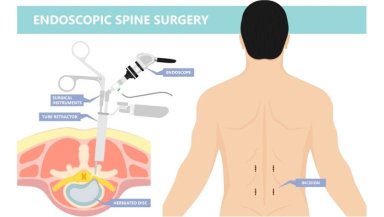
Open surgery requires muscle detachment and larger incisions. Endoscopic techniques move between muscle fibers, causing less trauma.
This difference is one of the strongest arguments for choosing endoscopic surgery.
5. Scarring and Cosmetic Results: A Small but Real Advantage
While cosmetic outcome is not the main objective, many patients appreciate the minimal scarring of endoscopic surgery.
Incision size comparison
- Endoscopic surgery: usually 7–10 mm
- Open surgery: often 2–5 cm or more
Why small incisions matter
- Less risk of infection
- Less postoperative pain
- Lower chance of wound complications
- Faster return to activities
A small incision also means less visible long-term scarring, which some patients value.
6. Pain Levels: Short-Term and Long-Term Differences
Less tissue disruption generally leads to less pain.
Short-term pain comparison
Many patients report:
- Mild incision soreness
- Reduced nerve pain
- Less back stiffness
Open surgery often results in more muscle pain because tissue is cut or retracted.
Long-term pain comparison
Both methods provide similar long-term pain reduction, assuming nerve compression is fully relieved.
When patients feel pain again
- If the nerve was severely compressed for months
- If healing causes temporary inflammation
- If recurrence occurs
Endoscopic surgery does not remove nerve sensitivity; it removes the cause of compression. Nerves may still take time to heal.
7. Long-Term Results: Is the Relief Durable?
One of the biggest questions patients have is whether endoscopic results last as long as open surgery.
What long-term studies show
- Similar durability for disc herniation relief
- Comparable reoperation rates
- Strong patient satisfaction at 1–5 years
- Lower chronic pain from scar formation
Why scarring matters long-term
Open surgery may create more scar tissue, which can irritate nerves over time. Endoscopic techniques reduce this risk.
Durability depends on three main factors
- The underlying spine condition
- The surgeon’s experience
- The patient’s activity level and lifestyle
When these factors align, long-term outcomes are excellent.
8. Risk of Recurrence: Important and Often Misunderstood
Recurrence is possible with any disc surgery.
Typical recurrence rates
- Endoscopic: 5–10%
- Open: 5–10%
Both techniques have similar recurrence rates because recurrence is related mainly to disc degeneration, not the surgical method.
Why recurrence happens
- The disc continues to age
- Heavy lifting before healing
- Weak core or poor posture
- Genetic predisposition
What you can do to reduce recurrence
- Maintain good posture
- Strengthen your core
- Avoid early heavy lifting
- Use proper bending techniques
Endoscopic surgery helps you recover faster, but long-term care still matters.
9. Complications: Does Endoscopic Surgery Reduce the Risk?
While endoscopic surgery reduces tissue damage, it does not eliminate all risks.
Endoscopic surgery trends
Lower risks of:
- Wound infection
- Bleeding
- Muscle damage
- Postoperative pain
Similar risks of:
- Recurrence
- Incomplete decompression
- Nerve irritation
Slightly higher risk of:
- Needing to convert to open surgery if access is limited (rare)
Overall, complication profiles are safe when experienced surgeons perform the procedure.
10. Patient Lifestyle: How Quickly You Can Resume Normal Life
For many adults, quicker return to normal routines is the deciding factor.
Endoscopic patients resume activities earlier
- Driving: 1–2 weeks
- Desk work: 1–2 weeks
- Light chores: few days
- Exercise: 3–6 weeks
- Heavy labor: 6–12 weeks
- Travel: 2–4 weeks
Open surgery delays many of these moves by weeks or months.
11. Who Benefits Most from Endoscopic Surgery?
Endoscopic surgery is especially worthwhile for:
- Active adults who want minimal downtime
- People with a clear, localized disc herniation
- Those concerned about scarring
- Patients who cannot afford long time off work
- Patients with mild-to-moderate foraminal stenosis
It may be less effective for severe multi-level disease or significant spinal instability.
12. When Endoscopic Surgery May Not Be Worth It
In some cases, the need for traditional surgery becomes clear, as it may provide better and more reliable results than minimally invasive approaches.
Situations where open surgery is preferred
- Severe spinal stenosis
- Multi-level disease
- Severe instability requiring fusion
- Complex anatomy
- Tumors or infections
If your condition is too advanced, endoscopic methods may not offer complete relief.
Conclusion
If you're deciding whether endoscopic spine surgery is the right choice, schedule a consultation with a spine specialist who performs both open and endoscopic procedures. A balanced discussion helps you understand what the surgery offers, what it does not and how it compares with traditional options based on your specific condition and lifestyle goals.
FAQs (Frequently Asked Questions)
1. What is endoscopic spine surgery?
Endoscopic spine surgery is a minimally invasive procedure where a small camera and instruments are used through tiny incisions to treat spine problems with minimal tissue damage.
2. How is endoscopic spine surgery different from traditional surgery?
Unlike traditional open surgery, it involves smaller cuts, less muscle damage, reduced pain, shorter hospital stay, and faster recovery.
3. What is the success rate of endoscopic spine surgery?
The success rate is generally high, often above 85–90%, depending on the condition being treated and the patient’s overall health.
4. What conditions can be treated with endoscopic spine surgery?
It is used to treat herniated discs, sciatica, spinal stenosis, slipped discs, and certain degenerative spine conditions.
5. What is the cost of endoscopic spine surgery?
The cost varies depending on the hospital, surgeon expertise, and location, but it is usually higher than conventional surgery due to advanced technology.
6. Is endoscopic spine surgery safe?
Yes, it is considered safe when performed by an experienced surgeon, with lower risk of complications compared to open surgery.
7. How long does recovery take after endoscopic spine surgery?
Recovery is usually quicker, with many patients resuming normal activities within a few weeks, depending on the procedure and condition.
8. What are the risks of endoscopic spine surgery?
Risks may include infection, bleeding, nerve injury, or recurrence of the problem, although these are relatively uncommon.
9. Who is eligible for endoscopic spine surgery?
Patients with specific spine conditions who have not improved with conservative treatment may be eligible after proper medical evaluation.
10. What are the benefits of minimally invasive spine surgery?
Benefits include smaller incisions, less pain, minimal scarring, quicker recovery, reduced hospital stay, and faster return to daily activities.
References and Sources
American Association of Neurological Surgeons (AANS)