What Really Happens During Endoscopic Spine Surgery — Step by Step, From Prep to Discharge

Medicine Made Simple Summary
Endoscopic spine surgery is a minimally invasive procedure used to treat conditions where a nerve is being compressed, such as a slipped disc or narrowing around a nerve. Instead of a long incision, the surgeon enters through a very small opening using a thin tube and a camera. This allows the surgeon to remove the exact tissue causing pain while disturbing very little muscle. The technique reduces bleeding, hospital stay and recovery time. It is designed to help patients get back to normal activity sooner with less pain and a lower overall healing burden.
Introduction: Why Patients Want a Clear, Realistic Walkthrough
Many patients considering endoscopic spine surgery feel unsure about what will actually happen on the day of the procedure. Adult patients often ask very practical questions:
- “When do I get anesthesia?”
- “How long am I in the operating room?”
- “What exactly happens through the small incision?”
- “How soon am I allowed to walk?”
- “Will I go home the same day?”
This article provides a clear, step-by-step walkthrough designed for people who want to understand the procedure without medical jargon. It explains each stage—from arrival to discharge—so you know exactly what to expect and why each step matters.
1. Understanding the Reason for Surgery
Endoscopic spine surgery is only recommended when there is a clear structure compressing a nerve and causing symptoms such as leg pain, arm pain, numbness or weakness.
Common reasons your doctor may recommend this procedure
A targeted structural problem, such as:
- A herniated disc fragment pushing on a nerve
- A narrowed nerve passageway (foraminal stenosis)
- Thickened tissue pressing on the nerve
- A recurrent disc herniation after previous surgery
Why endoscopic surgery is chosen
Patients often prefer this method because:
- The incision is much smaller
- Recovery is faster
- There is less tissue damage
- You can usually go home the same day
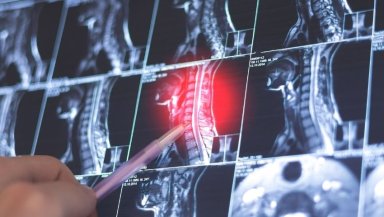
Before surgery, your doctor will show you MRI images to explain the exact cause of your symptoms and confirm that the endoscopic method is suitable.
2. Preparing for Surgery: What Happens Before You Enter the Operating Room
Most hospitals ask you to arrive 2–3 hours before the scheduled time.
You will meet several team members
- The pre-op nurse reviews your medical details and checks vital signs.
- Your surgeon reconfirms the plan and answers last-minute questions.
- The anesthesiologist discusses the anesthesia method and safety.
- A care coordinator explains expectations for the day.
These conversations are practical and focused on your comfort and safety.
A final review of your scan
Your surgeon studies your MRI or CT scan again, marking the exact spot where the working channel will be inserted. This planning ensures the surgeon reaches the affected nerve directly and efficiently.
Pre-surgery instructions you will receive
- When you last drank water or ate food
- When to stop certain medications
- What you can expect when you wake up
- How soon you will be able to walk
Most people find this stage reassuring because they understand the flow of the day clearly.
3. Anesthesia: How the Procedure Begins
Endoscopic spine surgery can be done under general anesthesia or under local anesthesia with sedation, depending on the surgeon’s approach and your comfort level.
General anesthesia
You are fully asleep and feel nothing.
Advantages include:
- No movement
- Predictable comfort
- Ideal for longer procedures
Local anesthesia with sedation
You are awake but relaxed, and the surgical area is numb.
Advantages include:
- Faster recovery from anesthesia
- Lower risk of grogginess or nausea
- Some patients feel more in control
Your anesthesiologist will guide the safest option for your case.
4. Positioning on the Operating Table
Once anesthesia begins, the team positions you carefully.
Cervical spine surgery
You lie on your back. A small roll supports the shoulders, and the neck is gently positioned so the surgeon can reach the affected level.
Lumbar spine surgery
You lie face down on a cushioned frame that supports your chest and hips. This reduces pressure on the abdomen and provides clear access to the lower spine.
Proper positioning prevents strain, reduces pressure points and helps the surgeon maintain a direct, stable path to the spine.
5. The Incision: The Small Opening That Makes the Big Difference
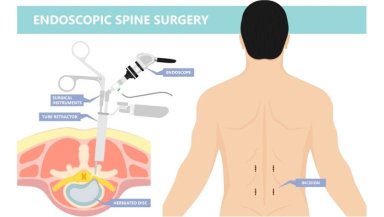
Your skin is cleaned thoroughly, and a tiny incision—usually less than 1 centimeter—is made.
Why this small cut matters
- Less bleeding
- Less muscle damage
- Minimal scarring
- Less postoperative pain
Unlike open surgery, the surgeon does not cut through layers of muscle. Instead, they gently separate fibers using narrow dilators.
6. The Working Channel and Camera: How the Surgeon Sees Inside
A thin tube called a working channel is inserted through the small incision. Through this tube, the surgeon introduces the endoscope—a slender camera that transmits a magnified image to a monitor.
Advantages of the camera
- The surgeon sees the nerve and disc in high detail
- Small fragments are easier to detect
- The surgeon avoids healthy tissue
- Precision is significantly improved
This technology allows the surgeon to work with millimeter-level accuracy.
7. Navigating to the Problem Area: How the Surgeon Reaches the Nerve
To ensure accuracy, the surgeon uses live X-ray imaging during the procedure. Each instrument movement is monitored to maintain the exact path planned earlier.
The goals during this step
- Reach the affected nerve root
- Avoid unnecessary tissue disturbance
- Confirm the exact site of compression
- Create just enough space to remove the problem safely
The surgeon follows a narrow natural corridor between tissue layers, which is why your recovery afterwards is faster.
8. The Main Surgical Step: Removing the Pressure on the Nerve
Once the endoscope is in place, the surgeon begins removing tissue that is compressing the nerve.
If you have a herniated disc
The surgeon removes loose disc fragments using fine graspers.
If you have bone spurs or stenosis
Special tools trim small bone overgrowths carefully.
If the ligament is thickened
The surgeon removes only the excess portion pressing on the nerve.
What success looks like
- The nerve root becomes visible
- The nerve has room to move freely
- The pressure is fully released
This is the most important moment of the procedure because it directly affects pain relief and recovery.
9. Closing the Incision: Usually a Single Stitch
After ensuring the nerve is fully decompressed:
The surgeon completes the final steps
- The area is irrigated to clear debris
- The endoscope and working channel are withdrawn
- A small dressing is placed over the incision
Because the incision is small, many patients do not require heavy bandaging.
10. Immediately After Surgery: Waking Up in Recovery
You are moved to a recovery room, where nurses monitor your comfort and safety. During recovery after endoscopic spine surgery, most patients feel:
- Mild soreness near the incision
- Early relief of leg or arm pain
- Slight grogginess if general anesthesia was used
- A sense of muscle stiffness
Patients are usually encouraged to sit up and walk early because movement improves circulation and reduces stiffness.
11. Same-Day or Next-Day Discharge: What to Expect Before You Go Home
Most patients leave the hospital within hours. Some may stay overnight if their procedure is longer or if they need additional monitoring.
You will receive instructions about
- How to care for the incision
- What pain medications to take
- Which activities to avoid temporarily
- When to resume driving, work or exercise
- Warning signs to watch for at home
Typical recovery experience
- Many patients return to desk jobs in 1–2 weeks
- Walking is encouraged from day one
- Light activity is safe early, but heavy lifting is restricted
- Leg or arm symptoms often improve quickly
This predictable recovery pattern is one of the reasons patients choose endoscopic surgery.
12. What to Watch for at Home
Patients should contact their doctor if they experience:
- Fever or chills
- Redness around the incision
- New numbness or weakness
- Increasing back or leg pain
- Fluid leaking from the incision
Most issues are minor when addressed early.
Conclusion
If you are considering endoscopic spine surgery, schedule a discussion with your spine specialist to understand whether your condition is suitable for this technique. Knowing exactly how the procedure works—from incision to discharge—helps you ask better questions and make choices that support your lifestyle, comfort and recovery expectations.
References and Sources