pH Monitoring for Acid Reflux: How It Helps Confirm GERD
Medicine Made Simple
pH monitoring is a test used to measure how often stomach acid moves back into the food pipe, also called the esophagus. It helps doctors confirm GERD, or gastroesophageal reflux disease, when symptoms like heartburn, chest burning, sour taste, chronic cough, or throat irritation continue for a long time. A small tube or wireless capsule records acid levels over 24 to 48 hours while you go about normal daily activities. The test helps doctors understand whether acid reflux is truly the cause of symptoms and guides the right treatment plan.
Understanding What pH Monitoring Means
pH monitoring is a special test that helps doctors measure acid levels inside the esophagus, which is the food pipe connecting the mouth to the stomach. The purpose of this test is to check whether stomach acid is flowing backward into the esophagus more often than it should.
Normally, food travels down the esophagus into the stomach, and a muscle valve at the lower end prevents stomach contents from coming back up. This valve is called the lower esophageal sphincter.
When this valve becomes weak or relaxes too often, acid from the stomach moves upward into the esophagus. This causes symptoms like heartburn, chest burning, sour taste in the mouth, throat irritation, chronic cough, or the feeling of food coming back up.
This condition is called gastroesophageal reflux disease, commonly known as GERD.
While symptoms may strongly suggest GERD, pH monitoring helps confirm it with actual measurements. Instead of guessing, the doctor can see how often acid reflux happens, how long it lasts, and whether it matches your symptoms.
This makes pH monitoring one of the most accurate tests for diagnosing reflux disease and supports better preventive gastroenterology care.
Why Doctors Recommend pH Monitoring
Doctors usually recommend pH monitoring when symptoms of acid reflux continue for a long time or when regular treatment is not giving enough relief.
Some patients have frequent heartburn even after taking acid-reducing medicines. Others may have symptoms like chest pain, chronic cough, hoarseness, throat clearing, or sleep disturbance without typical heartburn.
In these cases, doctors want to know whether acid reflux is truly the reason.
The test is also useful when endoscopy looks normal but symptoms continue. Since endoscopy checks the lining of the esophagus and not the actual acid exposure over time, pH monitoring provides different information.
Doctors may also advise this test before anti-reflux surgery to confirm that GERD is present and surgery is appropriate.
Some patients with symptoms that feel like reflux may actually have another condition such as muscle problems, non-acid reflux, or functional chest pain. pH monitoring helps separate these conditions.
This avoids unnecessary treatment and helps choose the right long-term plan.
Common Symptoms That May Need pH Monitoring
Not every person with acidity needs this test, but certain symptoms make pH monitoring more useful.
Frequent heartburn that happens several times a week is one of the most common reasons. Patients may feel burning behind the chest, especially after meals or while lying down.
A sour or bitter taste in the mouth, repeated regurgitation of food or acid, and difficulty sleeping because of reflux are also common signs.
Some people do not have classic heartburn but instead develop chronic cough, repeated throat clearing, hoarseness, asthma-like symptoms, or the feeling of a lump in the throat.
Chest pain that is not related to the heart can also be caused by acid reflux.
Patients with long-term symptoms despite taking medicines like proton pump inhibitors may need testing to confirm whether acid is still the problem.
When symptoms continue without a clear answer, pH monitoring helps bring clarity.
Types of pH Monitoring Tests
There are two main ways doctors perform pH monitoring.
The first is catheter-based pH monitoring. In this method, a thin soft tube is passed through the nose into the esophagus. The tube stays in place for about 24 hours and is connected to a small recording device worn on the body.
The second is wireless pH monitoring, often called the Bravo test. In this method, a tiny capsule is attached to the wall of the esophagus during upper GI endoscopy. This capsule records acid levels and sends the information wirelessly to a small receiver carried by the patient.
The capsule naturally falls off after a few days and passes through the digestive system.
Both methods are effective. The choice depends on symptoms, doctor preference, and hospital availability.
Wireless monitoring is often more comfortable because there is no tube in the nose, while catheter testing may be more easily available and sometimes gives additional information.
How pH Monitoring Is Different from Endoscopy
Many patients are confused when they are told to do pH monitoring after already having an endoscopy.
The reason is simple: these tests answer different questions.
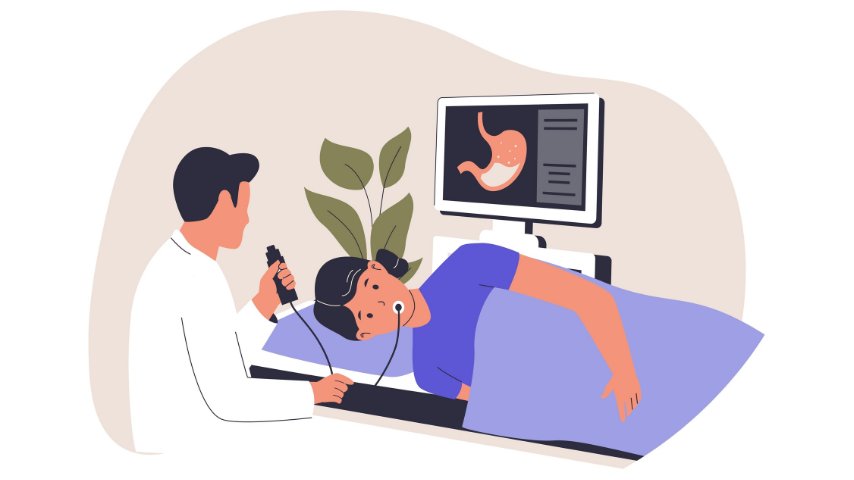
Endoscopy allows the doctor to look directly inside the esophagus, stomach, and upper intestine. It helps detect ulcers, inflammation, narrowing, bleeding, or visible damage caused by reflux.
However, some patients with GERD may have normal-looking endoscopy results.
pH monitoring does not look at the structure. Instead, it measures acid exposure over time and shows whether reflux is actually happening during normal daily life.
For example, a patient may feel severe heartburn but have no visible damage on endoscopy. pH monitoring can confirm whether acid is still causing symptoms.
In simple terms, endoscopy checks appearance, while pH monitoring checks function and timing.
Both tests often work together for a complete diagnosis.
Preparing for the Test
Preparation is important because the test needs to reflect your real acid reflux pattern as accurately as possible.
Patients are usually asked not to eat or drink for several hours before the procedure, especially if endoscopy is needed for capsule placement.
Your doctor may also give instructions about stopping acid reflux medicines like proton pump inhibitors or antacids for a few days before the test. This depends on whether the goal is to test symptoms while on treatment or without treatment.
It is important not to stop medicines on your own without medical advice.
You should also tell your doctor if you have swallowing difficulties, severe nasal blockage, previous esophageal surgery, or pregnancy.
Since the catheter test usually does not require sedation, patients can often return to normal activity quickly. If the wireless capsule is placed during endoscopy, mild sedation may be used.
Following instructions carefully improves the accuracy of the results.
What Happens During Catheter-Based pH Monitoring
In catheter-based monitoring, a thin soft tube is gently passed through one nostril and guided into the esophagus.
This may feel slightly uncomfortable and may cause temporary watering of the eyes, mild gagging, or coughing, but it usually settles quickly.
Once the tube is in the correct position, it is taped in place near the nose and connected to a small recorder worn on the waist or shoulder.
You then go home and continue normal daily activities for the next 24 hours.
During this time, you eat normal meals, sleep normally, and record symptoms like heartburn, cough, chest pain, or regurgitation in a diary.
This helps doctors compare acid reflux episodes with your symptoms.
After 24 hours, you return to the hospital and the tube is removed.
What Happens During Wireless pH Monitoring
In wireless monitoring, the small capsule is usually placed during an upper GI endoscopy.
The doctor attaches the tiny capsule to the wall of the esophagus. This takes only a short time and is usually done with sedation.
The capsule then records acid exposure for 48 hours or sometimes longer, depending on the system used.
There is no visible tube outside the body, so many patients find this more comfortable.
You carry a small receiver and record symptoms just like in catheter monitoring.
After a few days, the capsule naturally detaches and passes through the digestive system without needing removal.
This method is especially useful for patients who find the nasal catheter uncomfortable.
Is pH Monitoring Painful
pH monitoring is generally not painful, but it can feel unusual.
In catheter-based testing, the most uncomfortable part is placing the tube through the nose and throat. Once it is in place, most patients adjust and continue normal activities.
Some people notice mild throat awareness or nasal irritation during the recording period.
In wireless monitoring, there may be mild chest awareness or slight discomfort when swallowing for a short time after capsule placement.
Serious pain is not expected.
Since the test is designed to monitor normal daily life, most patients manage it well and complete the test without major problems.
The information gained is often worth the temporary inconvenience.
Recovery After the Test
Recovery is simple because this is mainly a diagnostic test and not a surgical procedure.
After catheter-based monitoring, the tube is removed and most patients return to normal life immediately.
After wireless monitoring, the capsule remains inside for a few days and passes naturally without needing special treatment.
You can usually eat and drink normally after the test unless your doctor gives different instructions.
If sedation was used during endoscopy for capsule placement, driving and important decisions should be avoided for the rest of the day.
The doctor studies the recorded acid levels and compares them with your symptom diary.
These results help decide whether medicines, lifestyle changes, surgery, or further testing may be needed.
Possible Risks and Limitations
pH monitoring is very safe and serious complications are rare.
Minor side effects may include nasal discomfort, sore throat, mild gagging, or temporary chest awareness depending on the type of test.
Very rarely, the wireless capsule may cause stronger discomfort or difficulty swallowing for a short time.
The test does not treat reflux directly. It only helps confirm the diagnosis and guide the next step.
It also focuses mainly on acid reflux. In some cases, symptoms may be caused by non-acid reflux or other digestive disorders that need different evaluation.
Even with these limitations, pH monitoring remains one of the best tests for confirming GERD when symptoms are unclear.
Why Confirming GERD Properly Matters
Many people take acid reflux medicines for months or even years without knowing whether acid reflux is truly the cause of their symptoms.
This can lead to unnecessary treatment, delayed diagnosis, and ongoing discomfort.
Some symptoms that feel like reflux may actually come from swallowing disorders, anxiety-related chest pain, allergies, or non-acid digestive problems.
On the other hand, untreated GERD can damage the esophagus over time and lead to ulcers, narrowing, or complications like Barrett’s esophagus.
Confirming GERD properly helps doctors choose the safest and most effective treatment.
It also helps patients understand whether medicines, surgery, or lifestyle changes are truly needed.
A correct diagnosis is always the best starting point for lasting relief.
Conclusion
pH monitoring is one of the most accurate ways to confirm whether acid reflux is causing symptoms like heartburn, chest burning, chronic cough, throat irritation, or repeated regurgitation.
By measuring acid exposure inside the esophagus over 24 to 48 hours, the test gives real answers instead of relying only on symptoms or guesswork.
It is especially useful when endoscopy is normal, medicines are not helping enough, or surgery is being considered.
Although the idea of a tube or capsule may sound uncomfortable, the test is safe, short, and highly valuable for making the right diagnosis.
If you have long-term reflux symptoms that continue despite treatment, your doctor may recommend pH monitoring for a good reason.
Finding the real cause is the first step toward better comfort, safer treatment, and long-term digestive health.
References and Sources
American College of Gastroenterology – GERD and pH Monitoring Information
National Institute of Diabetes and Digestive and Kidney Diseases – Acid Reflux and GERD Information