What If Laser Fistula Surgery Fails? Can FiLaC Be Repeated and What Are the Next Treatment Options?
Medicine Made Simple Summary
FiLaC, or Fistula-tract Laser Closure, is a sphincter-preserving treatment used for selected anal fistulas. Although it can successfully close the fistula in many patients, it does not guarantee permanent healing. Some patients may have persistent drainage, incomplete closure or recurrence after initially appearing healed. If FiLaC fails, it does not mean that treatment options have run out. The fistula can be reassessed and treatment may include repeat FiLaC, seton placement, LIFT, advancement flap, VAAFT or another appropriate procedure. The next step depends on the fistula’s anatomy, previous treatment and sphincter involvement.
What Does It Mean If FiLaC Fails?
If you have undergone FiLaC laser fistula surgery and are still experiencing drainage, you may immediately think that the procedure has failed.
But recovery is not always that simple.
FiLaC works by placing a thin laser fibre inside the fistula tract and delivering controlled laser energy to encourage the abnormal tunnel to close. The treatment is designed to preserve the anal sphincter rather than deliberately cutting through it.
The fistula does not necessarily close immediately.
Healing takes time.
A small amount of drainage during the early recovery period does not automatically mean that the treatment has failed.
Failure is generally considered when the fistula remains open, symptoms persist or the disease returns after an initial period of healing.
This distinction is important because some patients become worried too early, while others may ignore symptoms for too long.
How Successful Is FiLaC?
FiLaC can be effective, but published results vary.
A long-term study involving 175 patients reported primary healing in 66.8% of patients after a median follow-up of five years. In that study, 21.7% failed to heal and 11.4% experienced recurrence.
A more recent systematic review published in 2025 included 24 studies involving 1,503 patients. It found a pooled primary healing rate of 57.46%, recurrence in 18.48% and a reoperation rate of 36.49%. New-onset incontinence was uncommon at 0.57%.
These numbers may look very different.
That is because the studies included different types of fistulas, different techniques, different follow-up periods and different patient populations.
The important message is that FiLaC can work well for selected patients, but it should never be presented as a guaranteed cure.
Does Drainage After FiLaC Mean the Surgery Has Failed?
Not necessarily.
Some drainage can occur while the treated tract is healing.
The amount should generally reduce over time.
You may initially notice clear, yellowish or slightly blood-stained discharge. This can gradually become less frequent.
The more concerning pattern is when drainage persists without improvement or returns after the area had become completely dry.
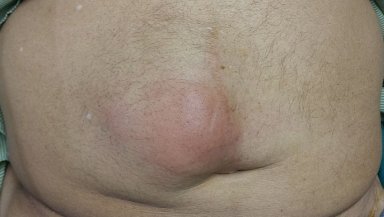
For example, you may have no pain and no discharge for several weeks. Then you develop a small lump near the anus followed by pus or renewed drainage.
This may suggest that the fistula has reopened or that an abscess has developed.
Increasing pain, swelling, fever or foul-smelling discharge should also be assessed by your surgeon.
A clinical examination is much more reliable than trying to determine treatment failure based on discharge alone.
Why Can FiLaC Fail?
There are several possible reasons.
- The fistula may have a complex pathway.
- It may have branches that were difficult to identify.
- The internal opening may not have completely closed.
- There may have been an undetected abscess.
- Previous surgery may have created scar tissue.
- The fistula may also have characteristics that make laser closure less effective.
Underlying conditions can matter as well. Crohn's disease, for example, can change the way anal fistulas develop and heal.
This is why patient selection is important.
The 2022 American Society of Colon and Rectal Surgeons guidelines describe minimally invasive techniques such as FiLaC as having reasonable short-term healing rates, but note that long-term healing and recurrence rates were still uncertain when the guideline was developed.
More recent evidence has improved our understanding, but significant variation in outcomes remains.
Can FiLaC Be Repeated?
Yes, in selected patients.
A failed first procedure does not automatically mean that laser treatment can never work for you.
The fistula needs to be reassessed first.
The anatomy may have changed since the original operation.
There may be a new branch.
There may be an abscess.
The internal opening may need to be located again.
Once the surgeon understands why the first treatment failed, repeat FiLaC may be considered.
The long-term study of 175 patients provides useful evidence. Forty-eight patients underwent another operation after the initial laser procedure. Twenty-six underwent repeat FiLaC, and 12 of those patients healed after the repeat laser treatment. The authors reported a secondary success rate of 73.7% for the group undergoing reoperation.
This does not mean that repeat FiLaC will work for everyone.
It means that failure of the first procedure does not automatically rule out another laser treatment.
When Might Repeat FiLaC Be Considered?
Repeat laser treatment may be considered when the fistula remains suitable for the technique.
The surgeon may look at whether the tract is still accessible.
They may assess whether the internal opening can be identified and treated.
They will also check for infection or an abscess.
If the fistula anatomy remains appropriate and there is no reason to believe another technique would provide a better outcome, repeat FiLaC may be an option.
However, repeating the same procedure without understanding why it failed is not always the best approach.
The goal should be to identify the reason for failure first.
Could a Seton Be Needed After FiLaC Fails?
A seton may be used when continued drainage is needed.
A seton is a thin surgical material placed through the fistula tract. It keeps the pathway open so that pus and fluid can drain rather than becoming trapped.
This can be particularly useful if an abscess has developed or if the fistula is complex.
A seton may also be used as part of a staged treatment plan before another definitive procedure.
Interestingly, the long-term FiLaC study found better primary healing among patients who had a seton or draining loop placed before laser treatment. Healing was 70.4% among patients with prior drainage compared with 51.5% among those without it.
This does not mean every patient needs a seton.
It means that controlling infection and drainage can be an important part of managing complex fistulas.
What If Another Procedure Is Better Than Repeat Laser?
Sometimes the best next step is not another FiLaC procedure.
The surgeon may recommend another sphincter-preserving technique.
- LIFT: Ligation of the intersphincteric fistula tract, which aims to close the fistula through the space between the sphincter muscles.
- Advancement flap: Healthy tissue is used to cover the internal opening of the fistula.
- VAAFT: Video-assisted anal fistula treatment, which uses a small camera to identify and treat the fistula tract.
The choice depends on the anatomy.
A 2025 systematic review and network meta-analysis comparing LIFT, VAAFT, FiLaC and endoanal flap procedures found different failure rates across the techniques, but did not establish one universally superior procedure. The authors concluded that more consistent long-term studies are needed.
This is why the next operation should be selected based on your fistula rather than simply choosing the newest available technique.
Could an Advancement Flap Be Combined With FiLaC?
In selected complex fistulas, surgeons may combine techniques.
For example, a 2024 retrospective study compared standard FiLaC with FiLaC combined with an advancement flap. The combined approach had a higher reported success rate in that small study, although it also involved longer operating times and hospital stays.
This is an example of why treatment can be personalised.
A surgeon may decide that treating the tract with laser while also closing the internal opening provides a better approach for a particular patient.
However, results from a small retrospective study should not be treated as proof that combined treatment is better for everyone.
What If You Have Had Several Previous Operations?
Repeated fistula surgery requires careful planning.
Scar tissue can change the anatomy.
The sphincter may already have been affected by previous procedures.
The surgeon therefore needs to know exactly what has already been done.
An MRI may be recommended in complex or recurrent cases to map the fistula and identify branches or abscesses.
The objective is to avoid simply repeating a previous operation without understanding why it failed.
For a recurrent fistula, protecting the remaining sphincter can become especially important.
This is one reason sphincter-preserving procedures may be considered.
Does Failure Mean You Will Have Bowel-Control Problems?
No.
Failure of FiLaC does not automatically mean that your sphincter has been damaged.
One of the main advantages of FiLaC is that it is designed to preserve the sphincter.
The 2025 systematic review found a very low rate of new-onset incontinence among patients undergoing laser-based fistula treatment.
However, the risk of continence problems depends on your fistula, previous surgery and the treatment chosen next.
If another procedure involves cutting sphincter muscle, your surgeon should explain the potential effect on bowel control.
This should be part of the treatment discussion before the next procedure.
When Should You See Your Surgeon Again?
Do not wait indefinitely if symptoms persist after FiLaC.
Arrange a review if drainage is not gradually decreasing.
You should also contact your surgeon if drainage returns after a period when the area was completely dry.
Increasing pain or swelling is particularly important.
A new lump near the anus may indicate an abscess.
Fever, chills or feeling generally unwell can indicate infection.
Heavy bleeding should also be assessed.
These symptoms do not automatically mean that FiLaC has failed.
They simply mean that the area needs proper examination.
What Tests May Be Needed After FiLaC Failure?
The surgeon may begin with a physical examination.
Depending on the situation, an MRI may be recommended.
MRI can help identify:
- The fistula pathway
- The internal opening
- Secondary branches
- Any abscess or collection
An examination under anaesthesia may also be needed in selected patients.
The purpose is to understand what remains before choosing another treatment.
This is particularly important when the fistula has already undergone one or more procedures.
The surgeon needs to know whether the problem is persistent disease, recurrence or a new abscess.
What Should You Ask Before Choosing the Next Treatment?
Ask why the first FiLaC procedure did not achieve complete healing.
Ask whether the fistula is still in the same location.
Ask whether an MRI is necessary.
Ask whether there is an abscess.
Ask how much sphincter muscle is involved.
Ask whether repeat FiLaC is realistic.
Ask what alternatives are available.
You should also ask about the expected healing rate and recurrence risk of each option.
Finally, ask what happens if the next procedure also fails.
These questions help you make a decision based on your actual situation rather than simply choosing another procedure because it sounds familiar.
The Key Takeaway
FiLaC failure does not mean that treatment has failed permanently.
Anal fistulas can be difficult to treat, particularly when they are complex, recurrent or involve the sphincter.
If the first laser procedure does not completely heal the fistula, the next step should be reassessment.
Repeat FiLaC can work in selected patients.
A seton may be needed to control drainage or infection.
Other options such as LIFT, advancement flap or VAAFT may be more appropriate depending on the fistula's anatomy.
The most important decision is not whether to repeat laser treatment.
It is understanding why the first treatment did not work and what the fistula looks like now.
Conclusion
It can be disappointing to hear that your anal fistula has not completely healed after FiLaC.
You may have expected laser treatment to be a one-time solution.
But fistulas can be complex, and no procedure guarantees permanent closure.
The good news is that FiLaC failure does not mean you have run out of options.
The first step is reassessment.
Your surgeon may examine the area and recommend imaging to understand the current fistula pathway.
If the fistula remains suitable for laser treatment, repeat FiLaC may be considered.
Evidence from long-term follow-up shows that some patients can successfully heal after repeat laser treatment.
If repeat laser is not appropriate, other sphincter-preserving procedures may be considered.
These can include LIFT, advancement flap or VAAFT.
A seton may also be used when drainage or infection needs to be controlled before definitive treatment.
The right option depends on the fistula's anatomy, your previous operations, the amount of sphincter involved and your overall health.
Do not judge the success of FiLaC only by the first few weeks of recovery.
Some drainage can occur while healing takes place.
However, persistent drainage, renewed pain, swelling, fever or a new lump should be reviewed.
Most importantly, do not assume that a failed first procedure means the next treatment will also fail.
Fistula treatment is often a process of understanding the anatomy, controlling infection, selecting the right technique and protecting bowel function.
If your FiLaC procedure has not worked as expected, a review with an experienced colorectal surgeon can help identify what happened and determine the safest next step.
References and Sources
PubMed – Comparative Outcomes of Standard FiLaC Versus FiLaC Combined With Advancement Flap
PubMed – Could FiLaC Be Effective in the Treatment of Anal Fistulas?
PubMed – The Optimal Indication for FiLaC Is High Trans-Sphincteric Fistula-in-Ano