Hernia Mesh: Is It Safe, Can You Feel It, and What Happens After Surgery?
Medicine Made Simple Summary
Hernia mesh is a medical material used to strengthen a weak area in the abdominal wall during many hernia repairs. It acts like a supportive scaffold, allowing the body's tissues to grow around it and reinforce the repair. Most patients recover without major problems and do not remain aware of the mesh once healing is complete. However, pain, infection, fluid collection and recurrence can occur. Understanding why mesh is used, how it becomes part of the repair, what recovery feels like and which symptoms need attention can help patients make informed decisions about surgery.
What Is a Hernia?
Before understanding hernia mesh, it helps to understand what a hernia actually is. Your abdominal wall is made up of muscles and strong connective tissues. Together, they form a protective layer that holds many of the organs inside your abdomen in their normal position.
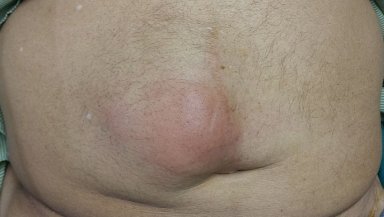
Sometimes, a weak area or opening develops in this wall. Fatty tissue or part of the intestine can then push through this weak area. This creates a bulge that may be visible under the skin.
This is called a hernia.
Hernias can occur in different parts of the abdominal wall. An inguinal hernia develops in the groin. An umbilical hernia occurs around the belly button. An incisional hernia can develop at the site of a previous abdominal operation.
Some hernias cause little or no discomfort. Others may cause pain, heaviness, burning or a pulling sensation, particularly when coughing, bending, lifting or standing for long periods.
When a hernia needs surgical repair, one of the key decisions is how to strengthen the weak area. This is where mesh may be used.
What Is Hernia Mesh?
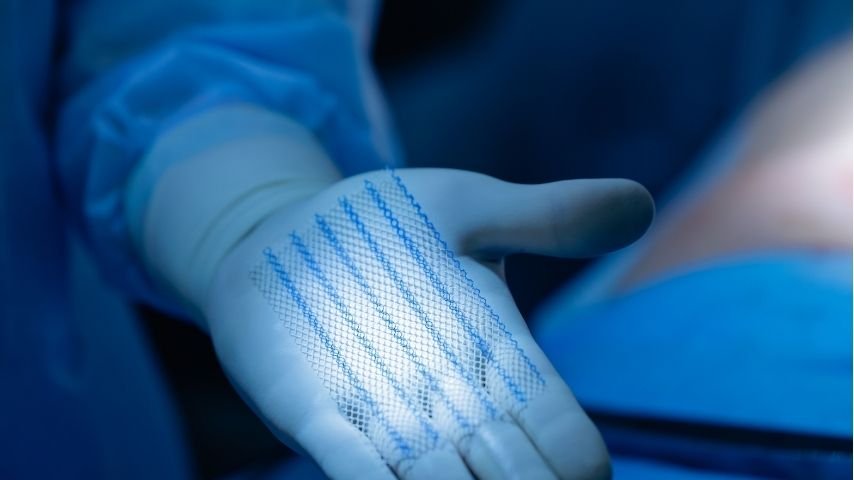
Hernia mesh is a medical implant designed to reinforce the weak area in the abdominal wall. It is usually a flat sheet of flexible material that is positioned over or around the area being repaired.
A simple way to understand mesh is to think of it as a supportive patch.
Imagine that a piece of fabric has a weak area. Simply pulling the edges together with stitches may put tension on the surrounding material. A mesh repair provides an additional layer of reinforcement over the weak area.
The mesh is positioned during surgery and fixed in place using methods such as stitches, glue or other fixation techniques, depending on the type of repair.
Over time, your own tissues grow around and through the mesh. This process helps incorporate the mesh into the abdominal wall and strengthens the repaired area. NHS England describes mesh as acting like a scaffold through which the body's own tissue grows.
Most commonly used permanent meshes do not simply dissolve after surgery. They are intended to provide long-term reinforcement.
Why Do Surgeons Use Mesh?
The main reason is to reduce the chance of the hernia coming back.
A hernia occurs because there is a weakness in the abdominal wall. If that weakness is repaired using stitches alone, tension can remain on the tissues. In many types of hernia, mesh provides additional reinforcement and can reduce recurrence.
For example, the American College of Surgeons reports that recurrence occurs less often after mesh repair than after non-mesh repair for adult inguinal hernias. For adult umbilical hernias, its patient guidance also shows substantially lower recurrence with mesh compared with suture repair in the evidence it summarises.
This does not mean that every hernia requires mesh.
Some small hernias may be suitable for a tissue repair without mesh. Current guidance also recognises that the choice depends on:
- The size and location of the hernia
- The patient's health
- Previous operations
- Other individual factors
The important point is that mesh is a tool used to strengthen a repair. It is not simply inserted because it is the newest or most advanced option.
Is Hernia Mesh Safe?
This is usually the biggest concern patients have before surgery.
Hearing that a permanent material will be placed inside the body can understandably make people uncomfortable. Stories about mesh complications on the internet can make this concern even stronger.
The evidence and current clinical guidance provide a more balanced picture.
Mesh is widely used in hernia surgery and is considered safe and effective for many patients. The American College of Surgeons describes mesh-based repair as a standard approach for many inguinal and ventral hernia operations, while also emphasising that hernia repair should be tailored to the individual patient.
At the same time, mesh is not completely risk-free.
Possible complications include:
- Infection
- Chronic pain
- Fluid collection
- Recurrence
- Rarely, migration or erosion
The risk of these complications varies depending on the type of hernia, the surgical approach, the mesh used and the patient's individual health.
This is why a good surgical consultation should not simply involve being told, “You need mesh.” You should understand why mesh is being recommended in your particular case.
Can You Feel the Mesh Inside Your Body?
This is one of the most common questions patients ask.
Many people imagine that they will permanently feel a foreign object inside their abdomen or groin after surgery.
In most cases, that is not how the experience is described.
During the early recovery period, you may notice soreness, swelling, tightness or a pulling sensation around the surgical area. These sensations are usually related to the operation and the healing process rather than the sensation of physically feeling the mesh itself.
As healing progresses, the tissues gradually grow around the mesh. Many patients eventually stop noticing the repaired area during normal daily activities.
A current patient guide from Frimley Health NHS Foundation Trust specifically explains that the mesh remains inside the body permanently but that patients should not normally be aware of or able to feel it after recovery.
However, everyone's recovery is different.
Some patients may experience longer-lasting sensitivity, numbness or discomfort around the repair. Persistent symptoms should be discussed with the surgical team rather than automatically being assumed to be normal.
What Happens to the Mesh After Surgery?
The mesh does not simply sit loose inside your abdomen.
It is positioned carefully during the operation and secured in place. As healing progresses, your body's tissues grow into and around the mesh.
This process helps create a stronger repaired area.
The exact way this happens depends on the type of mesh and the location of the repair. Different meshes have different materials, sizes, shapes, thicknesses and physical properties.
The European Hernia Society guidelines note that mesh characteristics matter and that mesh selection should not be based on weight alone. The guidelines also suggest that certain mesh designs may offer short-term differences in postoperative pain or recovery, but these do not necessarily translate into better long-term outcomes.
For patients, the practical message is simple. The mesh is selected and positioned to support the repair while your own body heals around it.
Can the Mesh Move Inside Your Body?
Mesh migration is one of the complications that patients often discover while researching hernia surgery.
The idea of a piece of mesh moving freely around the body can sound frightening. In normal circumstances, however, that is not what happens.
The mesh is fixed in position and becomes incorporated into the surrounding tissues as healing takes place.
Rare complications involving migration or erosion have been reported. NHS patient information describes mesh migration as a very small risk and explains that permanent mesh becomes incorporated into the repaired abdominal wall.
The risk also depends on where the mesh is placed. In common inguinal hernia repairs, for example, the mesh is positioned within the layers of the abdominal or groin wall rather than simply being left next to the internal organs.
If you develop unusual or persistent symptoms after surgery, your surgeon can determine whether further investigation is necessary.
Can Hernia Mesh Cause Infection?
Infection is a possible complication of any surgical procedure involving an implant.
A mesh infection is uncommon, but it can be more complicated than an ordinary wound infection because the infection involves a foreign material.
Signs that may suggest a wound or mesh infection include:
- Increasing redness
- Warmth
- Swelling
- Worsening pain
- Discharge from the wound
- Fever
A wound infection does not automatically mean that the mesh is infected.
Your doctor may need to examine the wound and determine what is causing the symptoms.
Current NHS patient information describes mesh infection as rare. One NHS source reports mesh infection after inguinal hernia repair at fewer than 1 in 500 cases, although the exact risk can vary depending on the patient and type of surgery.
If an actual mesh infection occurs, antibiotics and other treatments may be needed. In some cases, removal of the mesh may become necessary.
This is uncommon, which is important to keep in perspective when considering surgery.
Why Can You Have Pain After Mesh Surgery?
Pain after hernia surgery does not automatically mean that the mesh is causing a problem.
Several things can cause discomfort during recovery. The incision can be sore. The tissues around the hernia have been operated on. Nerves in the area can become irritated. Scar tissue develops as the body heals. The repair itself can create a sensation of tightness or pulling.
Some patients also experience numbness around the surgical area.
These sensations generally improve as recovery progresses.
However, a small proportion of patients experience longer-lasting pain.
The American College of Surgeons reports that around 10% to 12% of patients undergoing adult groin hernia repair may report pain one year after surgery, although the likelihood may be lower after laparoscopic repair. It also identifies factors associated with chronic pain, including recurrent hernia repair, emergency surgery, younger age, open repair and certain perioperative factors.
This is why persistent pain needs to be evaluated rather than simply blamed on the mesh.
Does Mesh Cause Chronic Pain?
This question needs a careful answer.
Mesh can be involved in chronic pain in some patients, but chronic pain after hernia surgery has several possible causes.
Nerves can become irritated or trapped by scar tissue, stitches or fixation material. The repair can create pressure or tension in the surrounding tissues. In some cases, the mesh itself may contribute to discomfort.
The American College of Surgeons notes that nerve pain can be related to pressure, staples, stitches or a trapped nerve in the surgical area.
This means that persistent pain does not automatically mean that the mesh needs to be removed.
The first step is to determine why the patient is experiencing pain.
Sometimes the pain gradually improves as tissues settle and remodel. In other cases, additional treatment may be required.
A patient with persistent pain should therefore be assessed by the surgeon or an appropriate specialist rather than making a decision about mesh removal based only on symptoms.
Can the Hernia Come Back Even After Mesh Repair?
Yes.
Mesh reduces the risk of recurrence, but no hernia repair can guarantee that a hernia will never return.
The risk depends on several factors. These include:
- The type and size of the hernia
- The location of the repair
- The surgical technique
- The patient's tissue quality
- Certain health factors
For adult inguinal hernias, the American College of Surgeons reports recurrence after repair in a range of patients and notes that recurrence occurs less often when mesh is used compared with non-mesh repair.
For abdominal or ventral hernias, mesh can also reduce recurrence. The American College of Surgeons notes that mesh repair can substantially reduce the chance of recurrence compared with suture repair in appropriate umbilical hernias.
Therefore, noticing a new lump after surgery does not automatically mean that the mesh has failed.
The area may have postoperative swelling or a fluid collection. A surgeon can examine the site and determine what is happening.
What Does Normal Recovery Feel Like?
The first few days after surgery are usually when discomfort is most noticeable.
You may have soreness around the wound and some bruising or swelling. Depending on the location of the repair, swelling can sometimes extend into nearby areas.
You may also experience tightness or a pulling sensation when changing position, coughing or becoming more active.
After laparoscopic surgery, some patients experience temporary abdominal bloating or shoulder discomfort because gas is used during the procedure to create space for the surgeon to work.
These symptoms generally improve as the body recovers.
The NHS advises patients to keep moving and gradually increase activity, while avoiding heavy lifting and strenuous activity during the early recovery period.
Recovery is not always perfectly linear. You may feel better one day and experience slightly more discomfort after increasing your activity the next day.
What matters is the overall direction.
Symptoms should generally settle rather than steadily worsen.
When Should You Contact Your Doctor After Mesh Surgery?
You should contact your healthcare team if your wound becomes increasingly red, hot, swollen or painful, particularly if there is pus or other discharge.
A high temperature, worsening abdominal or groin pain, increasing swelling or persistent vomiting should also be assessed.
The NHS advises patients to seek medical help for symptoms such as a painful or swollen wound, fever, worsening abdominal swelling or pain and persistent sickness after inguinal hernia surgery.
A new or persistent lump should also be discussed with your surgeon, particularly if it is painful or becomes larger.
These symptoms do not automatically mean that there is a mesh complication.
They simply mean that the surgical team needs to determine what is causing them.
Does Pain Mean the Mesh Has to Be Removed?
No.
This is an important point because patients who experience persistent pain may immediately search for information about mesh removal.
Mesh removal is not a routine treatment for ordinary postoperative discomfort.
Before considering removal, the surgeon needs to understand the cause of the pain. The problem may be nerve-related, caused by scar tissue, related to recurrence or associated with another complication.
Removing mesh is itself a surgical procedure and can carry additional risks.
For this reason, patients with chronic symptoms should ideally be assessed by a surgeon experienced in managing complex hernia complications.
The goal is not simply to remove the mesh. The goal is to identify the cause of the symptoms and choose the treatment that gives the best chance of improvement.
Is Mesh Necessary for Every Hernia?
No.
This is another important misconception.
Mesh is commonly used, but it is not automatically required for every hernia.
The decision depends on the hernia and the patient.
Very small hernias may sometimes be repaired without mesh. The American College of Surgeons notes that current guidance supports tissue repair for selected small primary umbilical or ventral hernias, particularly when other risk factors are absent.
For many larger or more complex hernias, however, mesh may provide important reinforcement and reduce recurrence.
Your surgeon should explain why mesh is recommended in your specific situation.
What Should You Ask Your Surgeon About Mesh?
Before surgery, it is reasonable to ask several questions:
- Ask why mesh is recommended for your particular hernia and whether a non-mesh repair is a reasonable alternative.
- Ask what type of mesh will be used, where it will be placed and how it will be fixed.
- You can also ask about the expected recurrence risk, the possibility of chronic pain and the expected recovery period.
If you have had previous abdominal or hernia surgery, tell your surgeon. Previous operations can influence the choice of technique.
You should also tell your surgeon about conditions such as diabetes, smoking and other health issues because these can influence wound healing and surgical risk.
The purpose of these questions is not to challenge the recommendation.
It is to understand it.
A patient who understands why a treatment has been recommended is better placed to make an informed decision.
The Key Takeaway
Hernia mesh is a medical implant used to reinforce the weak area in the abdominal wall during many hernia repairs. It acts as a scaffold, allowing the body's tissues to grow around it and strengthen the repair.
For many patients, mesh provides an important advantage because it can reduce the risk of the hernia coming back.
Most people recover without major mesh-related problems, and many do not remain aware of the mesh once healing is complete.
However, mesh is not completely risk-free. Infection, chronic pain, fluid collections, recurrence and rare complications such as migration or erosion can occur.
The most important thing to remember is that pain after surgery does not automatically mean that the mesh is causing a problem.
Pain can have several causes, including nerve irritation, scar tissue and the normal healing process.
If you are experiencing persistent or worsening symptoms after hernia surgery, speak with your surgical team rather than assuming that the mesh has failed.
Conclusion
The word “mesh” can sound worrying when you first hear that it will be permanently placed inside your body.
But for many patients, mesh is an important part of a successful hernia repair. It provides additional reinforcement to the weak area and can reduce the risk of recurrence.
Most patients do not permanently feel the mesh after recovery. During the early healing period, however, tightness, swelling, tenderness, numbness or pulling sensations can occur.
Serious complications such as mesh infection, migration or chronic pain are possible but uncommon.
The right decision about mesh should always be individualised. A small hernia may sometimes be repaired without mesh, while other hernias may benefit considerably from mesh reinforcement.
If you are considering hernia surgery, ask your surgeon why mesh is recommended for your particular condition, what alternatives are available and what risks apply to you.
If you have already undergone mesh repair and are experiencing persistent pain, swelling, redness or a new bulge, get the area assessed.
Do not assume that every postoperative symptom means that the mesh is the problem.
Understanding the repair, knowing what normal recovery feels like and recognising warning signs can help you recover with greater confidence.
Suggested Call to Action
Concerned about hernia mesh or unsure whether mesh is right for your surgery?
Consult an experienced general or hernia surgeon to understand your repair options, the benefits and risks of mesh and what you can expect during recovery.
References and Sources
American College of Surgeons – Inguinal and Femoral Hernia Repair
American College of Surgeons – Adult Umbilical Hernia Repair