Can You Exercise With a Hernia? What Patients Want to Know Before Lifting Weights
Medicine Made Simple Summary
Having a hernia does not always mean you have to stop exercising completely. In fact, staying active can be beneficial for your overall health. However, certain activities, especially heavy lifting and exercises that cause pain or pressure around the hernia, may need to be modified or avoided. The right approach depends on the type and size of your hernia, your symptoms and whether surgery has been planned. This article explains what happens to a hernia during exercise, which activities may be safer, what to avoid and when to seek medical advice.
Can You Exercise If You Have a Hernia?
One of the first questions people ask after being diagnosed with a hernia is, “Can I still exercise?”
For someone who enjoys going to the gym, plays a sport or simply wants to stay fit, being told to stop exercising can feel frustrating.
The good news is that having a hernia does not automatically mean that you have to stop all physical activity.
Exercise can still be an important part of staying healthy. Walking and other forms of gentle activity may be suitable for many people with a hernia. The important point is to understand how your particular hernia responds to physical activity.
Current patient guidance generally recommends staying active while avoiding activities that cause pain, discomfort or significant stress around the hernia. Heavy lifting may make a hernia bulge more prominent or uncomfortable.
This means the answer is not simply “exercise is safe” or “exercise is dangerous”.
The better question is, “Which exercise is appropriate for me right now?”
That answer depends on your hernia and your symptoms.
What Exactly Happens to a Hernia When You Exercise?
To understand why certain exercises may cause problems, it helps to understand what a hernia actually is.
Your abdominal wall is made up of muscles and connective tissues that help hold the organs inside your abdomen in place.
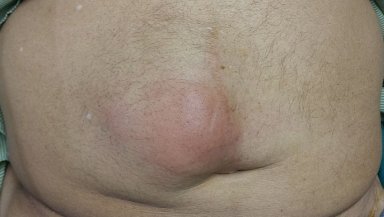
A hernia develops when there is a weak area or opening in this wall. Fatty tissue or part of the intestine can push through the weak area and create a bulge.
When you exercise, pressure inside your abdomen can increase.
This happens particularly during activities that require you to brace your abdominal muscles or hold your breath while pushing or pulling against resistance.
Heavy squats, deadlifts and other intense resistance exercises can create substantial pressure inside the abdomen.
If you already have a weak area, the tissue may push further through it. You may notice the hernia becoming more prominent or uncomfortable.
This does not mean that every time you exercise, you are causing permanent damage.
It means that certain movements may increase symptoms or make the bulge more noticeable.
The effect varies from person to person.
Does Lifting Weights Cause a Hernia?
This is another common question, particularly among people who spend time in the gym.
The answer is more complicated than simply saying, “Heavy lifting causes hernias.”
A hernia usually develops because there is a weakness in the abdominal wall combined with pressure inside the abdomen.
Some people may have a natural weakness in the abdominal wall. Others may develop weakness over time.
Factors such as chronic coughing, constipation, certain connective tissue conditions and repeated activities that increase pressure inside the abdomen can contribute to the development of an inguinal hernia. Heavy lifting is one of the activities that can increase abdominal pressure.
Recent discussions among people with hernias also show that many gym-goers believe a particular heavy lift caused their hernia. Others report having developed a hernia despite never lifting weights.
This is why it is not accurate to say that lifting weights alone is always responsible.
A more useful way to think about it is that heavy lifting can increase pressure on an already vulnerable area.
Why Does a Hernia Bulge More During Exercise?
You may have noticed something strange.
Your hernia may look small when you are lying down but become much more noticeable when you stand, cough or exercise.
There is a simple reason for this.
Exercise can temporarily increase pressure inside your abdomen.
That pressure pushes against the abdominal wall. If there is a weak spot, tissue can move through the opening and make the bulge more visible.
This is also why doctors may ask you to stand, cough or strain while examining a suspected hernia. These actions can make the bulge easier to identify.
A larger-looking bulge during exercise does not automatically mean that the hernia has suddenly become dangerous.
However, if the bulge is accompanied by increasing pain, tenderness or difficulty pushing the hernia back in, you should stop exercising and get medical advice.
Can Walking Be Safe With a Hernia?
For many people, walking is one of the easiest activities to continue.
Walking does not usually involve the same level of abdominal pressure as heavy resistance training.
It can help you remain physically active without placing the same demands on the abdominal wall.
If walking does not cause pain or make your hernia significantly more uncomfortable, it may be a reasonable form of activity.
Start at a comfortable pace.
You do not need to turn every walk into a workout.
The aim is to maintain movement while listening to your body.
If walking causes significant pain, a noticeable increase in swelling or other concerning symptoms, stop and speak with your healthcare professional.
The right activity level is different for each person.
What About Running With a Hernia?
Running creates more movement and impact than walking.
Some people with small, minimally symptomatic hernias may be able to run without significant discomfort. Others may notice pulling, pressure or pain in the groin or abdomen.
There is no universal rule that says every person with a hernia must stop running.
The key is how your body responds.
If running does not cause pain and your doctor has not advised you to restrict it, you may be able to continue at an appropriate level.
However, if running makes the lump more prominent, causes pain or leaves you with increasing discomfort afterwards, it is sensible to reduce the intensity and discuss your symptoms with a doctor.
You should not push through significant pain simply because you want to maintain your previous running routine.
Can You Lift Weights With a Hernia?
This is where the situation becomes more individual.
Heavy resistance training can significantly increase pressure inside the abdomen.
For someone with a known hernia, this may make the bulge larger or increase discomfort.
Recent online discussions show how strongly people want an answer to this question. Some gym-goers ask whether they can continue progressive overload training. Others describe modifying exercises, reducing weight or avoiding direct abdominal exercises until surgery.
There is no single weight that is automatically safe for everyone.
A 5 kg weight may be easy for one person and challenging for another.
The important consideration is not simply the number on the dumbbell.
It is the amount of strain the activity places on your body and whether it causes symptoms.
If lifting causes pain, pressure or a noticeable increase in the hernia bulge, that exercise should be stopped or modified.
Your surgeon or physiotherapist can help determine what level of exercise is appropriate for you.
What Exercises Should You Be Careful With?
Exercises that require heavy straining can place greater pressure on the abdominal wall.
This can include:
- Heavy squats
- Heavy deadlifts
- Maximal lifts
- Some exercises that require intense abdominal bracing
Direct abdominal exercises may also cause discomfort in some people.
This does not mean that every person with a hernia must avoid every abdominal exercise.
It means that exercises should be assessed individually.
If a particular movement repeatedly causes pain or makes the hernia bulge more prominent, it is not a good idea to keep pushing through it.
The NHS advises people with an inguinal hernia to stay active but avoid activities that cause discomfort or pain or place stress around the hernia.
Your exercise programme may therefore need to be modified rather than completely abandoned.
What About Push-Ups, Planks and Core Exercises?
Core exercises can be particularly confusing.
People often assume that strengthening the abdominal muscles will automatically repair a hernia.
Unfortunately, exercise cannot simply close the defect through which tissue is protruding.
Strengthening your muscles may improve overall fitness, but it does not necessarily repair the underlying opening in the abdominal wall.
Some core exercises can also significantly increase abdominal pressure.
Planks, sit-ups and other movements may be uncomfortable for some people with a hernia.
That does not mean everyone with a hernia must avoid them permanently.
The right decision depends on the type of hernia and your symptoms.
If an exercise causes pain, pressure or an obvious increase in the bulge, stop and seek professional advice before continuing.
Should You Stop Exercising Completely Until Surgery?
Not necessarily.
This is one of the biggest misconceptions surrounding hernias.
If you have been diagnosed with a hernia and are waiting for surgery, you may still be able to remain active.
Patient guidance from the NHS specifically recommends maintaining general fitness while waiting for surgery, while avoiding heavy lifting that makes symptoms worse.
Walking and other comfortable activities may help you maintain your fitness.
This can be useful because good general health may help you prepare for surgery and recover afterwards.
However, your surgeon may recommend specific restrictions depending on your condition.
If your hernia is painful, large, difficult to reduce or associated with other symptoms, your exercise restrictions may be different.
Your pre-surgery exercise plan should therefore be based on medical advice rather than a generic gym programme.
Can Exercise Make a Hernia Worse?
Exercise can make hernia symptoms more noticeable.
It can also increase pressure on the area and may cause the bulge to become more prominent.
But that does not mean every form of exercise will make the underlying hernia progressively worse.
This distinction is important.
You may notice a temporary increase in the size of the bulge during exercise because abdominal pressure has increased.
That is different from the hernia becoming permanently larger.
However, repeated activities that consistently cause pain or significant symptoms should not be ignored.
If your hernia is progressively becoming larger or more uncomfortable, you should be reassessed.
The aim is to keep you active without repeatedly provoking symptoms.
What If You Have No Pain? Can You Continue Your Normal Workout?
No pain is reassuring, but it does not automatically mean that every exercise is appropriate.
Some people have hernias with very few symptoms.
Watchful waiting may be an option for selected patients, particularly men with minimally symptomatic inguinal hernias. However, monitoring means paying attention to changes rather than simply ignoring the condition.
If you are symptom-free and want to continue exercising, speak with your doctor about the level of activity that is appropriate.
You may be able to continue some activities while reducing the intensity of others.
For example, a person may tolerate walking and moderate cardiovascular exercise but experience discomfort during heavy deadlifts.
Exercise does not have to be an all-or-nothing decision.
What If Your Hernia Hurts During Exercise?
Pain is a signal that deserves attention.
If you experience mild discomfort during an activity, stop and see whether it settles.
Do not immediately assume that you have caused serious damage.
However, if pain is significant, persistent or getting worse, stop the activity and seek medical advice.
The same applies if the hernia suddenly becomes more swollen, firm or difficult to reduce.
Pain that appears repeatedly during the same exercise is also a reason to review your programme.
You may need to:
- Reduce the weight
- Change the movement
- Avoid that exercise altogether
Your surgeon or physiotherapist can help you identify safer alternatives.
Can You Exercise After Hernia Surgery?
Yes.
Returning to physical activity is an important part of recovery after hernia surgery.
But you should not expect to return to your previous workout immediately.
Your body needs time to heal.
Walking is usually encouraged early after surgery, with activity gradually increased as you feel able. NHS guidance recommends gentle movement and gradually increasing activity during recovery.
Restrictions on heavy lifting vary between hospitals, surgical techniques and individual patients.
For example, Guy's and St Thomas' NHS Foundation Trust advises avoiding heavy lifting or strenuous exercise for around two weeks after keyhole surgery and around four weeks after open surgery, while noting that the surgeon's advice should guide individual recovery.
Other NHS guidance recommends avoiding heavy lifting or strenuous activity for four to six weeks after inguinal hernia repair.
These differences are important.
There is no single recovery timeline that applies to every patient.
Your surgeon's instructions should take priority.
When Can You Return to the Gym After Surgery?
Returning to the gym should be gradual.
Do not use the first pain-free day as a signal that you can immediately return to heavy weights.
Healing continues even when you begin feeling better.
Start with activities that your surgical team has cleared.
Walking is often a good starting point.
As your recovery progresses, you can gradually increase activity.
When resistance training is reintroduced, begin at a lower intensity than before surgery.
Pay attention to pain, swelling and discomfort around the repair.
Recent patient discussions show that people often worry about losing muscle or strength during recovery. Some report returning gradually after several weeks, while others take longer before returning to heavy lifting.
These personal experiences are useful for understanding patient concerns, but they should not replace your surgeon's recovery plan.
Can You Return to Heavy Weightlifting After Hernia Surgery?
Many people eventually return to strength training after successful hernia repair.
The timing depends on:
- The type of repair
- The size and location of the hernia
- The surgical technique
- Your healing
- Your surgeon's advice
A common mistake is to compare your recovery with someone else's.
One person may feel ready to lift after a few weeks. Another may need longer.
Returning too quickly can increase discomfort and make it difficult to distinguish normal healing from a problem.
A gradual progression is safer than immediately returning to your previous maximum weights.
If you are a competitive athlete or serious weightlifter, discuss your training goals with your surgeon before surgery.
Knowing that you want to return to heavy lifting can help your healthcare team plan your recovery and advise you appropriately.
Are Hernia Belts or Trusses a Solution for Exercise?
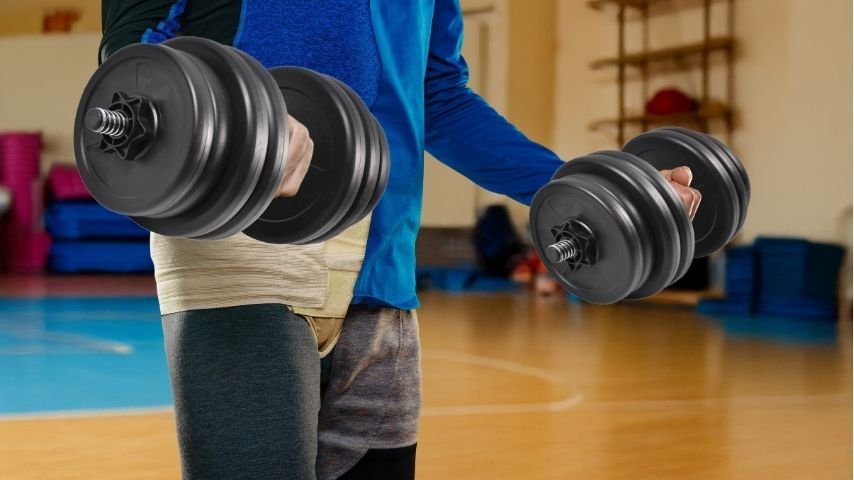
Some people use a hernia belt or truss because they believe it will allow them to continue lifting safely.
A truss may provide temporary support or reduce discomfort for some people.
However, it does not repair the underlying weakness.
It should not be considered a way to make heavy lifting automatically safe.
If you are considering using a truss while exercising, discuss it with your healthcare professional.
A device that makes the lump feel more secure does not necessarily mean that the underlying hernia is protected from pressure.
The goal should be appropriate activity and medical management rather than simply masking symptoms.
When Should You Stop Exercising and Seek Medical Attention?
Some symptoms should not be treated as ordinary exercise discomfort.
Seek medical assessment if:
- The hernia suddenly becomes very painful
- The hernia becomes significantly swollen or firm
- The hernia becomes difficult to push back
- You develop nausea or vomiting
- You develop abdominal swelling
- You develop a fever
- You have difficulty passing stool or gas
These can be signs of an incarcerated or strangulated hernia.
A strangulated hernia occurs when the blood supply to trapped tissue is reduced or cut off.
This is a medical emergency.
Do not try to exercise through these symptoms.
Do not wait for the pain to disappear after resting.
Seek urgent medical care.
How Should You Think About Exercise If You Have a Hernia?
Think about exercise as something that should be adjusted rather than automatically stopped.
Your body is giving you information.
If walking feels comfortable, it may be a useful activity.
If a particular exercise causes pain, modify it.
If heavy lifting makes the hernia bulge significantly or causes discomfort, stop that activity until you have medical advice.
If you are waiting for surgery, maintain your general fitness through activities that your healthcare team considers appropriate.
If you have already had surgery, follow the recovery plan and gradually rebuild your strength.
The goal is not to prove how much weight you can lift.
The goal is to stay healthy while protecting your recovery and avoiding unnecessary strain.
The Key Takeaway
Having a hernia does not automatically mean giving up exercise.
For many people, gentle and moderate physical activity can remain part of everyday life.
Walking is often a practical way to stay active. Other activities may also be possible depending on the type of hernia and your symptoms.
The biggest concern is usually heavy lifting and exercises that significantly increase pressure inside the abdomen.
If an exercise causes pain, makes the hernia noticeably larger or creates persistent discomfort, stop and discuss it with your healthcare professional.
If you are waiting for surgery, you may still be able to exercise safely at an appropriate level.
If you have already undergone hernia repair, return to exercise should be gradual and based on your surgeon's advice.
There is no universal “safe weight” or single exercise list that works for everyone.
Your hernia, your symptoms, your fitness level and your treatment plan all matter.
Most importantly, do not let the fear of a hernia stop you from staying active without first discussing what is safe for you.
At the same time, do not let your desire to continue training push you through symptoms that need medical attention.
The right approach is balance.
Conclusion
A hernia does not have to mean the end of your active lifestyle.
You may still be able to walk, exercise and maintain your fitness, but you may need to modify certain activities.
Heavy lifting and exercises that cause significant abdominal strain can make a hernia more noticeable or uncomfortable. If an exercise repeatedly causes pain or increases the bulge, it should be stopped and reviewed.
If you are waiting for surgery, staying reasonably active can help you maintain your overall fitness. If you have had surgery, gradually returning to activity is usually part of recovery, but the timing should be guided by your surgeon.
Do not compare your recovery with someone else's.
Your body may heal at a different pace.
If you have a hernia and want to continue exercising, speak with a qualified general surgeon about what activities are appropriate for your condition.
If your hernia is becoming painful, larger or difficult to reduce, do not simply train through it.
Get it assessed.
Suggested Call to Action
Have a hernia but don't want to give up your active lifestyle?
Consult a qualified general surgeon to understand what exercises are safe for you, whether your hernia needs treatment and how you can return to your normal activities safely.
References and Sources