Can Gallstones Cause Pain After Every Meal? What Your Body May Be Telling You
Medicine Made Simple Summary
Gallstones do not always cause pain after every meal, but meals, especially large or fatty ones, can trigger symptoms in people with symptomatic gallstones. Eating causes the gallbladder to contract and release bile, and a stone blocking the bile duct can lead to pain. Repeated attacks may eventually require treatment. When gallstones are causing frequent symptoms, doctors may recommend cholecystectomy, a procedure that removes the gallbladder. Understanding when pain is related to food, what other symptoms to watch for and when medical evaluation is needed can help you make informed decisions.
Why Can Eating Trigger Gallbladder Pain?
Eating is a normal process that your body performs several times a day. But if you have gallstones, a normal meal can sometimes trigger pain.
The reason lies in what happens inside your digestive system after you eat.
The gallbladder is a small organ located underneath the liver on the upper right side of the abdomen. Its main job is to store bile, a digestive fluid produced by the liver. When you eat, particularly food containing fat, the gallbladder contracts and releases bile into the small intestine.
If a gallstone blocks the opening through which bile normally flows, this contraction can cause pressure and pain.
The pain may settle when the stone moves away and the blockage is relieved.
This is why some people notice a repeated pattern of pain after meals.
Recent patient discussions show how confusing this can be. Some people describe pain after almost every meal, while others notice symptoms only after particularly heavy or fatty foods. Some also report that foods they previously tolerated suddenly seem to trigger discomfort. (reddit.com)
However, pain after eating does not automatically mean that you have gallstones.
Several digestive conditions can produce similar symptoms.
What Are Gallstones?
Gallstones are hard pieces of material that form inside the gallbladder.
They can develop when substances present in bile become unbalanced. Cholesterol is a common component of gallstones, although stones can also form from other substances such as bilirubin.
Some people have a single gallstone.
Others have many.
The size can range from tiny particles to stones that are considerably larger.
Importantly, having gallstones does not necessarily mean you will experience pain.
Many people have what are called silent gallstones. They may discover them accidentally during an ultrasound or another scan performed for an unrelated reason. These stones generally do not cause symptoms and often do not require treatment. (niddk.nih.gov)
Problems usually begin when a stone blocks a bile duct.
That is when symptoms such as biliary pain can occur.
What Does Gallbladder Pain After Eating Feel Like?
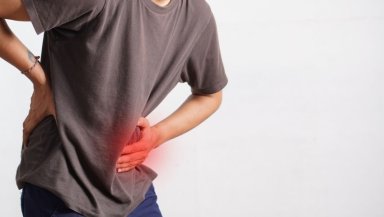
Gallbladder pain often occurs in the upper right part of the abdomen, underneath the ribs.
Some people feel the pain in the upper middle abdomen instead.
It may feel like a deep ache, pressure or intense discomfort. Unlike ordinary bloating, which may move around or come and go quickly, gallbladder pain can become steady and last for several hours.
The pain may also travel to the upper back or right shoulder.
Nausea and vomiting can occur during an attack.
NIDDK describes gallstone attacks as pain in the upper right abdomen that can last several hours and may occur after meals. (niddk.nih.gov)
The timing is important, but it is not the only clue.
If you repeatedly experience upper abdominal pain after eating, especially when the pain has a similar pattern each time, it is worth discussing with a doctor.
Why Are Fatty Foods Often a Trigger?
Fat is not automatically bad for the body.
Your body needs fat for energy and to absorb certain vitamins.
The reason fatty meals can be a problem for someone with gallstones is that fat stimulates the gallbladder to contract more strongly so that bile can be released into the intestine.
If a stone is sitting in a position where it blocks the bile duct, that contraction can increase pressure behind the obstruction.
This can trigger a gallbladder attack.
Patients often report symptoms after fried foods, rich gravies, creamy foods, fast food or other high-fat meals.
However, not everyone with gallstones reacts to the same foods.
One person may tolerate a particular meal without difficulty while another experiences pain after eating it.
This is why there is no universal “gallstone food list” that can predict symptoms for every patient.
Does Gallbladder Pain Happen After Every Meal?
Not necessarily.
This is an important distinction.
Gallstones do not automatically cause pain every time you eat.
Some people may experience symptoms only occasionally. Others may notice that certain meals trigger pain more consistently.
You may eat breakfast without any problem but develop pain after a large dinner.
You may tolerate a small portion of a food but experience symptoms after eating a larger quantity.
The pattern can also change over time.
Recent patient discussions include people describing increasingly frequent symptoms after meals, while others report that they initially had only occasional attacks. (reddit.com)
If you start noticing that abdominal pain occurs repeatedly after eating, especially if the pain is becoming more frequent, it is worth getting evaluated rather than simply eliminating more and more foods from your diet.
Could It Just Be Indigestion?
Yes.
This is why diagnosis can sometimes be difficult.
Indigestion can cause upper abdominal discomfort, bloating, belching, nausea and a feeling of fullness after meals.
Acid reflux and gastritis can also cause discomfort after eating.
Food intolerance can produce bloating and abdominal symptoms.
Irritable bowel syndrome can cause abdominal pain associated with bowel movements and changes in bowel habits.
Therefore, pain after eating is not enough to conclude that the gallbladder is responsible.
The pattern provides additional information.
Gallbladder pain is more likely to be located in the upper right or upper middle abdomen and may be steady and severe. It can last for hours and may spread towards the back or right shoulder.
Indigestion is more likely to involve burning, bloating, belching or uncomfortable fullness.
But there can be overlap.
This is why a proper medical assessment is more useful than trying to diagnose the problem from food triggers alone.
What If Every Meal Seems to Cause Pain?
If you are experiencing pain after almost every meal, do not assume that you simply need to stop eating fatty foods.
It may be helpful to temporarily avoid foods that clearly trigger symptoms while you arrange a medical assessment, but repeatedly restricting your diet without identifying the cause is not a long-term solution.
A doctor may ask you to keep track of your symptoms.
Note:
- What you ate
- When the pain began
- Where you felt it
- How long it lasted
- Whether you experienced nausea or vomiting
This information can help identify a pattern.
Your doctor may then recommend investigations.
An abdominal ultrasound is commonly used to look for gallstones. Blood tests may also be performed to check for inflammation or problems involving the liver and bile ducts. (nhs.uk)
Depending on your symptoms, additional tests may be necessary.
Can Changing Your Diet Prevent Gallbladder Attacks?
Dietary changes can sometimes help reduce symptoms.
If you know that fatty meals trigger your pain, reducing very fatty or fried foods may make attacks less frequent.
Eating smaller portions may also be easier to tolerate than very large meals.
However, dietary changes do not remove existing gallstones.
This is an important distinction.
You may successfully avoid your trigger foods and feel much better, but the stones may still be present.
Cambridge University Hospitals advises patients with gallstones to avoid foods that clearly trigger symptoms and maintain a balanced diet. It also cautions against rapid weight loss because this can increase the risk of gallstone formation. (cuh.nhs.uk)
Extreme dieting is therefore not the answer.
Your goal should be a healthy, balanced diet rather than trying to eliminate fat completely.
When Does Repeated Food-Related Pain Mean You Should See a Doctor?
If pain occurs repeatedly after meals, particularly if it is located under the right ribs or in the upper middle abdomen, you should discuss it with a healthcare professional.
This becomes more important if the pain lasts for several hours or is associated with nausea or vomiting.
Repeated attacks may indicate symptomatic gallstones.
NIDDK explains that people who have experienced a gallbladder attack are more likely to experience additional attacks. (niddk.nih.gov)
You should also seek medical attention if your symptoms are becoming more frequent or severe.
Do not wait until the pain becomes unbearable before seeking evaluation.
What Warning Signs Need Urgent Attention?
Most food-related abdominal discomfort is not an emergency.
However, some symptoms can indicate a complication.
Seek prompt medical attention if you develop:
- Severe or persistent abdominal pain, particularly if it lasts several hours
- Fever or chills
- Yellowing of the eyes or skin
- Dark urine
- Unusually pale stools
- Repeated vomiting along with severe abdominal pain
Fever or chills can suggest infection or inflammation.
Yellowing of the eyes or skin can indicate jaundice and may occur when bile flow is blocked.
Dark urine or unusually pale stools can also be warning signs.
NIDDK identifies prolonged abdominal pain, fever or chills, jaundice, dark urine, light-coloured stools, nausea and vomiting as symptoms that can occur with complications of gallstones. (niddk.nih.gov)
These symptoms require timely medical evaluation.
When Is Cholecystectomy Considered?
If gallstones are confirmed and are causing repeated symptoms, your doctor may discuss surgery.
The procedure is called cholecystectomy, which means removal of the gallbladder.
The most common approach is laparoscopic or keyhole surgery. The surgeon makes several small incisions and uses a camera and specialised instruments to remove the gallbladder.
The reason the entire gallbladder is removed rather than simply removing the stones is that the gallbladder is where the stones form.
Once the gallbladder is removed, bile continues to be produced by the liver and flows directly into the intestine.
NHS guidance states that people can live normally without a gallbladder and generally continue to eat a normal, healthy diet after removal. (nhs.uk)
Cholecystectomy is generally considered when gallstones are causing symptoms or complications, rather than simply because stones have been found incidentally.
Will I Have to Avoid Fatty Foods Forever After Cholecystectomy?
This is one of the biggest concerns patients have before gallbladder surgery.
The answer is generally no.
The gallbladder stores bile, but the liver continues to produce bile after the gallbladder is removed.
You can therefore digest food without a gallbladder.
NHS guidance states that you do not usually need to follow a special diet after gallbladder removal. Some people may temporarily find fatty foods harder to tolerate, particularly during early recovery. (guysandstthomas.nhs.uk)
Recent patient discussions show how much anxiety exists around this issue. Some people worry they will never be able to eat pizza, fried food or other favourite foods again. Others report returning to a normal diet within days or weeks. (reddit.com)
Individual experiences vary.
For the first few days after surgery, smaller meals may feel more comfortable. You can then gradually increase the variety and quantity of food according to how your body responds.
Can Diarrhoea Happen After Gallbladder Removal?
Some people develop diarrhoea or more frequent bowel movements after cholecystectomy.
This can happen because bile is no longer stored in the gallbladder between meals. Instead, bile flows more continuously from the liver into the intestine.
For most people, this does not cause a long-term digestive problem.
NHS guidance states that indigestion, abdominal pain and diarrhoea can occur after gallbladder removal and usually improve, although persistent symptoms should be discussed with a healthcare professional. (nhs.uk)
This is another reason not to assume that surgery automatically means permanent dietary restrictions.
Most people are able to return to a normal diet.
The Key Takeaway
Gallstones can cause pain after meals, but not necessarily after every meal.
The strongest clue is usually the pattern. Repeated upper-right or upper-middle abdominal pain after eating, particularly after heavy or fatty meals, may be consistent with symptomatic gallstones.
However, indigestion, reflux, gastritis and other digestive problems can produce similar symptoms.
If you repeatedly experience pain after meals, particularly when the episodes last for hours or are becoming more frequent, it is worth getting evaluated.
An ultrasound can often identify gallstones, while blood tests and other investigations may help determine whether there is inflammation or blockage.
If symptomatic gallstones are confirmed, your doctor may discuss cholecystectomy as definitive treatment.
Conclusion
Food should normally give you energy, not leave you wondering why your upper abdomen hurts.
If you repeatedly experience pain after eating, particularly under the right ribs, it is worth paying attention to the pattern.
Gallstones can cause pain when a stone temporarily blocks the flow of bile. Eating causes the gallbladder to contract, and this can trigger symptoms when a stone is obstructing the duct.
But not every episode of post-meal pain is caused by the gallbladder.
Indigestion, acid reflux, gastritis and other digestive conditions can feel very similar.
If the symptoms keep returning, do not keep eliminating foods indefinitely without finding out why.
A doctor can assess your symptoms and may recommend an ultrasound or other tests.
If gallstones are causing repeated attacks or complications, cholecystectomy may be recommended to remove the gallbladder and prevent further gallstone-related attacks.
And if you develop severe persistent pain, fever, vomiting, jaundice, dark urine or pale stools, seek medical attention promptly.
Your body may be telling you something.
The key is learning how to listen to the pattern rather than simply blaming every episode on indigestion.
Suggested Call to Action
Experiencing repeated abdominal pain after meals or wondering whether your food-related discomfort could be caused by gallstones?
Consult a gastroenterologist or experienced general surgeon for an evaluation and appropriate imaging to understand the cause and whether treatment such as cholecystectomy may be needed.