Can a Hernia Get Worse If You Wait? When Watchful Waiting Is No Longer Enough
Medicine Made Simple Summary
A hernia does not always need immediate surgery. For some people, especially those with a small inguinal hernia and few or no symptoms, doctors may recommend watchful waiting. But waiting does not mean the hernia has healed. It may gradually become larger or more uncomfortable, and some people eventually need surgery. The key is knowing when observation is still reasonable and when symptoms suggest repair is needed. This article explains how hernias can change, what warning signs to watch for, and when waiting may no longer be the safest choice.
What Does “Watchful Waiting” Mean for a Hernia?
Being told that you have a hernia does not always mean that you need surgery immediately.
This can be confusing for patients. You may hear the word “hernia” and naturally assume that it needs to be repaired as soon as possible. But the decision is not always that straightforward.
Watchful waiting means monitoring the hernia instead of having surgery immediately. It is generally considered for selected people whose hernia causes no symptoms or only minimal symptoms, particularly men with an inguinal hernia.
The important word is “watchful”.
It does not mean forgetting about the hernia. It means understanding your symptoms, watching for changes and knowing when you need another medical assessment.
Current guidance indicates that watchful waiting can be a reasonable option for men with inguinal hernias that cause few or no symptoms. However, many of these patients eventually develop symptoms and choose surgery. NIDDK reports that about 70% of men who delay surgery develop new or worsening symptoms requiring surgery within five years.
So, watchful waiting is not the same as saying, “Nothing will happen.”
It means, “Surgery is not necessarily needed right now, but the situation needs to be monitored.”
Why Can a Hernia Get Worse Over Time?
To understand why a hernia can become more troublesome, it helps to understand what is happening underneath the skin.
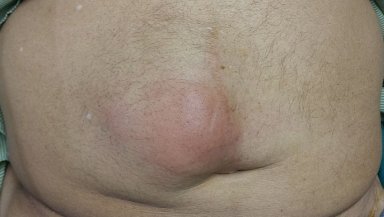
Your abdominal wall acts like a protective layer around the organs inside your abdomen. A hernia develops when there is a weak area or opening in this wall. Fatty tissue or part of the intestine can push through this weak area and create a bulge.
The weakness itself does not usually disappear simply because the lump becomes smaller when you lie down.
When you stand, cough, strain or lift something, pressure inside your abdomen increases. This can push the tissue outward again.
Over time, repeated pressure can cause the bulge to become more noticeable. The hernia may also become more uncomfortable.
Some hernias remain relatively stable for years. Others gradually increase in size or start causing symptoms.
This is why two people with what appears to be a similar hernia may receive very different advice.
The decision depends on the type of hernia, its size and location, the person's symptoms, overall health and the risk of complications.
Does Every Hernia Become Bigger?
No.
There is no rule that says every hernia will continuously grow.
Some people have a small hernia that remains minimally symptomatic for a long time. Others notice gradual enlargement.
The important thing is to pay attention to change.
A lump that was previously barely noticeable but is now clearly visible deserves reassessment. The same is true if the hernia begins interfering with walking, exercising, working, sleeping or other everyday activities.
A change in symptoms can be more important than the size of the lump itself.
For example, a small hernia that causes significant pain may require more attention than a larger hernia that causes no discomfort.
This is why the decision about surgery should not be based only on measurements or appearance.
Your symptoms and how the hernia affects your daily life matter.
When Is Watchful Waiting Reasonable?
Watchful waiting may be appropriate when a doctor has confirmed the diagnosis and the hernia is causing little or no discomfort.
This is particularly relevant to some men with inguinal hernias.
If the lump is easily reducible, meaning it can move back into the abdomen, and there are no concerning symptoms, immediate surgery may not always be necessary.
In this situation, the patient and doctor can discuss the advantages and disadvantages of waiting compared with planned surgery.
One advantage of watchful waiting is that you avoid an operation and its potential complications at a time when the hernia is not significantly affecting your life.
Hernia surgery is generally safe, but it is still surgery. Possible complications include:
- Infection
- Fluid or blood collection
- Chronic pain
- Urinary problems
- Recurrence of the hernia
For someone who has very few symptoms, the decision to operate therefore needs to balance the potential benefits of repair against the risks associated with surgery.
Watchful waiting can be a safe option for appropriately selected patients. But it should always follow a proper medical assessment.
When Does Watchful Waiting Stop Making Sense?
The situation changes when the hernia begins affecting your quality of life.
You may initially have only a small lump. You may not have any pain. You may continue your normal activities.
Months or years later, you may notice discomfort while walking, exercising, coughing or lifting.
You may also find that the lump has become larger or appears more frequently.
This is an important point.
The purpose of watchful waiting is not to tolerate increasing symptoms indefinitely. If the hernia becomes increasingly uncomfortable or starts interfering with your normal activities, it may be time to reconsider planned surgical repair.
Clinical guidance commonly considers symptoms that significantly interfere with daily activities as a reason to consider surgery. Increasing size or difficulty reducing the hernia can also change the treatment decision.
A planned operation is generally preferable to waiting until a hernia becomes an emergency when surgery is otherwise appropriate.
Sign 1: The Hernia Is Becoming More Painful
Pain is one of the clearest signs that your situation needs reassessment.
A hernia may initially cause only mild discomfort. You may notice a pulling or heavy sensation in the groin after standing for a long time.
Over time, the discomfort may become more frequent.
You may begin to feel pain while walking, exercising, coughing or lifting. You may also find that you need to stop activities that you previously enjoyed.
This does not automatically mean that the hernia has become dangerous.
But it does mean that the balance between waiting and repairing the hernia may have changed.
If pain is increasing, speak with your doctor or surgeon rather than simply accepting it as something you have to live with.
Sign 2: The Lump Is Getting Larger
A hernia that gradually increases in size should be reassessed.
The bulge may become more obvious when you stand. It may become difficult to conceal under clothing. It may also become uncomfortable during physical activity.
A larger hernia is not automatically an emergency.
However, progressive enlargement can make everyday activities more difficult and may influence the decision to have planned surgery.
The important thing is not to wait until the hernia becomes extremely large or severely symptomatic before seeking medical advice.
A surgeon can assess whether continued observation remains reasonable or whether elective repair would be a better option.
Sign 3: The Hernia Is Affecting Your Everyday Life
This is often overlooked.
Patients sometimes focus only on pain and forget to consider function.
Ask yourself whether the hernia is changing what you do.
- Are you avoiding exercise because of it?
- Are you uncomfortable while working?
- Does standing for long periods make the symptoms worse?
- Are you avoiding lifting objects?
- Are you changing the way you sleep because of discomfort?
If the answer is yes, the hernia may no longer be considered minimally symptomatic.
The goal of treatment is not simply to remove a lump. It is also to help you maintain a safe and comfortable quality of life.
If a hernia is restricting normal activities, discuss planned treatment with a surgeon.
Sign 4: The Hernia Is Becoming Difficult to Push Back
A reducible hernia can move back into the abdomen, either naturally when you lie down or with gentle pressure under appropriate medical guidance.
An irreducible hernia does not return easily.
This change matters.
A hernia that previously went back inside but now remains outside may have become incarcerated. An incarcerated hernia means the tissue has become trapped and cannot be returned to its normal position.
This situation needs medical assessment.
It does not always mean that the tissue has lost its blood supply. But incarceration can progress to strangulation, which is much more serious.
Do not repeatedly force a painful or resistant lump back into place.
If the hernia has suddenly become stuck, particularly if it is painful or swollen, seek medical attention promptly.
Sign 5: You Develop Sudden or Severe Pain
Sudden severe pain is very different from the mild discomfort that some people experience with a hernia.
A sudden change in pain can indicate that the hernia has become trapped or that its blood supply has been affected.
This requires urgent medical assessment.
A strangulated hernia occurs when the blood supply to the tissue trapped within the hernia is cut off. Without adequate blood supply, the tissue can become damaged or die. If part of the intestine is involved, intestinal obstruction and other serious complications can occur.
This is not a situation where watchful waiting is appropriate.
Emergency treatment may be required.
Sign 6: You Develop Nausea, Vomiting or Abdominal Swelling
A hernia can sometimes involve part of the intestine.
If the intestine becomes trapped, it can interfere with the movement of food and digestive contents through the bowel.
This may cause symptoms such as:
- Abdominal pain
- Bloating
- Nausea
- Vomiting
You may also find it difficult or impossible to pass stool or gas.
These symptoms are particularly concerning when they occur with a painful or swollen hernia.
Do not assume that these symptoms are simply food poisoning, indigestion or a stomach infection if you also have a known hernia.
The combination needs urgent medical assessment because it may indicate bowel obstruction or strangulation.
Sign 7: The Skin Over the Hernia Changes Colour
A hernia that suddenly becomes red, purple, dark or unusually discoloured requires urgent attention.
Skin colour changes can occur when the tissues within a trapped hernia are under pressure and their blood supply is affected.
This can be a sign of strangulation.
The concern becomes greater if the colour change occurs together with:
- Severe pain
- Swelling
- Fever
- Nausea
- Vomiting
Do not wait to see whether the colour returns to normal.
Seek urgent medical care.
A strangulated hernia can become life-threatening and requires prompt treatment.
Can Waiting Turn a Planned Surgery Into an Emergency?
This is one of the biggest concerns patients have.
The answer is that emergency complications can occur, but they are not inevitable.
For appropriately selected people with minimally symptomatic inguinal hernias, watchful waiting is considered an acceptable approach. Acute incarceration is relatively uncommon in this group.
However, a small proportion of hernias can become incarcerated or strangulated.
If that happens, the situation changes completely.
Instead of having time to discuss the surgical technique, prepare for the procedure and optimise your health, you may need emergency surgery.
Emergency surgery can involve additional complications, particularly when the intestine has been trapped or its blood supply has been compromised.
This is why the goal is not to scare patients into having surgery.
The goal is to understand the difference between safe observation and ignoring a changing hernia.
Is Surgery Better Than Waiting?
There is no single answer that applies to everyone.
For someone with minimal symptoms, surgery may not provide enough immediate benefit to justify operating straight away.
For another person, increasing pain or limitations may make planned repair the better choice.
Surgery itself also has risks.
Possible complications include:
- Infection
- Swelling
- Urinary problems
- Chronic pain
- Recurrence
Serious complications are uncommon, but they are part of the decision that should be discussed with the surgeon.
This is why the decision should be individualised.
A good consultation is not simply about asking, “Should I have surgery?”
It is about asking, “What is the safest and most appropriate option for me at this stage?”
What Can You Do While You Are Waiting?
If your doctor recommends watchful waiting, it does not mean that you have to ignore your health.
Pay attention to changes in the size of the lump and the symptoms you experience.
Notice whether the hernia is becoming more painful or interfering with your normal activities.
Avoid activities that consistently cause significant pain or discomfort.
If you have chronic constipation or a persistent cough, speak with your doctor about managing these conditions because repeated straining and coughing increase pressure inside the abdomen.
Maintaining a healthy weight and following general lifestyle advice can also support your overall health and may be particularly relevant if surgery becomes necessary.
Most importantly, understand the warning signs that mean you should seek urgent care.
What Should You Ask Your Surgeon?
If you have been diagnosed with a hernia and are unsure whether to wait or have surgery, your consultation should be a discussion rather than a simple yes-or-no decision.
Ask:
- What type of hernia you have and whether it is reducible.
- Whether watchful waiting is appropriate in your specific situation.
- What changes would mean that you should return for reassessment.
- How likely it is that your symptoms will increase over time.
- About the benefits and risks of planned surgery.
- What type of repair may be suitable for you and what recovery may look like.
Understanding these points can make the decision much less confusing.
When Should You Go to the Emergency Department?
A hernia needs urgent medical attention if it:
- Suddenly becomes much larger
- Becomes very painful or tender
- Can no longer be reduced
- Develops redness or dark discoloration
Urgent assessment is also needed if you develop:
- Fever
- Severe abdominal pain
- Persistent nausea or vomiting
- Abdominal bloating
- Difficulty passing stool or gas
These symptoms can indicate an incarcerated or strangulated hernia or bowel obstruction.
Do not wait for a routine appointment when these warning signs appear.
Do not rely on painkillers to mask worsening symptoms.
And do not try to repeatedly force a painful hernia back into place.
Prompt medical assessment is the safest option.
The Key Takeaway
A hernia does not always need to be repaired immediately.
For selected people, particularly men with an inguinal hernia causing little or no discomfort, watchful waiting can be a safe and reasonable approach.
But watchful waiting is not the same as ignoring the hernia.
The hernia may gradually become larger. Symptoms may become more frequent. Pain may increase. Daily activities may become difficult. The lump may eventually become difficult or impossible to reduce.
These changes mean that the original decision may need to be reconsidered.
The most important distinction is between a hernia that is stable and minimally symptomatic and one that is changing or showing warning signs.
Sudden severe pain, a rapidly enlarging or trapped lump, skin colour changes, fever, nausea, vomiting, abdominal swelling or difficulty passing stool or gas can signal a serious complication.
If these symptoms occur, seek urgent medical attention.
If your hernia is gradually becoming more uncomfortable or affecting your daily life, speak with a surgeon about planned repair.
Waiting can be appropriate when it is medically advised.
Ignoring a changing hernia is different.
The right decision is not simply about operating now or waiting forever. It is about understanding your hernia, monitoring it appropriately and knowing when the balance has changed.
Conclusion
If you have been diagnosed with a hernia and your doctor has recommended watchful waiting, you do not necessarily need to worry.
Many people with minimally symptomatic inguinal hernias can be safely monitored.
However, your symptoms should guide the next step.
If the lump becomes larger, pain increases, daily activities become difficult or the hernia becomes difficult to reduce, arrange a medical review.
If you develop sudden severe pain, vomiting, abdominal swelling, fever or skin discolouration over the hernia, seek urgent medical attention.
A planned consultation can help you understand whether continuing to watch the hernia is appropriate or whether surgical repair is now a better option.
If your hernia is changing or interfering with your everyday life, speak with a qualified general surgeon to understand your treatment options before it becomes an emergency.
References and Sources
National Institute of Diabetes and Digestive and Kidney Diseases (NIDDK)