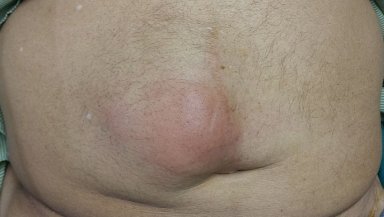
Anal Fistula: Why Does It Keep Coming Back Even After Treatment? Understanding the Cycle of Abscess, Drainage and Recurrence
Medicine Made Simple Summary
An anal fistula is an abnormal tunnel that develops between the inside of the anus or rectum and the skin around the anus, often after an anal abscess. Treatment aims to close or remove this tunnel while protecting the muscles that control bowel movements. A fistula can sometimes return even after surgery because the internal opening remains, the tract has multiple branches, infection persists, or the fistula is difficult to treat safely. Understanding the connection between abscess, drainage, healing and recurrence can help patients recognise symptoms and seek appropriate treatment.
What Is an Anal Fistula?
An anal fistula is a small abnormal tunnel that connects the inside of the anal canal to the skin near the anus. It is not the same as an ordinary wound or skin infection. The tunnel usually develops because of an infection that starts in one of the small glands inside the anus.
When these glands become blocked and infected, pus can collect and form an anal abscess. An abscess is essentially a pocket of infection. It can cause swelling, redness, tenderness and significant pain.
Sometimes the abscess bursts by itself or is opened and drained by a surgeon. The pain and swelling may then improve dramatically.
This is where the story can become confusing.
You may think the problem has been treated because the pus has drained and the pain has disappeared. But in some people, a small tunnel remains between the original infected gland and the skin. This tunnel is an anal fistula.
The American Society of Colon and Rectal Surgeons explains that an anal fistula is frequently the result of a previous anal abscess and can leave a persistent connection between the anal canal and the external skin.
Why Does an Abscess Happen in the First Place?
To understand why a fistula can return, it helps to understand how the problem begins.
The anal canal contains small glands. Sometimes one of these glands becomes blocked. Bacteria can then multiply inside it and an infection can develop.
As pus accumulates, pressure builds up.
The result is an abscess.
An abscess may cause:
- Sudden and severe pain.
- Sitting can become uncomfortable.
- Walking may hurt.
- The skin around the anus may become swollen or red.
- Some people develop fever or feel generally unwell.
The abscess needs to be drained because pus trapped inside a closed cavity generally cannot be adequately treated with antibiotics alone.
Surgical drainage is the main treatment for an anorectal abscess. Antibiotics may be required in particular situations, but they do not replace drainage in an uncomplicated abscess.
Once the pus is released, the pressure falls.
The pain often improves.
But that does not always mean the underlying problem has completely disappeared.
How Does an Abscess Become a Fistula?
Imagine a small blocked gland inside the anus that becomes infected.
The infection creates an abscess.
The abscess then finds a way to drain. This may happen naturally through the skin or through a surgical opening.
If the original infected gland and the drainage path remain connected, the body may form a permanent tunnel.
That tunnel is the fistula.
The inside of this tunnel can develop a lining that prevents it from simply closing like an ordinary wound.
This is why an anal fistula can behave differently from a normal skin wound.
The American Society of Colon and Rectal Surgeons notes that a fistula can persist after an abscess has been drained, with an external opening that may continue to discharge.
This explains one of the most frustrating experiences patients report.
- The swelling disappears.
- The pain improves.
- The wound seems to close.
- Then weeks or months later, the area becomes swollen again.
- The cycle starts again.
Why Does It Sometimes Keep Draining?
A small amount of discharge from the external opening can occur when a fistula is still present.
The tunnel provides a pathway through which fluid, pus or other material can escape.
This drainage may actually reduce pressure inside the fistula.
That can make the problem seem less serious.
You may notice a small amount of discharge on your underwear and think, “At least it is draining, so it must be healing.”
But persistent or recurrent discharge can be a sign that the fistula has not completely closed.
The pattern can sometimes look like this:
- Swelling develops.
- Pain increases.
- The area drains.
- The pain improves.
- Everything appears normal for a period.
- The same process can repeat.
The American Society of Colon and Rectal Surgeons describes this as a recurring cycle of pain, swelling and drainage when a fistula remains.
Why Can a Fistula Return After Surgery?
Recurrence does not necessarily mean that the previous surgeon did something wrong.
Anal fistulas can be difficult to treat because their anatomy is different from one patient to another.
Some are short and simple.
Others pass through important anal sphincter muscles.
Some have more than one branch.
Some have an internal opening that is difficult to identify.
Some have already been treated several times.
The aim of treatment is to eliminate the fistula while protecting continence. In other words, the surgeon needs to deal with the abnormal tunnel without unnecessarily damaging the muscles that help you control bowel movements.
This balance can make complex fistulas particularly challenging.
Research has identified several factors associated with recurrence, including:
- Multiple fistula tracts.
- Previous anal surgery.
Can the Fistula Have More Than One Tunnel?
Yes.
This is one reason a fistula can be difficult to treat.
A simple fistula may have one main pathway.
A complex fistula may have branches or extensions.
Think of it like a tree.
The main tunnel is the trunk.
Smaller branches can extend away from it.
If treatment closes the main pathway but a hidden branch remains, infection may continue.
The fistula may therefore appear to have healed before symptoms return.
Multiple fistula tracts have been associated with a higher risk of recurrence in published research.
This is also why your surgeon may sometimes recommend imaging, such as an MRI scan, before deciding on treatment.
The goal is to understand the anatomy before choosing the procedure.
Why Is the Internal Opening So Important?
An anal fistula generally has an external opening on the skin and an internal opening inside the anal canal.
The external opening may be easy to see.
The internal opening can be much harder to identify.
But finding and appropriately treating the internal opening is important because it may be the source of the ongoing fistula.
If the external opening closes while the internal connection remains, fluid and infection may become trapped again.
The result can be another abscess.
The abscess may then drain.
The skin may heal again.
And the cycle can repeat.
This is why simply treating the visible skin opening may not solve the underlying problem.
Does a Fistula Always Come Back?
No.
Many anal fistulas can be successfully treated.
The risk of recurrence depends on:
- The type of fistula.
- Its anatomy.
- The treatment used.
- Individual patient factors.
Simple fistulas are generally easier to treat than complex fistulas.
The location of the fistula in relation to the anal sphincter is particularly important.
The surgeon needs to know how much muscle is involved before deciding how to treat it.
For a straightforward fistula involving little sphincter muscle, a procedure called a fistulotomy may be appropriate.
A fistulotomy involves opening the fistula tract so that it can heal from the inside outward.
The NHS describes fistulotomy as one of the main surgical treatments for anal fistula, particularly when the fistula is suitable for this approach.
For more complex fistulas, other approaches may be considered.
Why Can't Every Fistula Be Treated With Fistulotomy?
This is an important question.
The anal sphincter muscles help control bowel movements.
If a fistula passes through a significant amount of sphincter muscle, simply cutting through the entire tract could damage those muscles.
That may increase the risk of problems with bowel control.
Therefore, the surgeon may choose a sphincter-preserving procedure for a complex fistula.
Depending on the individual anatomy, options can include:
- A seton procedure.
- LIFT.
- Advancement flap.
- VAAFT.
- FiLaC.
- Other techniques.
The NHS notes that treatment options have different benefits and risks and that the choice depends on the location of the fistula and the specific procedure.
There is no single operation that is best for every fistula.
The anatomy determines the strategy.
What Is a Seton and Why Is It Sometimes Used?
A seton is a thin piece of surgical material placed through the fistula tract.
It may look unusual to patients because a small loop can remain visible outside the anus.
But the purpose is to allow continued drainage and control infection while protecting the sphincter.
A seton may be used as part of a staged treatment plan, particularly for fistulas that involve significant sphincter muscle.
The NHS explains that a seton may be left in place for several weeks before another procedure is performed.
Patients sometimes become worried when they are told that the seton is staying in place.
It does not necessarily mean that treatment has failed.
In many cases, it is a deliberate part of the treatment strategy.
Can a Fistula Return Even After a Seton?
Yes, recurrence can still occur.
A seton can control drainage and help manage infection, but it does not automatically mean that the fistula has been permanently eliminated.
What happens next depends on the type of seton and the overall treatment plan.
Some patients undergo another procedure after the fistula has settled.
The surgeon may then choose a sphincter-preserving technique based on the anatomy.
The important thing is to understand what the seton is intended to achieve in your particular case.
Ask whether it is being used temporarily for drainage or as part of a definitive treatment strategy.
What About Laser Fistula Surgery?
Laser treatment, commonly known as FiLaC, is one of the sphincter-preserving approaches used for selected anal fistulas.
A laser fibre is introduced into the fistula tract. Energy is then used to treat the lining of the tract with the aim of closing it while avoiding cutting through the sphincter muscles.
It sounds attractive because protecting continence is an important concern for patients.
However, laser treatment is not a guaranteed solution for every fistula.
Published research has found variable healing rates, and patient selection and fistula anatomy matter. A systematic review of observational studies reported a pooled success rate of approximately 63% for FiLaC, while more recent comparative evidence continues to show that outcomes vary between techniques.
The important message is not that laser is good or bad.
It is that laser may be appropriate for some patients and not for others.
Your surgeon should first understand the fistula anatomy and then explain why a particular technique is being recommended.
Why Can Symptoms Return Months After Treatment?
Recurrence does not always happen immediately.
Sometimes the fistula appears to have healed for weeks or months before symptoms return.
A patient may have no discharge.
The external opening may look closed.
There may be no pain.
Then swelling appears in the same area.
The skin becomes tender.
Eventually, pus drains again.
This can happen if a portion of the fistula tract remains active or if a new abscess forms.
Published research has identified multiple tracts and previous anal surgery among factors associated with recurrence.
This is why follow-up matters even when you feel well.
Your surgeon may want to examine the area and assess whether healing is progressing as expected.
Can an Anal Fistula Heal by Itself?
Sometimes an abscess can drain and the external wound can appear to close.
But an established anal fistula generally does not reliably heal on its own.
The NHS states that anal fistulas usually require surgery because they rarely heal without treatment.
This is an important distinction.
- An abscess may drain.
- The pain may disappear.
- The skin may close.
- But if the abnormal tunnel remains, the underlying fistula can persist.
That is why repeated episodes of swelling and drainage should not simply be treated as unrelated skin infections.
A colorectal surgeon can assess whether a fistula is present.
Can You Ignore Repeated Drainage If There Is No Pain?
It is tempting to ignore it.
After all, if there is no pain, why see a doctor?
The problem is that drainage may indicate that the fistula remains open.
In some cases, the drainage may be small and intermittent.
The patient may become accustomed to it.
But persistent discharge from an opening near the anus is not something that should simply be accepted as normal.
It is worth having the area assessed, particularly if you have previously had an abscess or fistula surgery.
Early assessment can help determine whether the fistula is healing or remains active.
When Should You Be Concerned About a New Abscess?
A new abscess often causes a change in symptoms.
You may suddenly develop:
- Increasing pain.
- Swelling or tenderness.
- Difficulty sitting.
- Red or warm skin.
- Fever or chills.
- Very painful swelling before it drains.
If you have previously had an anal fistula, do not assume that a new painful lump is simply part of normal healing.
It may represent another abscess.
An abscess generally requires assessment and, when appropriate, drainage.
The American Society of Colon and Rectal Surgeons identifies surgical drainage as the primary treatment for an anorectal abscess.
Does Antibiotic Treatment Cure an Anal Fistula?
Usually, antibiotics alone do not eliminate an established anal fistula.
Antibiotics can be important in particular circumstances, especially when there is spreading infection or certain medical conditions.
But an established fistula is a physical tunnel.
Medication alone generally cannot remove that tunnel.
The American Society of Colon and Rectal Surgeons states that antibiotics alone are a poor alternative to drainage for an uncomplicated abscess and that fistulas usually require surgical treatment.
This is why repeated courses of antibiotics without addressing the underlying fistula may provide only temporary relief.
If symptoms keep returning, the underlying anatomy needs to be assessed.
Can Crohn's Disease Cause Recurrent Fistulas?
Yes.
Not every recurrent anal fistula is caused by Crohn's disease.
Most anal fistulas develop following an anal abscess caused by blocked anal glands.
However, Crohn's disease can cause perianal fistulas and can change how they are treated.
The NHS lists Crohn's disease among the less common causes of anal fistulas.
If you have:
- Multiple fistulas.
- Recurrent disease.
- Other bowel symptoms.
- Unexplained weight loss.
- A history suggestive of inflammatory bowel disease.
Your doctor may consider whether further evaluation is needed.
Treatment for Crohn's-related fistulas can involve both medical and surgical management.
This is another reason why recurrent fistula disease should be evaluated rather than repeatedly treated without understanding the cause.
Does Previous Fistula Surgery Increase the Chance of Recurrence?
Previous surgery can be one of several factors associated with recurrence.
This does not mean that having surgery once guarantees that the next procedure will fail.
It means that recurrent disease can be more challenging to treat.
Scar tissue may make the anatomy harder to identify.
The fistula may have changed its pathway.
There may be additional branches.
The sphincter may also have been affected by previous procedures.
A meta-analysis of recurrence risk factors found associations between recurrence and previous anal surgery and multiple fistula tracts.
For a patient who has already undergone one or more procedures, a detailed assessment by a colorectal specialist can therefore be particularly useful.
What Tests Can Help Find a Recurrent Fistula?
A physical examination is often the starting point.
The surgeon may inspect the external opening and examine the surrounding area.
Depending on the complexity of the fistula, additional tests may be recommended.
These can include:
- An MRI scan.
- Endoanal ultrasound.
- Examination under anaesthesia.
MRI can be particularly useful for mapping complex fistula pathways and identifying extensions that may not be obvious from the outside.
The NHS lists proctoscopy and imaging such as ultrasound, CT or MRI among tests that may be used when assessing an anal fistula.
The purpose of imaging is not simply to confirm that a fistula exists.
It can help the surgeon understand its route.
That information can influence the choice of treatment.
What Is the Main Goal of Fistula Treatment?
The goal is not simply to stop the discharge.
The goal is to eliminate the abnormal tunnel while preserving normal bowel control.
That is why treatment can sometimes involve several stages.
A surgeon may first drain an abscess.
A seton may then be placed to maintain drainage.
Once inflammation has settled, another procedure may be performed to close or treat the fistula.
For a simple fistula, fistulotomy may be appropriate.
For a complex fistula, a sphincter-preserving procedure may be preferred.
The treatment plan therefore depends on the anatomy rather than simply on how much pain the patient is experiencing.
What Can You Do If Your Fistula Keeps Coming Back?
If you have already undergone treatment and the fistula has returned, do not assume that you have reached the end of your options.
The first step is to understand why it may have returned.
Your surgeon may need to reassess the fistula anatomy.
An MRI or examination under anaesthesia may be considered if the pathway is unclear.
The treatment may then be modified.
A different procedure may be more appropriate than the one used previously.
For example, a fistula that was previously treated with one technique may later be treated using another sphincter-preserving approach.
The important thing is to avoid repeatedly treating the symptoms without understanding the underlying pathway.
The Key Takeaway
An anal fistula can feel like a problem that disappears and then returns without warning.
But there is usually a reason for the cycle.
- An infection can create an abscess.
- The abscess drains.
- The pain improves.
- But if an abnormal tunnel remains between the anal canal and the skin, the fistula can continue to drain.
- If the external opening closes while the internal pathway remains, fluid can become trapped again and another abscess may develop.
- This creates the familiar cycle of pain, swelling, drainage and apparent healing.
Recurrence does not necessarily mean that previous treatment was unsuccessful because of poor care.
Complex anatomy, multiple fistula tracts, previous surgery and the relationship between the fistula and the sphincter muscles can all influence the outcome.
Modern treatment focuses on eliminating the fistula while preserving continence.
Depending on the anatomy, treatment may involve:
- Fistulotomy.
- Seton placement.
- LIFT.
- Advancement flap.
- Laser treatment.
- Other sphincter-preserving approaches.
There is no single procedure that is right for every patient.
Conclusion
If an anal fistula keeps coming back, the most important thing is to understand why.
Repeated swelling and drainage are not simply a series of unrelated infections.
They can represent a persistent tunnel connecting the anal canal to the skin.
The cycle can begin with an abscess.
The abscess drains.
The symptoms improve.
The external opening may close.
But if the internal connection remains, infection can build up again.
This is why treating only the visible swelling may not provide a permanent solution.
A proper assessment should look at the entire fistula pathway.
The surgeon needs to know:
- Where it begins.
- Where it travels.
- Whether it has branches.
- How much sphincter muscle it involves.
That information helps determine the safest treatment.
For a simple fistula, fistulotomy may provide an effective solution.
For complex fistulas, preserving the sphincter becomes particularly important, and procedures such as seton treatment, LIFT, advancement flap or FiLaC may be considered depending on the individual anatomy.
If you have persistent discharge, a recurring lump, increasing pain or repeated abscesses after previous treatment, do not simply wait for the next episode to drain.
See a colorectal surgeon for reassessment.
The aim is not merely to stop today's pain.
It is to break the cycle and find a treatment approach that addresses the underlying fistula while protecting your long-term bowel function.
References and Sources
ASCRS – Abscess and Fistula Patient Information