What Is a Bronchoscopic Lung Nodule Biopsy? A Simple Guide for Patients
Medicine Made Simple
A bronchoscopic lung nodule biopsy is a minimally invasive procedure used to collect a small sample of tissue from a lung nodule so doctors can determine its cause. Lung nodules are small spots that appear in the lungs on imaging tests such as CT scans. While many nodules are harmless, some may represent infections, inflammation, or early lung cancer. During the procedure, doctors use a thin flexible tube called a bronchoscope that is inserted through the mouth or nose into the lungs. Special instruments are then used to collect tissue samples from the nodule. Examining these samples helps doctors make an accurate diagnosis.
Understanding What a Lung Nodule Is
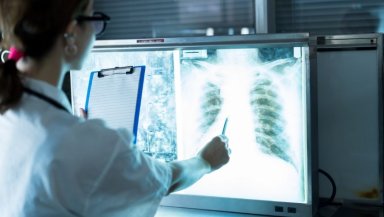
The lungs are responsible for exchanging oxygen and carbon dioxide in the body. They contain delicate airways and tiny air sacs that work continuously to support breathing. When doctors examine imaging tests such as CT scans of the chest, they carefully study the lung tissue to identify any unusual findings.
A lung nodule is a small round or oval spot that appears different from normal lung tissue on imaging. These nodules are usually small and often measure less than three centimeters in diameter. Larger abnormalities are typically described as lung masses rather than nodules.
Lung nodules are commonly discovered during CT scans performed for other medical reasons. A patient might undergo a scan because of a persistent cough, chest pain, or as part of a lung cancer screening program, as explained in a Lung Nodules Guide. In many cases, the nodule causes no symptoms and is detected incidentally.
Why Doctors Sometimes Need a Biopsy
Most lung nodules are benign and may occur due to previous infections, inflammation, or scar tissue. However, some nodules may represent early lung cancer or other diseases that require treatment.
When a nodule is detected, doctors analyze several characteristics such as its size, shape, location, and growth pattern over time. In many cases, doctors recommend monitoring the nodule with follow-up CT scans to see whether it changes.
However, if the nodule appears suspicious or grows over time, doctors may recommend a biopsy. A biopsy allows doctors to obtain a small sample of tissue from the nodule so it can be examined under a microscope. This helps determine whether the nodule is benign, inflammatory, infectious, or cancerous, and guides Lung Nodule Biopsy Options.
What Bronchoscopy Means
Bronchoscopy is a medical procedure that allows doctors to look inside the airways of the lungs. During bronchoscopy, a thin flexible tube called a bronchoscope is inserted through the nose or mouth and gently guided into the lungs.
The bronchoscope contains a tiny camera and light source that allow doctors to see the inside of the airways on a monitor. It also has channels that allow specialized instruments to pass through the scope.
Bronchoscopy is commonly used to evaluate lung diseases, investigate persistent cough or infection, and collect tissue samples from the lungs, including through Robotic Bronchoscopy in advanced settings.
Suggested image: Illustration showing bronchoscope passing through airway into lungs.
What Makes Bronchoscopic Biopsy Different From Other Biopsies
There are several ways doctors can obtain tissue from a lung nodule. One option is CT-guided needle biopsy, where a needle is inserted through the chest wall into the lung. Another option is surgical biopsy.
Bronchoscopic lung biopsy is different because the procedure reaches the nodule through the natural airway passages rather than through the chest wall. This approach avoids surgical incisions and is considered minimally invasive.
Bronchoscopy-based biopsy techniques are particularly useful for nodules located near or connected to the airways.
Advances in bronchoscopy technology now allow doctors to reach nodules that are deeper inside the lungs using advanced imaging guidance.
How Bronchoscopic Lung Nodule Biopsy Works
The procedure usually takes place in a specialized bronchoscopy suite within a hospital. Before the procedure begins, patients are connected to monitoring equipment that tracks heart rate, oxygen levels, and blood pressure.
Sedation is typically administered to help the patient relax. Local anesthetic may also be applied to numb the throat and reduce coughing during the procedure.
The bronchoscope is then gently inserted through the mouth or nose and guided through the airways into the lungs. Using imaging guidance, doctors navigate the bronchoscope toward the lung nodule.
Once the nodule is located, small instruments passed through the bronchoscope are used to collect tissue samples.
These samples are then sent to a laboratory where specialists examine them under a microscope.
Suggested image: Step-by-step illustration of bronchoscopy biopsy procedure.
Advanced Technologies Used During Bronchoscopic Biopsy
Modern bronchoscopy procedures often use advanced technologies that help doctors reach lung nodules more accurately.
One important tool is endobronchial ultrasound (EBUS). This technology uses ultrasound waves to create images of structures located near the airways, including lymph nodes and lung nodules.
Another technique is electromagnetic navigation bronchoscopy, which uses GPS-like technology to guide the bronchoscope to small nodules deep within the lungs.
Some advanced centers also use robotic bronchoscopy, which allows highly precise navigation through the complex airway system.
These technologies improve the chances of obtaining accurate tissue samples while minimizing complications.
Suggested image: Diagram showing navigation bronchoscopy reaching lung nodule.
What Patients May Feel During the Procedure
Many patients feel anxious before undergoing a lung biopsy. Understanding what happens during the procedure can help reduce these concerns.
Because sedation is used, most patients feel relaxed and may even sleep lightly during the procedure. The local anesthetic applied to the throat helps minimize discomfort.
The procedure typically lasts between thirty and sixty minutes. Patients usually do not feel pain during the biopsy itself.
After the procedure, mild throat irritation or coughing may occur temporarily. These symptoms usually resolve within a short time.
What Happens After the Biopsy
After the bronchoscopy procedure is completed, patients are moved to a recovery area where medical staff monitor them as the sedation wears off.
Most patients remain under observation for one to two hours before going home.
Doctors provide instructions regarding eating, drinking, and returning to normal activities. In most cases, patients can resume routine activities the next day.
The tissue samples collected during the biopsy are sent to a pathology laboratory. Specialists examine the samples to determine the exact cause of the lung nodule.
Results may take several days depending on the type of analysis required.
Suggested image: Pathologist examining lung tissue sample.
How Bronchoscopic Biopsy Helps Guide Treatment
The main goal of bronchoscopic lung nodule biopsy is to obtain an accurate diagnosis.
If the biopsy shows that the nodule is benign, patients may only need periodic monitoring with follow-up scans.
If the biopsy identifies infection or inflammation, doctors can prescribe appropriate medications.
If cancer cells are detected, doctors can develop a treatment plan that may include surgery, radiation therapy, chemotherapy, or targeted therapies.
An accurate diagnosis allows doctors to choose the most effective treatment for each patient.
Conclusion
A bronchoscopic lung nodule biopsy is a minimally invasive procedure that allows doctors to obtain tissue samples from lung nodules using the natural airway passages. This technique helps diagnose conditions such as infections, inflammatory diseases, and lung cancer.
Although the idea of a biopsy can feel intimidating, bronchoscopy procedures are carefully designed to be safe and comfortable for patients. Most people recover quickly and can return home the same day.
If your CT scan has detected a lung nodule and your doctor recommends further evaluation, discussing bronchoscopic biopsy with a pulmonologist can help you understand the procedure and the next steps toward an accurate diagnosis.