






You might notice some mild pressure, but the procedure is not considered painful. Any residual discomfort fades very quickly.

Table of Contents 
- Introduction
- What Is Bronchoscopic Lung Nodule Biopsy
- Why Is a Lung Nodule Biopsy Done?
- Right Candidate for Lung Nodule Biopsy
- Who May Not Be Suitable for Lung Nodule Biopsy?
- Bronchoscopic Lung Nodule Biopsy / CT-Guided Lung Biopsy Procedure
- During the Procedure
- After the Procedure
- Risks and Complications of Lung Nodule Biopsy
- Benefits of Bronchoscopic Lung Nodule Biopsy
- Why Choose Gleneagles Hospitals for Lung Nodule Biopsy?
- Conclusion
Introduction
Lung nodules are small growths identified on CT scans. While typically benign, they may require investigation to exclude malignancy or infection. When imaging is insufficient, a biopsy is necessary to retrieve tissue for laboratory analysis.
Modern minimally invasive techniques, such as navigational bronchoscopy, enable Gleneagles Hospitals specialists to precisely investigate nodules, meaning many patients can avoid the need for traditional surgical biopsies.
What Is Bronchoscopic Lung Nodule Biopsy
To diagnose lung nodules, doctors use two main biopsy methods:
Bronchoscopic Biopsy: A flexible tube (bronchoscope) is passed through your airways. Advanced versions use computer navigation to reach hard-to-access nodules.
CT-Guided Biopsy: A radiologist uses a CT scan to guide a thin needle through the chest wall.
Both procedures are designed to precisely identify infections, inflammation, or cancer. The main benefit of these modern methods is achieving a clear diagnosis while avoiding open surgery.
Why Is a Lung Nodule Biopsy Done?
If your doctor has recommended a biopsy, it is because a scan has shown a growth that needs a closer look. While many nodules are found by chance, we must be certain about what they are. This ensures we possess the required evidence to coordinate your optimal care plan.
Indications for biopsy include:
Pulmonary nodules detected on CT scans that require further evaluation.
Nodules that increase in size or change in appearance over time.
Suspicious features on imaging that raise concern for lung cancer.
Nodules in patients with a history of smoking or other risk factors.
Persistent lung lesions that do not resolve with treatment.
Right Candidate for Lung Nodule Biopsy
Finding a nodule doesn't automatically mean you’ll have a biopsy. Your doctor will review your medical history, recent scans, and overall health before making any firm clinical recommendations.
Candidates often include:
Nodules over 8–9 mm, particularly if they are increasing in size.
Risk factors like smoking, age 65+, family history, or exposure to asbestos/radon.
With symptoms that include a cough that persists, weight loss, bloody sputum, or breathing difficulties.
Intermediate risk (5-65%), where acting now is safer than just waiting.
Patients in good overall health are suitable for minimally invasive procedures like CT-guided or transbronchial biopsy.
We prioritise your peace of mind and comfort, ensuring that any procedure suggested is truly the safest and best option.
Your health matters – get expert advice today.
Who May Not Be Suitable for Lung Nodule Biopsy?
Although lung biopsy procedures are generally safe, they may not be recommended for every patient. Doctors may postpone or avoid the procedure in certain situations.
These may include:
Advanced obstructive lung disease or respiratory failure.
Acute or chronic cardiac instability.
Haematological issues requiring blood thinners.
Physical comorbidities prohibiting safe sedation.
Miniature lesions unsuitable for percutaneous or transbronchial targeting.
In these scenarios, immediate biopsy is contraindicated. Clinical teams may recommend periodic imaging as the primary diagnostic tool to track nodule behaviour without compromising patient safety.
Bronchoscopic Lung Nodule Biopsy / CT-Guided Lung Biopsy Procedure
Experienced doctors, such as pulmonologists or interventional radiologists, perform these procedures. At Gleneagles Hospitals, they use a special room where they can monitor you closely. Before your appointment, the team reviews your medical history, scans, and current medications. They might also run blood tests to make sure it's safe to proceed.
Before your appointment:
Do not eat or drink for several hours before the procedure.
Tell the doctor about any blood-thinners.
Tell them about allergies or bad reactions to anaesthesia.
Avoid smoking.
The doctor will explain why you need the biopsy and what to expect.
During the Procedure
Procedural protocols are strictly dictated by the chosen technique.
Bronchoscopic or Navigational Bronchoscopy
Local anaesthesia is applied to the throat, alongside sedation. The bronchoscope is inserted via the nose or mouth. Advanced imaging guides the instrument to the nodule to secure biopsy samples.
CT-Guided Lung Biopsy
The patient is secured on a CT table. CT scans provide precise guidance for the insertion of a biopsy needle through the chest wall.
Expect a duration of 30 to 60 minutes, which varies with the procedure's technical requirements and anatomical complexity.
After the Procedure
After the biopsy, we monitor you for a while to check your vital signs and oxygen. You might have mild chest pain, a cough, some fatigue, or minor blood in your sputum. These symptoms settle fast. Most people go home the same day, depending on the type of biopsy. We send your tissue samples to the lab for analysis. You should get your results back in a few days. If you have any serious concerns, please let the nursing team know before leaving.
Risks and Complications of Lung Nodule Biopsy
While standard, these procedures involve risks, particularly because the lungs are highly delicate organs.
Risks include:
Haemorrhage at the site of the biopsy
Temporary oxygen instability during the procedure
Rarely an infection
Pneumothorax (air leak causing partial lung collapse), a recognised risk of CT-guided needle biopsies
The medical team provides vigilant observation throughout the process to ensure any deviation is identified early. Effective management of these complications is our primary clinical response.
Benefits of Bronchoscopic Lung Nodule Biopsy
Biopsy procedures are essential for diagnostic accuracy and life-saving treatment planning.
Key benefits include:
Definitive nodule diagnosis
Identifying serious lung infections
Early-stage cancer detection
Avoiding the need for surgical biopsy in many cases
Accurate, directed therapy
Why Choose Gleneagles Hospitals for Lung Nodule Biopsy?
Advanced diagnostics require modern medical infrastructure. Gleneagles Hospitals incorporates biopsies into our comprehensive, patient-focused pulmonary care services.
Our hospital facilities include:
Advanced bronchoscopy diagnostic systems
Imaging-guided biopsy for accurate targeting
Expert pulmonologists and interventional radiologists
On-site pathology and laboratory services
Monitoring and post-procedure observation areas
We guide you through every stage of evaluation, from diagnosis to treatment planning. Our multidisciplinary medical teams provide the support you need, ensuring clarity and expert care at every turn.
Conclusion
A lung nodule finding is often normal, and its investigation is safe. The doctors collect tissue via minimally invasive biopsies, avoiding the need for surgery. These minimally invasive techniques drastically lower recovery time compared to traditional, invasive surgeries. Early diagnosis is critical, and these procedures are the most effective means of obtaining the necessary tissue samples.
Your treatment plan depends on the findings and your current health status. At Gleneagles Hospitals, our team uses advanced technology to support you, keeping your comfort and safety at the very heart of everything we do.

Experience: 15 Years
Heart and Lung Transplant, Pulmonology, Interventional Pulmonology and Sleep Medicine
Bengaluru, Kengeri
Explore Our Blogs
View All Pulmonology, Interventional Pulmonology and Sleep Medicine
Lung Nodule Found on CT Scan? Why Doctors Sometimes Recommend a Transbronchial Lung Biopsy
 Pulmonology, Interventional Pulmonology and Sleep Medicine
What Happens During a Navigation Bronchoscopy? Step-by-Step Guide for Patients
 Pulmonology, Interventional Pulmonology and Sleep Medicine
Robotic Bronchoscopy vs Navigation Bronchoscopy: What’s the Difference?
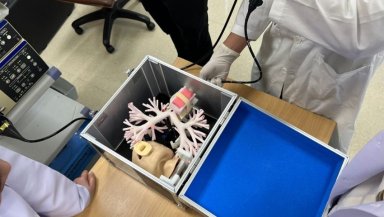 Pulmonology, Interventional Pulmonology and Sleep Medicine
Navigational Bronchoscopy Explained: How Doctors Reach Small Lung Nodules Without Surgery
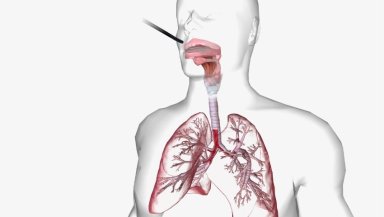 Pulmonology, Interventional Pulmonology and Sleep Medicine
Navigation Bronchoscopy vs CT-Guided Lung Biopsy: Which Test Is Better for Lung Nodules?
 Pulmonology, Interventional Pulmonology and Sleep Medicine
How Accurate Is Navigation Bronchoscopy for Diagnosing Lung Nodules?
Frequently Asked Questions
Is a lung nodule biopsy painful?
How long does a lung biopsy procedure take?
30 to 60 minutes. It depends on the exact technique and where the nodule is. We move as quickly as we safely can.
When will the biopsy results be available?
Results may take several days because the tissue samples need careful examination in the laboratory. Your doctor will inform you when the results are expected.
Can lung nodules always mean cancer?
No. Many lung nodules are benign, caused by factors such as past infections or scarring. The biopsy helps us give you a clear answer.
Will I need to stay in the hospital after the biopsy?
Most people go home on the same day. You will stay for a few hours of observation to ensure you have recovered before leaving.

