Early Lung Cancer Detection: How Navigation Bronchoscopy Helps Diagnose Small Lung Nodules
Medicine Made Simple
Early lung cancer is often detected when a CT scan shows a small lung nodule. A lung nodule is a small spot in the lung that may be caused by infection, inflammation, or cancer.
When these nodules are very small and located deep inside the lungs, doctors may use navigation bronchoscopy to collect a tissue sample. This advanced procedure uses CT imaging and GPS-like guidance to help doctors reach difficult areas of the lungs through the natural airways.
Navigation bronchoscopy allows doctors to diagnose lung cancer earlier and begin treatment at the most effective stage.
Understanding Why Early Detection of Lung Cancer Matters
Lung cancer is one of the most serious diseases affecting the lungs. It occurs when abnormal cells in the lung begin to grow uncontrollably.
Like many cancers, lung cancer is easier to treat when it is detected early. When the disease is diagnosed at an early stage, treatment options such as surgery or targeted therapy can be more effective.
Unfortunately, lung cancer often develops without noticeable symptoms in its early stages. Many patients do not experience symptoms until the disease has progressed.
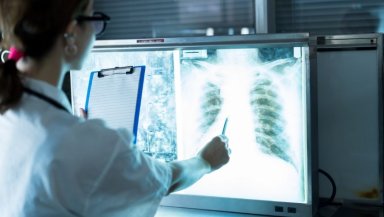
Because of this, imaging tests such as CT scans play an important role in detecting lung abnormalities early.
What a Lung Nodule Means on a CT Scan
A lung nodule is a small round or oval spot that appears in the lung during imaging tests such as CT scans.
These nodules are usually less than three centimeters in size. They may appear solid, partially solid, or ground-glass in appearance depending on the type of tissue involved.
Lung nodules are quite common and can occur for many reasons. Infections such as tuberculosis or fungal infections may leave small scars that appear as nodules.
Inflammatory conditions such as sarcoidosis may also produce nodules in the lungs.
In some cases, however, lung nodules may represent early lung cancer.
Because imaging alone cannot always determine the cause, doctors sometimes recommend additional tests to obtain tissue samples. In determining the best approach, specialists may weigh the benefits of navigation bronchoscopy vs ct guided biopsy depending on the nodule's location and the patient's overall lung health.
Why Small Lung Nodules Are Difficult to Diagnose
Small lung nodules may be located in various parts of the lungs. Some are located near the central airways where traditional bronchoscopy can reach them easily.
However, many nodules are located in the peripheral areas of the lungs, which are closer to the outer edges of the lung tissue.
These areas are connected to the central airways through extremely narrow and complex airway branches. Traditional bronchoscopy tools may not always reach these distant areas.
As a result, diagnosing small nodules in these regions can be challenging.
In the past, doctors often relied on CT-guided needle biopsy or surgical procedures to obtain tissue samples from these nodules.
How Navigation Bronchoscopy Improves Diagnosis
Navigation bronchoscopy is a modern technology designed to improve the ability of doctors to reach small lung nodules located deep inside the lungs.
The procedure combines bronchoscopy with computer-guided navigation systems.
Doctors use CT scan images to create a detailed three-dimensional map of the patient’s lungs. This map shows the branching airway system and the exact location of the lung nodule.
Using this map, doctors can plan the best route to reach the nodule through the airways.
During the procedure, the navigation system guides the bronchoscope through the airway network in a manner similar to a GPS navigation system. In some high-volume centers, doctors may even choose robotic vs navigation bronchoscopy to gain even more precision and stability when reaching the most remote nodules.
How the Procedure Is Performed
Navigation bronchoscopy is usually performed in a specialized bronchoscopy suite within a hospital.
Before the procedure begins, doctors review the CT scan and plan the pathway that will be used to reach the lung nodule.
Patients are connected to monitoring equipment that tracks oxygen levels, heart rate, and blood pressure during the procedure.
Sedation is typically given to help patients remain comfortable. Local anesthetic is also applied to numb the throat.
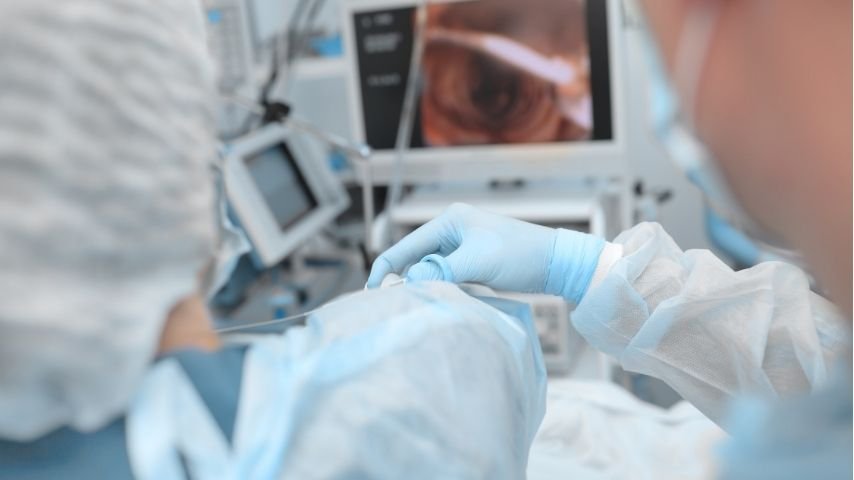
A thin flexible bronchoscope is inserted through the mouth or nose and guided through the airway passages.
The navigation system helps doctors follow the planned pathway toward the lung nodule.
Once the bronchoscope reaches the area near the nodule, biopsy instruments collect small tissue samples.
What Happens to the Tissue Sample
The tissue samples collected during the biopsy are sent to a pathology laboratory.
Pathologists examine the tissue under a microscope to determine the cause of the nodule.
The results may show that the nodule is benign, related to infection or inflammation, or caused by cancer.
In some cases, additional molecular tests may be performed to identify specific genetic changes in cancer cells. These tests help doctors choose the most effective treatment.
Results are usually available within several days.
Benefits of Navigation Bronchoscopy for Early Lung Cancer Detection
Navigation bronchoscopy offers several advantages when evaluating small lung nodules.
One major benefit is that it allows doctors to reach nodules that are located deep within the lungs without requiring surgical incisions.
Because the bronchoscope travels through the natural airway passages, the procedure is considered minimally invasive.
Navigation bronchoscopy also improves diagnostic accuracy by guiding biopsy instruments directly toward the lung nodule.
The procedure may allow doctors to evaluate multiple nodules during the same bronchoscopy session if necessary.
Recovery After the Procedure
After the bronchoscopy is completed, patients are monitored in a recovery area until the sedation wears off.
Most patients are able to go home the same day.
Temporary symptoms such as mild throat irritation, cough, or hoarseness may occur for a short time after the procedure.
Doctors usually recommend avoiding food and drinks until the throat numbness has completely worn off.
Patients are advised to contact their doctor if they experience persistent chest pain, breathing difficulty, or significant bleeding.
Why Advanced Centers Use Navigation Bronchoscopy
Navigation bronchoscopy requires specialized equipment and trained specialists. For this reason, the procedure is usually performed in hospitals with advanced pulmonology programs.
These centers often have multidisciplinary teams that include pulmonologists, radiologists, pathologists, and thoracic surgeons.
Working together, these specialists evaluate lung nodules and determine the most appropriate diagnostic and treatment strategies.
The availability of advanced bronchoscopy technology helps these centers diagnose lung diseases earlier and more accurately.
Conclusion
Early detection of lung cancer can significantly improve treatment outcomes. Many early lung cancers appear as small lung nodules that are discovered during CT scans.
When these nodules are located deep inside the lungs, navigation bronchoscopy provides a minimally invasive way to obtain tissue samples and determine the cause.
By combining CT imaging with advanced navigation systems, doctors can reach difficult areas of the lungs and diagnose lung cancer at an earlier stage.
If a CT scan has identified a lung nodule and your doctor recommends further evaluation, discussing navigation bronchoscopy with a pulmonologist can help determine whether this advanced diagnostic procedure is appropriate for your situation.
References and Sources