Navigation Bronchoscopy vs CT-Guided Lung Biopsy: Which Test Is Better for Lung Nodules?
Medicine Made Simple
When a CT scan detects a lung nodule, doctors may recommend a biopsy to determine the cause. Two commonly used diagnostic methods are navigation bronchoscopy and CT-guided lung biopsy. Navigation bronchoscopy uses CT-based lung maps and GPS-like guidance to reach nodules through the natural airway passages. CT-guided biopsy, often referred to as a Needle Biopsy for Lung Nodules, involves inserting a needle through the chest wall into the lung while using CT imaging for guidance. Both procedures help doctors obtain tissue samples for diagnosis. Understanding how these tests work and when each is recommended can help patients make informed decisions about lung nodule evaluation.
Understanding Why Lung Nodules Need Further Testing
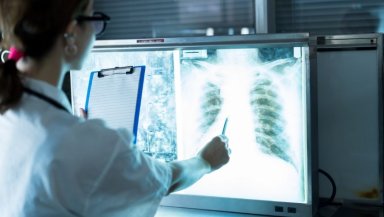
A lung nodule is a small spot that appears in the lungs during imaging tests such as CT scans. These nodules are quite common and are often discovered incidentally when patients undergo scans for other reasons.
Most lung nodules are benign. They may develop because of past infections, inflammation, or scar tissue in the lungs.
However, some nodules may represent early navigation bronchoscopy lung cancer cases. Because imaging tests alone cannot always determine the exact cause of a nodule, doctors sometimes recommend a biopsy.
A biopsy allows doctors to collect a small sample of tissue from the nodule. This tissue is examined in a laboratory to determine whether the nodule is benign, infectious, inflammatory, or cancerous.
Accurate diagnosis helps doctors recommend the most appropriate treatment or monitoring plan.
Two Common Ways to Biopsy Lung Nodules
When a lung nodule requires further evaluation, doctors usually choose between two minimally invasive procedures.
The first method is navigation bronchoscopy. This procedure uses a bronchoscope and advanced computer navigation to reach the nodule through the airways.
The second method is CT-guided lung biopsy. This procedure uses CT imaging to guide a needle through the chest wall directly into the lung nodule.
Both techniques aim to collect tissue samples safely and accurately, but they differ in how doctors reach the nodule.
What Navigation Bronchoscopy Is
Navigation bronchoscopy is an advanced diagnostic procedure used to reach lung nodules that may be located deep inside the lungs.
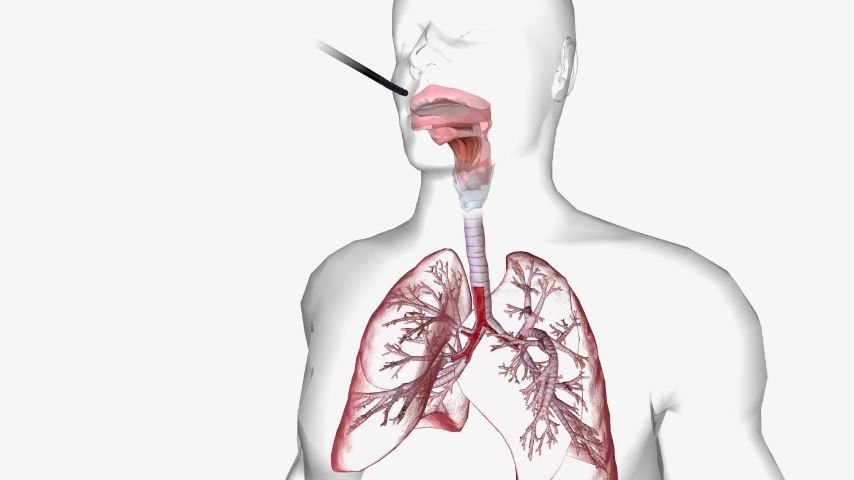
The procedure combines bronchoscopy with advanced navigation technology. Doctors use CT scan images to create a detailed three-dimensional map of the lungs.
This map shows the airway pathways and the exact location of the lung nodule. Doctors use this map to plan the route that the bronchoscope will follow during the procedure.
A thin flexible bronchoscope is inserted through the mouth or nose and guided through the airway system.
The navigation system helps doctors move the bronchoscope through the airway branches toward the nodule. This specialized lung nodule navigation bronchoscopy approach is designed to target lesions that traditional tools might miss.
Once the bronchoscope reaches the target area, biopsy tools are used to collect tissue samples.
What CT-Guided Lung Biopsy Is
CT-guided lung biopsy is another commonly used technique to obtain tissue from lung nodules.
In this procedure, doctors use CT imaging to guide a thin needle through the chest wall and into the lung nodule.
The patient lies on a CT scanning table while the doctor determines the safest pathway for the needle.
Local anesthesia is used to numb the skin and chest wall before inserting the needle.
The doctor advances the needle toward the nodule while taking CT images to ensure accurate positioning.
Once the needle reaches the nodule, a small sample of tissue is removed and sent to the laboratory for analysis.
When Doctors Prefer Navigation Bronchoscopy
Navigation bronchoscopy is particularly useful for nodules located in certain parts of the lungs.
Doctors often recommend this procedure when lung nodules are located deep inside the lungs and can be reached through the airway system.
This technique may also be useful when doctors need to examine the airways or collect samples from lymph nodes during the same procedure.
Because the bronchoscope travels through the natural airway passages, navigation bronchoscopy does not require puncturing the chest wall.
This may reduce the risk of certain complications.
When CT-Guided Biopsy May Be Recommended
CT-guided lung biopsy may be preferred when the lung nodule is located near the outer surface of the lung.
In these cases, inserting a needle through the chest wall may provide a direct and efficient route to the nodule.
CT-guided biopsy can be particularly useful when airway pathways do not lead close enough to the nodule for bronchoscopy to reach it.
Radiologists carefully plan the needle pathway to avoid major blood vessels and ensure accurate sampling.
Comparing Accuracy of Both Procedures
Both navigation bronchoscopy and CT-guided biopsy can provide accurate tissue samples for diagnosing lung nodules.
The diagnostic accuracy of each procedure often depends on factors such as the size and location of the nodule.
Navigation bronchoscopy has improved significantly with modern technologies such as electromagnetic navigation systems and robotic bronchoscopy.
These technologies allow doctors to reach smaller nodules that were previously difficult to access.
CT-guided biopsy can also provide accurate results, especially for nodules located near the outer lung regions.
Doctors evaluate each patient’s situation to determine which method offers the best chance of obtaining a reliable diagnosis.
Understanding the Risks of Each Procedure
Both procedures are considered safe, but they involve different types of risks.
Navigation bronchoscopy is minimally invasive because it uses the natural airway passages. Patients may experience mild throat irritation, cough, or temporary hoarseness after the procedure.
CT-guided lung biopsy involves inserting a needle through the chest wall. This approach carries a higher risk of pneumothorax, a condition in which air leaks into the space around the lung.
Pneumothorax may require additional monitoring or treatment if it occurs.
Doctors carefully assess the patient’s condition and imaging findings before recommending the most appropriate biopsy method.
What Patients Can Expect During Recovery
Recovery after navigation bronchoscopy is usually quick. Patients are monitored for a short time after the procedure while the sedation wears off.
Most patients are able to return home the same day.
CT-guided biopsy also typically allows same-day discharge. However, patients may need additional monitoring to ensure that complications such as pneumothorax do not occur.
Doctors provide instructions about activity, symptoms to watch for, and when biopsy results will be available.
How Doctors Decide Which Test Is Best
The choice between navigation bronchoscopy and CT-guided biopsy depends on several factors.
The location of the lung nodule is one of the most important considerations. Nodules that are connected to airway pathways may be easier to reach using bronchoscopy.
Nodules located near the outer surface of the lung may be more suitable for CT-guided biopsy.
Doctors also consider the size of the nodule, the patient’s overall health, and the availability of advanced bronchoscopy technology.
In many hospitals, pulmonologists and radiologists work together to determine the best diagnostic approach.
Conclusion
When a lung nodule is detected on a CT scan, obtaining an accurate diagnosis is essential for guiding treatment decisions. Navigation bronchoscopy and CT-guided lung biopsy are two commonly used procedures that help doctors collect tissue samples from lung nodules.
Navigation bronchoscopy reaches nodules through the natural airway passages using advanced navigation technology. CT-guided biopsy uses imaging guidance to insert a needle through the chest wall directly into the lung.
Both procedures are effective diagnostic tools, and the choice between them depends on the location of the nodule and the patient’s individual circumstances.
If your doctor recommends a lung biopsy, discussing the available options with a pulmonologist can help you understand which procedure is most appropriate for your condition.
References and Sources