Who Is NOT a Good Candidate for Thyroid Artery Embolization? Honest Eligibility Guide

Medicine made simple summary
Thyroid Artery Embolization (TAE) is a minimally invasive procedure used to shrink an enlarged thyroid gland by reducing its blood supply. A thin tube is inserted through a blood vessel and guided to the thyroid arteries, where tiny particles are released to block blood flow. This causes the gland to shrink gradually over time. While TAE is effective and avoids surgery, it is not suitable for everyone. Proper evaluation is important to determine whether this treatment is safe and appropriate for each individual.
Why eligibility matters before choosing TAE
Thyroid artery embolization is a promising treatment, but it is not a one-size-fits-all solution. Many patients assume that because it is less invasive than surgery, it is suitable for everyone with a goiter. This is not always the case.
Every thyroid condition is different. The size of the goiter, its location, the presence of nodules, and overall health all influence whether TAE will work effectively and safely.
Understanding who may not be a good candidate helps avoid unrealistic expectations and ensures that patients choose the most appropriate treatment for their situation.
When the size and structure of the goiter become a limitation
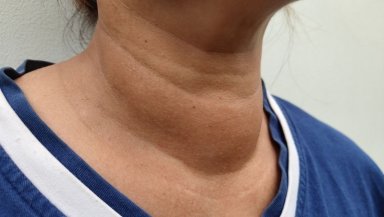
While TAE can treat many goiters, extremely large or complex goiters may not respond as effectively. If the thyroid has grown in a way that compresses the airway significantly, immediate relief may be required.
In such cases, surgery may be preferred because it removes the enlarged tissue directly and provides faster results. TAE works gradually, and this may not be suitable when symptoms are severe.
The internal structure of the thyroid also matters. If the blood supply is irregular or comes from multiple sources that are difficult to access, the effectiveness of TAE may be limited.
When there is suspicion of cancer
One of the most important situations where TAE may not be recommended is when there is a suspicion of thyroid cancer. If nodules appear suspicious on imaging or tests suggest a possible malignancy, surgery is usually the preferred option.
This is because surgery allows for removal and detailed examination of the tissue. TAE does not remove the gland, so it cannot provide the same level of diagnostic certainty.
In such cases, choosing TAE could delay necessary treatment. This is why careful evaluation is essential before deciding on the procedure.
When thyroid function is severely abnormal
The thyroid gland controls hormone levels in the body, and in some patients, these levels may be significantly disturbed. If the thyroid is highly overactive or underactive, it may need to be stabilized before considering any procedure.
TAE can affect thyroid function temporarily as the gland shrinks. If hormone levels are already unstable, this change may need to be managed carefully.
Doctors often recommend controlling hormone levels with medication first before proceeding with any intervention.
Patients with certain medical conditions
Although TAE is less invasive than surgery, it still involves working within blood vessels. Patients with certain medical conditions may require special consideration.
Those with bleeding disorders or problems related to blood clotting may not be ideal candidates without proper preparation. Similarly, patients with severe vascular conditions may need additional evaluation.
Allergies to contrast dye, which is used during the procedure for imaging, may also affect eligibility. In such cases, doctors may take precautions or consider alternative options.
When access to blood vessels is challenging
TAE depends on the ability to reach the thyroid arteries through blood vessels. In some patients, the anatomy of the blood vessels may make this difficult.
If the arteries are too narrow, irregular, or hard to access, the procedure may not be feasible or safe. Imaging studies before the procedure help identify these challenges.
This is one of the reasons why detailed planning is done before recommending TAE.
Patients expecting immediate results
TAE works gradually. The thyroid shrinks over weeks and months as the blood supply is reduced. Patients who expect instant relief may find this approach frustrating.
If symptoms are severe and require quick resolution, surgery may be a better option. TAE is more suitable for patients who are comfortable with a gradual improvement.
Understanding this timeline helps match the treatment to patient expectations.
Emotional readiness and understanding
Choosing a treatment is not only about physical eligibility but also about mental readiness. Patients need to understand how TAE works, what to expect during recovery, and how results develop over time.
If there is uncertainty or hesitation, it is important to discuss concerns openly with a doctor. Being fully informed helps ensure that the chosen treatment aligns with both medical needs and personal comfort.
Why proper evaluation is essential
Before recommending TAE, doctors conduct a detailed assessment that includes blood tests, imaging, and clinical evaluation. This helps determine whether the procedure is suitable and safe.
This step is crucial because it ensures that patients receive the most effective treatment for their condition. Skipping proper evaluation can lead to poor outcomes or the need for additional treatment later.
Eligibility is not about limiting options but about choosing the right one.
When TAE is still a strong option
Even though TAE is not suitable for everyone, it remains an excellent option for many patients. Those with moderate goiter size, stable thyroid function, and a preference for non-surgical treatment often benefit the most.
It provides a balance between effectiveness and minimal invasiveness, making it a valuable part of modern thyroid care.
Looking at the bigger picture
Every treatment has its place, and the best choice depends on individual circumstances. TAE is one of several options available for managing goiter.
Understanding when it is not suitable is just as important as knowing when it is. This balanced view helps patients make informed decisions without confusion.
Conclusion
Thyroid artery embolization is a safe and effective treatment for many patients, but it is not suitable for everyone. Factors such as goiter size, structure, thyroid function, and overall health play an important role in determining eligibility. If you are considering TAE, consult a specialist and undergo proper evaluation to understand whether it is the right option for you. Making an informed decision ensures better outcomes and long-term confidence in your treatment plan.