Should You Choose Capsule Endoscopy? A Gastroenterologist Answers the Most Common Patient Questions
Medicine Made Simple
Capsule endoscopy is a simple, non-invasive procedure that uses a tiny camera inside a swallowable capsule to examine the digestive tract, particularly the small intestine. As the capsule moves naturally through the body, it captures thousands of images that help doctors identify bleeding, inflammation, ulcers, polyps, tumors, and other digestive conditions. Unlike traditional endoscopy or colonoscopy, capsule endoscopy does not require sedation or the insertion of tubes. While the procedure is highly effective for specific conditions, many patients have questions about whether it is necessary, what it can detect, and whether it is the right choice for them.
Introduction
If your doctor has recommended capsule endoscopy, chances are you have questions.
In fact, most patients have lots of them.
Do I really need this test?
Is it better than a colonoscopy?
Can it detect cancer?
Will the capsule get stuck?
Is it painful?
What happens if the results are normal?
These are all reasonable concerns.
Whenever a new medical test is recommended, patients want to understand why it is needed, what information it can provide, and whether the benefits outweigh the inconvenience.
The challenge with capsule endoscopy is that many people have never heard of it until their doctor recommends it. Unlike blood tests, X-rays, or colonoscopy, capsule endoscopy is still unfamiliar to many patients.
The good news is that understanding the procedure is much easier than most people expect.
In this article, we answer the most common questions gastroenterologists hear from patients who are considering capsule endoscopy.
What Exactly Is Capsule Endoscopy?
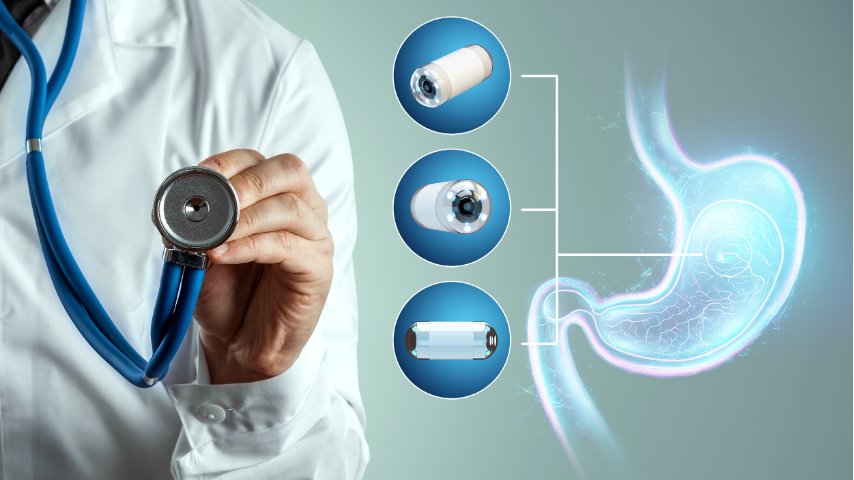
The simplest way to think about capsule endoscopy is as a camera inside a pill.
The capsule is approximately the size of a large vitamin tablet. Inside it are a miniature camera, a light source, a battery, and a wireless transmitter.
After swallowing the capsule with water, it travels naturally through the digestive tract while taking thousands of pictures.
These images are sent wirelessly to a recording device worn by the patient and later reviewed by a gastroenterologist.
The procedure is designed primarily to examine the small intestine, an area that is difficult to evaluate using traditional endoscopy or colonoscopy.
For many patients, capsule endoscopy provides information that cannot be obtained through other routine investigations.
Why Would My Doctor Recommend Capsule Endoscopy?
Doctors do not recommend capsule endoscopy for every digestive symptom.
The procedure is usually advised when there is a specific clinical question that needs to be answered.
One of the most common reasons is unexplained gastrointestinal bleeding. Patients may have low iron levels, anemia, or evidence of blood loss despite normal endoscopy and colonoscopy results.
Capsule endoscopy is also frequently recommended for suspected Crohn's disease, particularly when symptoms suggest inflammation within the small intestine.
Other reasons include unexplained abdominal pain, persistent diarrhea, small intestinal tumors, polyps, celiac disease, and abnormal findings on imaging studies.
In many cases, capsule endoscopy is recommended because previous tests have not provided enough information.
Is Capsule Endoscopy Better Than Colonoscopy?
This is probably the most frequently asked question.
The answer is simple.
Neither test is better. They are designed to do different jobs.
A colonoscopy examines the large intestine and rectum. It allows doctors to take biopsies, remove polyps, and perform treatments during the procedure.
Capsule endoscopy focuses primarily on the small intestine. It allows doctors to visualize areas that colonoscopy cannot reach.
Think of them as complementary tools rather than competing procedures.
If your doctor recommends capsule endoscopy after a colonoscopy, it does not mean the first test failed. It usually means there is another section of the digestive tract that still needs to be evaluated.
If My Colonoscopy Was Normal, Why Do I Need Another Test?
This question often causes confusion.
Many patients assume that a normal colonoscopy means the entire digestive tract has been examined.
In reality, colonoscopy evaluates the colon and a small portion of the end of the small intestine.
The majority of the small bowel remains unseen.
Conditions such as Crohn's disease, small intestinal bleeding, ulcers, vascular abnormalities, and certain tumors can develop in these areas.
If symptoms continue despite a normal colonoscopy, your doctor may recommend capsule endoscopy to investigate parts of the digestive tract that have not yet been visualized.
What Can Capsule Endoscopy Detect?
Capsule endoscopy is particularly effective at identifying abnormalities within the small intestine.
The procedure can detect areas of bleeding, ulcers, inflammation, polyps, tumors, abnormal blood vessels, and signs of Crohn's disease.
It may also help evaluate celiac disease and certain inherited conditions that increase the risk of gastrointestinal polyps.
Because the small intestine is difficult to access using traditional procedures, capsule endoscopy often provides valuable diagnostic information that might otherwise be missed.
Can Capsule Endoscopy Detect Cancer?
Yes, it can.
Although cancers of the small intestine are relatively uncommon compared with colorectal cancer, they do occur.
Capsule endoscopy can identify suspicious growths, abnormal tissue, and lesions that require further evaluation.
However, it is important to understand that capsule endoscopy cannot confirm cancer on its own.
If a suspicious area is identified, additional investigations such as biopsy, advanced endoscopy, imaging studies, or surgery may be required to establish a definitive diagnosis.
The procedure is best viewed as a highly effective detection tool rather than a final diagnostic step.
Can Capsule Endoscopy Diagnose Crohn's Disease?
Capsule endoscopy plays an important role in evaluating suspected Crohn's disease.
Many patients with Crohn's disease have inflammation within the small intestine that cannot be reached during routine colonoscopy.
The capsule can identify ulcers, erosions, swelling, and other signs of inflammation throughout the small bowel.
However, diagnosing Crohn's disease usually involves more than one test.
Doctors combine capsule endoscopy findings with symptoms, blood tests, stool tests, imaging studies, and biopsy results before making a final diagnosis.
The procedure often provides an important piece of the puzzle rather than the entire answer.
Is Swallowing the Capsule Difficult?
Most patients are pleasantly surprised by how easy it is.
The capsule is larger than many tablets but has a smooth coating that helps it slide down comfortably.
For most people, swallowing the capsule feels similar to taking a large vitamin supplement.
Once swallowed, patients generally do not feel the capsule moving through their digestive tract.
Many people forget it is even there within a few minutes.
Patients with swallowing disorders may require additional evaluation before the procedure, but for the majority of individuals, swallowing the capsule is straightforward.
Does Capsule Endoscopy Hurt?
No.
One of the reasons patients appreciate capsule endoscopy is that it is completely painless.
There are no tubes inserted into the digestive tract. No injections are required. Sedation is usually unnecessary.
The procedure simply involves swallowing the capsule and wearing the recording equipment throughout the day.
Most patients continue their normal routine during the examination.
Compared with many other digestive investigations, capsule endoscopy is often considered one of the most comfortable options available.
Will I Need Sedation?
In almost all cases, the answer is no.
Unlike traditional upper GI endoscopy and colonoscopy, capsule endoscopy does not require sedation.
This offers several advantages.
Patients do not need recovery time, can often continue normal activities, and typically do not require someone to accompany them home.
The absence of sedation also eliminates risks associated with anesthesia and makes the overall experience much simpler.
What Happens If the Capsule Gets Stuck?
This is often the biggest concern patients have.
The good news is that capsule retention is uncommon.
Most capsules pass naturally through the digestive tract within a few days.
The risk is slightly higher in patients with Crohn's disease, intestinal narrowing, tumors, or previous bowel surgery.
Doctors carefully assess these risk factors before recommending the procedure.
In some situations, a dissolvable patency capsule may be used beforehand to confirm that the digestive tract is open enough for the camera capsule to pass safely.
Even when retention occurs, treatment is usually focused on the underlying condition that caused the narrowing.
What Happens If the Results Are Normal?
Many patients worry that a normal result means their symptoms have no explanation.
This is not true.
A normal capsule endoscopy is valuable because it helps rule out serious abnormalities within the small intestine.
It reduces the likelihood of active bleeding, Crohn's disease, tumors, significant ulcers, and other structural problems.
Your doctor may then investigate alternative explanations such as irritable bowel syndrome, food intolerances, functional digestive disorders, medication-related symptoms, or other medical conditions.
Sometimes knowing what is not causing the symptoms is just as important as identifying what is.
Can Capsule Endoscopy Replace Other Digestive Tests?
No.
Although capsule endoscopy is extremely useful, it does not replace colonoscopy, endoscopy, CT scans, MRI studies, or laboratory testing.
Each investigation provides different information.
For example, capsule endoscopy cannot take biopsies or perform treatments.
Colonoscopy remains the preferred procedure for removing polyps and obtaining tissue samples.
Doctors select investigations based on the specific clinical question they are trying to answer.
The best diagnostic approach often involves combining information from multiple tests.
What Are the Advantages of Capsule Endoscopy?
The procedure offers several important benefits.
It is non-invasive, does not require sedation, and allows detailed visualization of the small intestine.
Patients can generally continue normal daily activities during the examination.
The procedure is well tolerated, has a strong safety record, and often identifies abnormalities that are difficult to detect using conventional methods.
Perhaps most importantly, capsule endoscopy provides access to a part of the digestive tract that was once very difficult to examine.
What Are the Limitations of Capsule Endoscopy?
While capsule endoscopy is highly valuable, it does have limitations.
The capsule can only capture images. It cannot obtain biopsies, remove polyps, stop bleeding, or perform treatments.
The quality of the examination depends heavily on preparation and visibility within the digestive tract.
In some cases, food residue or rapid movement of the capsule may limit image interpretation.
If an abnormality is detected, additional procedures are often needed to confirm the diagnosis or provide treatment.
Understanding these limitations helps patients develop realistic expectations.
How Do I Know If Capsule Endoscopy Is Right for Me?
The decision depends on your symptoms, medical history, and previous test results.
Capsule endoscopy is particularly valuable when doctors suspect disease within the small intestine or when other investigations have not provided answers.
The best way to determine whether the procedure is appropriate is through a detailed discussion with your gastroenterologist to understand your endoscopy need.
Your doctor can explain why the test is being recommended, what information it may provide, and how it fits into your overall diagnostic plan.
The Bottom Line
Capsule endoscopy has transformed the way doctors investigate digestive disorders by making it possible to examine the small intestine in a simple, patient-friendly manner.
For many patients, it provides answers that traditional investigations cannot. The procedure is safe, comfortable, and highly effective when used for the right reasons.
However, like any medical test, it has specific strengths and limitations. Understanding what capsule endoscopy can and cannot do helps patients make informed decisions and approach the procedure with confidence.
If your doctor has recommended capsule endoscopy, it is usually because the information it provides may play an important role in understanding your symptoms and guiding the next steps in your care.
If you have been advised to undergo capsule endoscopy or continue to experience unexplained digestive symptoms needing closer evaluation despite previous testing, schedule a consultation with a gastroenterologist. A detailed evaluation can help determine whether capsule endoscopy is the right next step in finding answers and improving your digestive health.