Why TOFI Is More Common in Indians and South Asians Than You Think

Medicine Made Simple
Many Indians and South Asians are surprised when they develop diabetes, fatty liver disease, high cholesterol, or heart disease despite appearing slim. The reason often lies in a condition called TOFI, which stands for Thin Outside, Fat Inside. People with TOFI may have a normal body weight but carry excess fat around vital organs such as the liver, pancreas, and heart. Research shows that South Asians are particularly prone to storing fat in this way. Understanding why this happens can help you identify hidden risks early and take steps to protect your long-term health.
Introduction
For years, health advice around the world focused heavily on body weight.
If you were overweight, you were considered at risk for diabetes and heart disease. If you were slim, most people assumed you were healthy.
However, doctors across India and many other South Asian countries have noticed a different pattern.
A large number of patients who develop diabetes, high cholesterol, fatty liver disease, and even heart attacks do not fit the traditional image of being overweight.
Many of them appear slim.
Some wear small clothing sizes. Others have a normal Body Mass Index (BMI). Yet their blood tests tell a very different story.
This phenomenon has puzzled both patients and doctors for years.
Today, researchers understand that many South Asians are more likely to develop a condition known as TOFI, or Thin Outside, Fat Inside.
This means a person may look healthy on the outside while carrying unhealthy amounts of fat deep inside the body.
Understanding why TOFI is so common among Indians and South Asians is important because it challenges one of the biggest myths about health: that being thin automatically means being healthy.
What Is TOFI?
TOFI stands for Thin Outside, Fat Inside.
It describes people who appear slim externally but have excess fat stored around their internal organs.
Unlike the fat that sits under the skin, this hidden fat accumulates around organs such as:
- The liver
- The pancreas
- The intestines
- The kidneys
- Major blood vessels
This type of fat is called visceral fat.
Visceral fat is far more dangerous than the fat we can see because it actively affects metabolism, hormone function, inflammation, and organ health.
A person with TOFI may have:
- A normal BMI
- A normal body weight
- No obvious signs of obesity
Yet they may still be at risk for serious health conditions.
This is why TOFI is often called a "hidden" health problem.
Why Are South Asians Different?
One of the most important discoveries in modern medicine is that people from different ethnic backgrounds do not store fat in the same way.
South Asians tend to have a unique body composition compared to many Western populations.
Research has consistently shown that South Asians often have:
- Higher body fat percentages
- Lower muscle mass
- Greater abdominal fat accumulation
- Higher levels of visceral fat
This means that two people with the same weight and BMI may have very different health risks depending on their ethnicity.
An Indian individual with a BMI considered normal may carry significantly more visceral fat than a European individual with the same BMI.
As a result, metabolic diseases often develop at lower body weights.
The "Thin-Fat Indian" Phenomenon
Scientists have even coined a term called the "Thin-Fat Indian Phenotype."
This concept emerged after researchers observed that many Indians have relatively low muscle mass and higher body fat percentages despite having a normal body weight.
This pattern often begins early in life.
Studies have found that even newborn Indian babies may have relatively higher body fat levels compared to babies from many other populations.
As these individuals grow older, the tendency to accumulate abdominal and visceral fat continues.
This helps explain why India has become one of the global centers for diabetes and cardiovascular disease despite having a large population that does not appear obese.
Genetics: The Role We Cannot Ignore
Genetics plays an important role in determining how the body stores fat.
Over thousands of years, human populations adapted to different environments and food availability.
Some researchers believe that South Asians developed a tendency to store energy efficiently during periods when food was scarce.
While this may have been beneficial in the past, modern lifestyles have changed dramatically.
Today, calorie-rich foods are easily available, while physical activity has decreased significantly.
As a result, the same genetic tendencies that once helped survival may now contribute to increased visceral fat storage and metabolic disease.
Genetics alone does not cause TOFI, but it can make some people more susceptible.
Lower Muscle Mass: An Overlooked Risk Factor
When people think about health, they often focus only on fat.
However, muscle is equally important.
Muscle tissue plays a major role in:
- Burning calories
- Regulating blood sugar
- Improving insulin sensitivity
- Supporting metabolism
Research shows that many South Asians naturally have lower muscle mass compared to some other populations.
This means the body has a reduced capacity to use glucose efficiently.
When muscle mass is low, excess calories are more likely to be stored as fat.
Over time, this contributes to visceral fat accumulation and insulin resistance.
This is one reason why strength training is becoming increasingly important for South Asian populations.
Why Belly Fat Is a Bigger Problem Than Weight
Many Indians focus primarily on body weight.
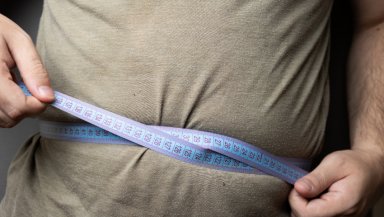
However, waist size often provides more useful information than the weighing scale.
A person may maintain the same weight for years while slowly accumulating fat around the abdomen.
This abdominal fat is often a sign of increasing visceral fat.
Unlike fat stored under the skin, visceral fat surrounds organs and affects how they function.
This is why someone can weigh only 60 kilograms and still have a high risk of diabetes if most of their fat is concentrated around the abdomen.
The location of fat matters just as much as the amount.
The Impact of Modern Indian Lifestyles
Genetics may load the gun, but lifestyle often pulls the trigger.
Over the past few decades, lifestyles across India have changed dramatically.
- Urbanization has reduced physical activity.
- Technology has increased sedentary behavior.
- Long working hours often leave little time for exercise.
At the same time, dietary habits have also changed.
Many people consume:
- Highly refined carbohydrates
- Sugary beverages
- Packaged snacks
- Fast food
- Processed foods
These foods are often calorie-dense but nutritionally poor.
When combined with inactivity, they create an ideal environment for visceral fat accumulation.
The effects may not appear immediately, but over years they significantly increase metabolic risk.
Why Diabetes Develops Earlier in South Asians
One of the most alarming aspects of TOFI is its connection to diabetes.
South Asians frequently develop Type 2 diabetes at younger ages and lower BMI levels than many other populations.
This happens because visceral fat contributes to insulin resistance.
Insulin is the hormone responsible for helping cells absorb glucose from the bloodstream.
As visceral fat increases, cells become less responsive to insulin.
The pancreas must work harder to maintain normal blood sugar levels.
Eventually, blood sugar begins to rise.
This process may start years before diabetes is diagnosed.
Many individuals are unaware that they have insulin resistance until routine blood tests reveal abnormalities.
The Link Between TOFI and Heart Disease
Heart disease remains one of the leading causes of death among South Asians worldwide.
Visceral fat plays a major role in this risk.
Hidden abdominal fat contributes to:
- High cholesterol
- High triglycerides
- High blood pressure
- Chronic inflammation
- Blood vessel damage
These changes increase the likelihood of:
- Heart attacks
- Stroke
- Coronary artery disease
This explains why some slim individuals experience cardiovascular problems despite never being overweight.
The risk comes from what is happening inside the body rather than what is visible outside.
Fatty Liver Disease: The Silent Epidemic
Fatty liver disease has become increasingly common across India.
Many people are shocked when an ultrasound reveals fat accumulation in the liver despite having a normal body weight.
However, this is a common feature of TOFI.
Visceral fat promotes fat deposition within the liver.
Initially, fatty liver disease causes few symptoms.
Over time, it can progress to inflammation, scarring, and permanent liver damage.
Because the condition often develops silently, many people remain unaware until routine health screening identifies the problem.
Warning Signs That May Suggest TOFI
TOFI symptoms often develop without obvious signs.
However, certain signs may indicate increased risk.
These include:
- A family history of diabetes
- A family history of heart disease
- Increasing waist size despite stable weight
- Fatty liver disease
- High cholesterol
- Elevated triglycerides
- Prediabetes
- High blood pressure
- Low physical fitness
- Persistent fatigue
Having one of these factors does not necessarily mean you have TOFI.
However, multiple risk factors should prompt further evaluation.
How Can You Find Out If You Have TOFI?
Because TOFI is a hidden condition, appearance alone cannot diagnose it.
Healthcare professionals may recommend:
- Waist circumference measurements
- Body composition analysis
- Blood sugar testing
- HbA1c testing
- Cholesterol testing
- Liver function tests
- DEXA scans
- Imaging studies in selected cases
These tests help identify hidden metabolic risk before serious disease develops.
Can TOFI Be Prevented?
The good news is that TOFI is not inevitable.
Even if you have a genetic predisposition, lifestyle choices can significantly reduce your risk.
Some of the most effective preventive measures include:
- Building Muscle: Strength training improves insulin sensitivity and helps reduce visceral fat.
- Staying Physically Active: Regular movement throughout the day is just as important as structured exercise.
- Eating a Balanced Diet: Focus on vegetables, fruits, legumes, whole grains, lean proteins, and healthy fats. Following a TOFI diet can help limit sugary drinks, processed snacks, and excessive refined carbohydrates.
- Prioritizing Sleep: Poor sleep increases the risk of insulin resistance and abdominal fat accumulation.
- Managing Stress: Chronic stress contributes to hormonal changes that encourage visceral fat storage.
Why Every South Asian Should Think Beyond BMI
BMI remains a useful screening tool, but it has limitations.
For South Asians, relying solely on BMI can create a false sense of security.
A normal BMI does not always mean low risk.
Understanding body composition, waist circumference, metabolic health, and family history provides a much more accurate picture.
The goal should not simply be to remain thin.
The goal should be to remain metabolically healthy.
Final Thoughts
TOFI is far more common among Indians and South Asians than many people realize. Genetics, lower muscle mass, increased visceral fat storage, modern lifestyles, and dietary changes all contribute to this increased risk. As a result, many seemingly healthy individuals develop diabetes, heart disease, and fatty liver disease despite maintaining a normal body weight. Understanding this hidden risk is the first step toward prevention. By focusing on body composition, physical activity, nutrition, sleep, and regular health screening, along with appropriate TOFI treatment when needed, South Asians can significantly reduce their risk of chronic disease.
If you are an Indian or South Asian and have a family history of diabetes, heart disease, or fatty liver disease, do not assume a normal weight means you are healthy. Speak with your healthcare provider about assessing your metabolic health, waist circumference, body composition, and key blood markers. Early detection of hidden risk factors can help you make informed lifestyle changes and protect your long-term health.
References and Sources
National Center for Biotechnology Information (NCBI)