Is Capsule Endoscopy Safe? Understanding the Real Risk of Capsule Retention
Medicine Made Simple
Capsule endoscopy is a minimally invasive procedure that uses a tiny camera inside a swallowable capsule to examine the digestive tract, especially the small intestine. After swallowing the capsule, it travels naturally through the digestive system while capturing thousands of images. The procedure is considered very safe and is performed worldwide to investigate conditions such as gastrointestinal bleeding, Crohn's disease, unexplained anemia, and small intestinal disorders. However, many patients worry about one potential complication known as capsule retention, where the capsule becomes trapped inside the intestine. Understanding the actual risks can help patients make informed decisions and approach the procedure with confidence.
Introduction
One of the first questions patients ask after learning they need a capsule endoscopy is surprisingly simple:
"What if the capsule gets stuck?"
The concern is understandable.
Most people are comfortable swallowing tablets and capsules, but the idea of swallowing a camera that travels through the digestive tract naturally raises questions. While patients appreciate that the procedure does not involve sedation, tubes, injections, or surgery, many become anxious when they hear about a possible complication called capsule retention.
Stories shared online sometimes make the risk sound alarming. A quick internet search can leave patients wondering whether capsule endoscopy is dangerous or whether the capsule frequently gets trapped inside the body.
The reality is far less frightening.
Capsule endoscopy is considered one of the safest procedures in digestive medicine. Millions of examinations have been performed worldwide, and the vast majority of patients complete the procedure without any complications.
Like every medical test, however, it is important to understand both the benefits and the risks. Knowing who is at risk for capsule retention, how doctors screen for it, and what happens if it occurs can help replace fear with facts.
Understanding How Capsule Endoscopy Works
Before discussing risks, it helps to understand exactly what happens during a capsule endoscopy.
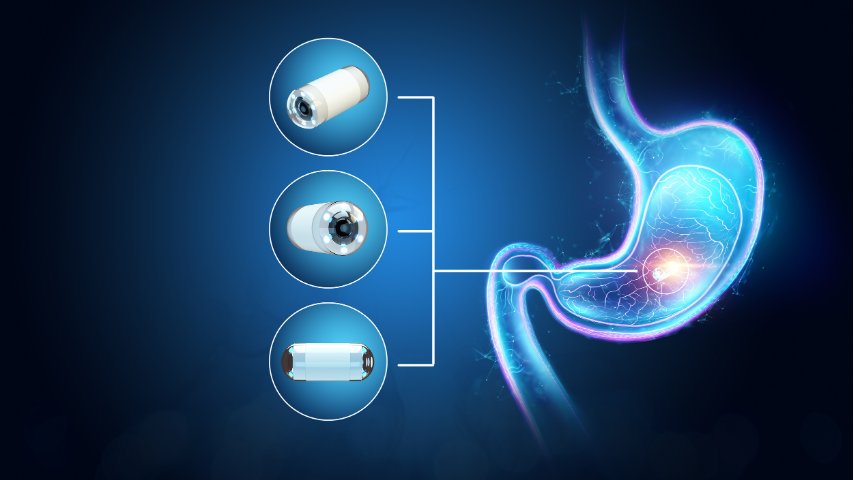
The procedure involves swallowing a capsule that is roughly the size of a large vitamin tablet. Inside the capsule is a miniature camera, a battery, a light source, and a wireless transmitter.
As the capsule moves naturally through the digestive tract, it captures thousands of images of the intestinal lining. These images are transmitted to a recorder worn by the patient and later reviewed by a gastroenterologist.
Unlike traditional endoscopy, the capsule requires no steering or control. It relies entirely on the natural contractions of the digestive tract to move forward.
Once its job is complete, the capsule continues through the intestines and is usually passed naturally during a bowel movement.
Most patients never notice when it leaves the body.
Why Is Capsule Endoscopy Considered So Safe?
Several factors contribute to the excellent safety profile of capsule endoscopy.
First, the procedure does not require sedation. This eliminates risks associated with anesthesia and recovery medications.
Second, there are no surgical incisions, needles, or instruments inserted into the digestive tract.
Third, patients are able to continue most normal activities during the procedure, reducing the physical and emotional stress often associated with medical investigations.
The capsule itself is made from materials specifically designed for medical use. It is smooth, lightweight, and engineered to pass through the digestive system naturally.
For most people, the procedure feels no different than swallowing a large tablet.
This combination of simplicity and effectiveness is one reason capsule endoscopy has become such an important diagnostic tool in gastroenterology.
What Is Capsule Retention?
Capsule retention occurs when the capsule remains inside the digestive tract longer than expected because it cannot pass through a narrowed section of the intestine.
Under normal circumstances, the capsule moves through the stomach, small intestine, and colon before leaving the body naturally.
In rare situations, an obstruction or narrowing prevents the capsule from continuing its journey.
Instead of passing normally, it remains trapped behind the narrowed area.
It is important to understand that capsule retention does not mean the capsule is permanently stuck.
The term simply describes a situation in which the capsule has not passed naturally within the expected timeframe.
In many cases, the retained capsule causes no symptoms at all and is discovered only during follow-up evaluation.
How Common Is Capsule Retention?
One of the biggest misconceptions surrounding capsule endoscopy is that capsule retention is common.
In reality, it is relatively uncommon.
For most patients undergoing capsule endoscopy, the risk is very low.
The likelihood depends largely on the reason the procedure is being performed and whether the patient has underlying intestinal conditions.
Individuals with otherwise healthy intestines have a very small risk of retention.
The risk increases in people who have diseases that can narrow the intestine, such as Crohn's disease, previous bowel surgery, tumors, radiation-related intestinal damage, or chronic inflammation.
This is why doctors spend time reviewing medical history before recommending the procedure.
The goal is not simply to identify disease but also to ensure the examination can be performed safely while considering the endoscopy risks and benefits.
Why Does Capsule Retention Happen?
To understand retention, imagine a busy highway.
Traffic flows smoothly when the road is wide and open. Problems occur when a lane closes, a tunnel narrows, or an obstacle blocks the route.
The same principle applies to the digestive tract.
A healthy intestine provides enough space for the capsule to move freely.
When narrowing develops, movement can become restricted.
Several conditions can create these narrow areas:
- Crohn's disease
- Tumors
- Previous abdominal surgery
- Severe inflammation from other digestive disorders
The capsule itself is not causing the blockage. Rather, it reveals a pre-existing problem that was already present.
Who Is Most at Risk?
Most patients undergoing capsule endoscopy have little reason to worry about retention.
However, certain groups require more careful evaluation.
Patients who may need closer assessment include:
- Patients with known Crohn's disease
- Individuals with a history of bowel obstruction
- Patients with previous abdominal surgeries involving the intestines
- Patients with known tumors
- Individuals with radiation-related intestinal injury
- Patients with longstanding inflammatory conditions
Having one of these risk factors does not automatically mean capsule endoscopy is unsafe.
It simply means doctors may perform additional testing before proceeding.
How Do Doctors Prevent Capsule Retention?
Preventing retention begins long before the capsule is swallowed.
A detailed medical history is often the most important safety tool.
Doctors ask about previous surgeries, bowel obstructions, Crohn's disease, persistent abdominal symptoms, and prior imaging results.
If concerns exist, additional tests may be recommended.
CT scans and MRI studies can help identify narrowing within the intestine.
In some situations, doctors use a specialized device known as a patency capsule.
What Is a Patency Capsule?
The patency capsule is one of the most important advances in capsule endoscopy safety.
It looks similar to a regular capsule endoscopy device but serves a completely different purpose.
Instead of containing a camera, the patency capsule is designed to test whether the intestine is open enough for the actual examination.
The capsule is made from materials that gradually dissolve over time.
If it passes through the digestive tract normally, doctors can feel confident that the camera capsule is likely to pass safely as well.
If it becomes delayed within a narrowed section, it eventually dissolves instead of remaining trapped.
This simple safety step significantly reduces the risk of unexpected retention.
For high-risk patients, the patency capsule provides reassurance for both doctors and patients.
What Symptoms Occur If a Capsule Is Retained?
Many people assume that a retained capsule immediately causes severe symptoms.
Surprisingly, this is often not the case.
A large number of retained capsules are discovered without causing noticeable discomfort.
Patients may feel completely normal and only learn about retention during follow-up evaluation.
When symptoms do occur, they may include:
- Abdominal pain
- Bloating
- Nausea
- Vomiting
- Signs of bowel obstruction
These symptoms result from the underlying intestinal narrowing rather than the capsule itself.
The capsule simply draws attention to a problem that was already present.
This is an important distinction because it changes how doctors approach treatment.
How Is Capsule Retention Diagnosed?
If the capsule has not passed within the expected period, your doctor may order imaging studies to determine its location.
A simple abdominal X-ray is often sufficient to identify whether the capsule remains inside the digestive tract.
Additional imaging may be required to understand why the capsule has not passed.
These investigations help doctors identify the underlying cause and determine the most appropriate management strategy.
What Happens If the Capsule Gets Stuck?
Learning that a capsule has been retained can sound frightening, but treatment options are often straightforward.
The best approach depends on the cause of retention and whether symptoms are present.
In some cases, medication used to treat inflammation allows the intestine to open sufficiently for the capsule to pass naturally.
This is particularly common in patients with inflammatory bowel disease.
Other patients may require a specialized endoscopic procedure to retrieve the capsule.
These procedures are often far less invasive than surgery.
Only a small proportion of patients require an operation, and when surgery is necessary, it is usually because the underlying intestinal disease itself requires treatment.
In many situations, the retained capsule helps identify an important diagnosis that might otherwise have remained hidden, highlighting the importance of understanding endoscopy biopsy and other diagnostic findings.
Is Capsule Retention More Dangerous Than the Condition Being Investigated?
This is an important question.
For many patients, the answer is no.
The conditions that lead to retention, such as Crohn's disease, intestinal strictures, or tumors, often carry greater long-term health implications than the retained capsule itself.
In some cases, discovering retention actually leads to earlier diagnosis and treatment of a previously undetected condition.
While retention is understandably concerning, it is often a symptom of an underlying problem rather than the primary issue.
Other Risks Associated with Capsule Endoscopy
Although retention receives most of the attention, other complications are extremely uncommon.
Some patients may have difficulty swallowing the capsule, particularly if they have known swallowing disorders.
Rarely, the capsule may enter the airway instead of the digestive tract during swallowing.
Healthcare providers assess this risk carefully before recommending the procedure.
Allergic reactions and technical malfunctions are exceedingly rare.
Overall, capsule endoscopy remains one of the safest diagnostic procedures available in digestive medicine.
Balancing Risk Against Benefit
Every medical investigation involves weighing potential risks against expected benefits.
The risk of capsule retention often receives significant attention because it is easy to understand and visualize.
However, it is equally important to consider what the procedure can reveal.
Capsule endoscopy frequently identifies:
- Bleeding sources
- Inflammation
- Ulcers
- Tumors
- Polyps
- Small bowel diseases
For patients with persistent symptoms, unexplained anemia, or suspected Crohn's disease, the diagnostic value often outweighs the small risk of complications.
Your doctor's role is to assess your individual circumstances and determine whether the benefits justify proceeding.
Questions You Should Ask Your Doctor
Patients who feel informed tend to feel more confident.
If capsule endoscopy has been recommended, consider discussing your personal risk factors with your healthcare provider, including preparing for an endoscopy.
Ask about:
- Whether previous imaging studies suggest any intestinal narrowing
- Whether a patency capsule might be useful
- Whether your medical history places you in a higher-risk category
Understanding why the test is being recommended and how safety is being assessed can provide significant peace of mind.
The Bottom Line
Capsule endoscopy is a safe, effective, and widely used procedure that has transformed the diagnosis of small intestinal diseases. While capsule retention is a real complication, it remains relatively uncommon and primarily affects patients with pre-existing intestinal narrowing.
Modern screening methods, detailed medical evaluation, advanced imaging, and the use of patency capsules have significantly reduced the risk of unexpected retention. For most patients, the likelihood of completing the procedure without complications is extremely high.
Rather than focusing solely on the possibility of retention, it is important to consider the valuable information capsule endoscopy can provide. In many cases, the procedure offers answers that other investigations cannot, helping patients move closer to an accurate diagnosis and appropriate treatment.
If your doctor has recommended capsule endoscopy and you have concerns about safety or capsule retention, speak openly with your gastroenterologist. Understanding your personal risk factors, what happens after an endoscopy, and the precautions available can help you make an informed decision and approach the procedure with confidence.