DEXA Scan vs Body Fat Scale vs Waist Measurement: Which Test Best Detects Hidden Fat?
Medicine Made Simple
Many people assume that if their weight is normal, their health must be good. However, hidden visceral fat can accumulate around important organs even when body weight appears healthy. This condition, known as TOFI (Thin Outside, Fat Inside), often goes unnoticed because it cannot be identified by appearance alone. Fortunately, several tools can help assess hidden fat, including waist measurements, body fat scales, and DEXA scans. Each method has strengths and limitations. Understanding how these tests work can help you choose the right assessment and gain a more accurate picture of your metabolic health.
Introduction
Imagine two people standing next to each other.
They are the same height.
They weigh exactly the same.
Their BMI is identical.
Yet one of them has healthy muscle mass and low visceral fat, while the other carries significant hidden fat around the liver, pancreas, and intestines.
From the outside, they look almost identical.
From a health perspective, they may be very different.
This is one of the biggest challenges in identifying TOFI, or Thin Outside, Fat Inside.
Unlike obesity, which is often visible, TOFI hides beneath the surface. Many people with excess visceral fat appear slim and healthy. They may not realize they are at increased risk of diabetes, fatty liver disease, heart disease, and metabolic syndrome until blood tests begin to show abnormalities.
The question then becomes: how do you measure something you cannot see?
Over the years, several methods have been developed to assess body fat and metabolic risk. Some are simple and inexpensive. Others are highly sophisticated and provide detailed insights into body composition.
Among the most commonly used methods are:
- Waist circumference measurement
- Body fat scales
- DEXA scans
Each method offers different information. Understanding their advantages and limitations can help you determine which approach is most useful for detecting hidden fat.
Why Body Weight Alone Is Not Enough
For decades, body weight and BMI have been used as primary indicators of health.
While these measurements are useful for screening large populations, they have important limitations.
BMI only considers height and weight.
It does not tell us:
- How much of your body consists of fat
- How much consists of muscle
- Where fat is stored
- Whether you have excess visceral fat
This is why someone can have a perfectly normal BMI and still develop diabetes or heart disease.
The problem is not always how much fat you have.
The problem is often where that fat is located.
Visceral fat, which surrounds internal organs, is particularly harmful because it affects metabolism, insulin sensitivity, inflammation, and cardiovascular health.
To identify this hidden risk, we need better tools than the bathroom scale.
Understanding the Different Types of Fat
Subcutaneous Fat
This is the fat located just beneath the skin.
It is the fat you can pinch around your waist, thighs, or arms.
Although excessive amounts can contribute to obesity, subcutaneous fat is generally less harmful than visceral fat.
Visceral Fat
Visceral fat is stored deep inside the abdomen.
It surrounds organs such as:
- The liver
- The pancreas
- The intestines
- The kidneys
Unlike subcutaneous fat, visceral fat is metabolically active.
It releases inflammatory substances that contribute to insulin resistance, diabetes, heart disease, and fatty liver disease.
Because visceral fat is hidden from view, specialized measurements are often needed to estimate its presence.
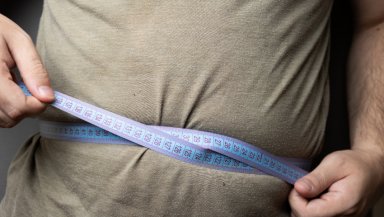
Method 1: Waist Circumference Measurement
Why Waist Size Matters
Research has consistently shown that abdominal fat is strongly linked to metabolic disease.
A larger waistline often indicates increased visceral fat accumulation.
Unlike BMI, waist circumference focuses on fat distribution rather than total body weight.
This makes it particularly useful for identifying people who may be at risk despite having a normal BMI.
Advantages of Waist Measurement
- Inexpensive
- Quick and easy
- Can be performed at home
- Requires no equipment beyond a measuring tape
- Provides useful information about abdominal fat
Limitations of Waist Measurement
Waist circumference cannot directly measure visceral fat.
It also cannot distinguish between:
- Fat and muscle
- Subcutaneous fat and visceral fat
For example, two people may have identical waist measurements but very different amounts of visceral fat.
As a result, waist circumference is best viewed as a screening tool rather than a diagnostic test.
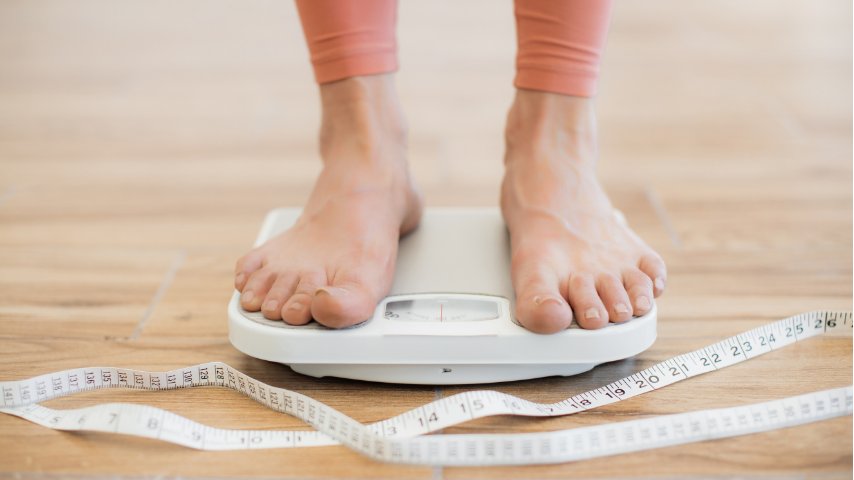
Method 2: Body Fat Scales
Body fat scales have become increasingly popular in recent years.
Unlike standard weighing scales, they estimate body fat percentage using a technology called bioelectrical impedance analysis (BIA).
When you stand on the scale, a small electrical current passes through the body.
Because muscle, fat, and water conduct electricity differently, the device uses this information to estimate body composition.
What Body Fat Scales Measure
Depending on the model, body fat scales may estimate:
- Body fat percentage
- Muscle mass
- Water content
- Bone mass
- Visceral fat score
- Metabolic age
This makes them more informative than traditional scales.
Advantages of Body Fat Scales
- Convenient
- Easy to use at home
- Affordable compared to advanced imaging
- Useful for tracking trends over time
- Provides more information than weight alone
Limitations of Body Fat Scales
The accuracy of body fat scales can vary considerably.
Results may be affected by:
- Hydration status
- Recent exercise
- Food intake
- Time of day
- Device quality
A person may receive different readings within a short period of time.
While body fat scales are useful for monitoring progress, they are not considered the gold standard for measuring visceral fat.
Are Body Fat Scales Good for Detecting TOFI?
Body fat scales can provide useful clues.
If they indicate high body fat despite a normal BMI, further assessment may be warranted.
However, they should not be relied upon as the sole method for diagnosing TOFI.
Method 3: DEXA Scan
DEXA stands for Dual-Energy X-ray Absorptiometry.
Although originally developed to measure bone density, modern DEXA technology can provide highly detailed body composition analysis.
Many experts consider DEXA one of the most valuable tools for assessing body fat distribution.
How a DEXA Scan Works
During the scan, low-dose X-rays pass through the body.
The machine differentiates between:
- Bone
- Muscle
- Fat
This allows highly accurate assessment of body composition.
The scan typically takes less than 20 minutes and is painless.
What Information Does a DEXA Scan Provide?
A DEXA scan can measure:
- Total body fat percentage
- Regional fat distribution
- Lean muscle mass
- Bone density
- Abdominal fat levels
This level of detail is particularly useful when evaluating TOFI.
Advantages of DEXA Scans
- Highly accurate
- Detailed body composition analysis
- Measures fat distribution
- Measures muscle mass
- Useful for identifying hidden fat
- Valuable for tracking long-term progress
Limitations of DEXA Scans
- More expensive than other methods
- Not available everywhere
- Requires specialized equipment
- Involves minimal radiation exposure
Although the radiation dose is extremely low, it remains higher than that of a waist measurement or body fat scale.
Which Test Is Best for Detecting Hidden Fat?
If You Want a Simple Home Screening Tool
Waist circumference is often the best starting point.
It is easy, inexpensive, and strongly associated with metabolic risk.
If You Want Regular Monitoring at Home
A body fat scale can provide useful information about body composition trends.
While individual readings may vary, long-term patterns can be helpful.
If You Want the Most Detailed Body Composition Assessment
A DEXA scan is generally the most informative option.
It provides detailed information about fat distribution, muscle mass, and overall body composition.
For people concerned about TOFI, DEXA offers insights that weight measurements alone cannot provide.
What About CT and MRI Scans?
You may have heard that CT scans and MRI scans can directly measure visceral fat.
This is true.
In fact, these imaging techniques are considered among the most accurate methods for assessing visceral fat.
However, they are not routinely used for screening because:
- They are expensive
- They are not widely available for this purpose
- CT scans involve higher radiation exposure
- They are generally reserved for specific medical situations
For most individuals, waist measurements, body composition assessments, and DEXA scans provide sufficient information.
When Should You Consider a DEXA Scan?
A DEXA scan may be particularly useful if:
- You have a normal BMI but suspect TOFI
- You have a family history of diabetes or heart disease
- You have unexplained metabolic abnormalities
- You have fatty liver disease despite being slim
- You are following a body recomposition program
- You want detailed information about muscle and fat distribution
For many people, a DEXA scan provides clarity that simpler measurements cannot offer.
Beyond Testing: Why Lifestyle Still Matters
While testing can provide valuable information, no test improves health on its own.
The purpose of identifying visceral fat is to take action.
The most effective strategies for reducing visceral fat include:
- Regular physical activity
- Strength training
- Balanced nutrition
- Adequate sleep
- Stress management
- Regular health screening
Regardless of which test you choose, lifestyle changes remain the foundation of long-term health.
Conclusion
Hidden visceral fat cannot always be detected by appearance, body weight, or BMI. This is why many people with TOFI remain unaware of their risk until metabolic health problems develop. Waist circumference provides a simple and accessible screening tool. Body fat scales offer convenient monitoring of body composition trends. DEXA scans deliver the most detailed and accurate assessment of fat distribution and muscle mass among commonly available tests. Understanding the strengths and limitations of each method can help you make informed decisions about your health and identify hidden risks before they become serious problems.
If you have a normal body weight but a family history of diabetes, heart disease, fatty liver disease, or other metabolic conditions, consider discussing TOFI diagnosis with your healthcare provider, especially if you have concerns about TOFI symptoms or believe you may be Skinny fat. Looking beyond the bathroom scale could reveal important information about your long-term health and help you take preventive action early.
References and Sources
NCBI (National Center for Biotechnology Information)