Capsule Endoscopy vs Colonoscopy: Which Test Can Reveal More About Your Gut?
Medicine Made Simple
Capsule endoscopy and colonoscopy are two important procedures used to investigate digestive problems, but they are designed to examine different parts of the digestive tract. A colonoscopy uses a flexible tube with a camera to examine the large intestine and rectum, while capsule endoscopy involves swallowing a tiny camera pill that captures images of the small intestine. Neither test is universally better than the other. Each has specific strengths and limitations. Understanding how these procedures work can help patients make informed decisions and understand why doctors may recommend one test, or sometimes both.
Introduction
When people develop digestive symptoms such as abdominal pain, unexplained bleeding, chronic diarrhea, anemia, weight loss, or changes in bowel habits, one of the first questions they often ask is, "What test do I need?"
Two of the most commonly discussed investigations are colonoscopy and capsule endoscopy.
Because both procedures involve cameras examining the digestive tract, many people assume they do the same thing.
In reality, they serve very different purposes.
One is considered the gold standard for examining the large intestine and performing treatments during the procedure. The other is a remarkable technology that allows doctors to view parts of the digestive tract that were once difficult to reach.
Patients are often confused when they hear that they need a capsule endoscopy after already having undergone a colonoscopy.
Many wonder why another test is necessary.
The answer lies in understanding how the digestive system is structured and what each procedure can and cannot see.
By the end of this guide, you will understand the differences between capsule endoscopy and colonoscopy, when each is used, their advantages and limitations, and why doctors sometimes recommend both.
Understanding the Digestive Tract
Before comparing the tests, it helps to understand the journey food takes through the body.
After food is swallowed, it passes through the esophagus into the stomach. From there, it enters the small intestine, where most digestion and nutrient absorption occur.
The small intestine is followed by the large intestine, also known as the colon. The colon absorbs water and forms stool before waste leaves the body through the rectum.
The digestive tract is surprisingly long.
The small intestine alone measures approximately six to seven meters in length. The colon adds another one and a half meters.
Different digestive diseases affect different parts of this system.
This is why doctors use different procedures to examine different sections of the digestive tract.
What Is a Colonoscopy?
A colonoscopy is a procedure that allows doctors to examine the inside of the large intestine and rectum.
During the procedure, a long, flexible tube with a camera attached to its tip is gently inserted through the rectum.
The camera transmits real-time images to a monitor, allowing the doctor to inspect the intestinal lining carefully.
Colonoscopy is widely regarded as one of the most effective tools for diagnosing and preventing colorectal disease.
The procedure can identify:
- Colon polyps
- Colorectal cancer
- Inflammation
- Ulcers
- Bleeding
- Diverticular disease
- Inflammatory bowel disease
- Infections affecting the colon
```html
One of the greatest strengths of colonoscopy is that it is not just a diagnostic procedure.
It is also therapeutic.
Doctors can remove polyps, stop bleeding, take tissue samples, and perform certain treatments during the same procedure.
This makes colonoscopy a powerful tool in modern digestive healthcare.
What Is Capsule Endoscopy?
Capsule endoscopy takes a completely different approach.
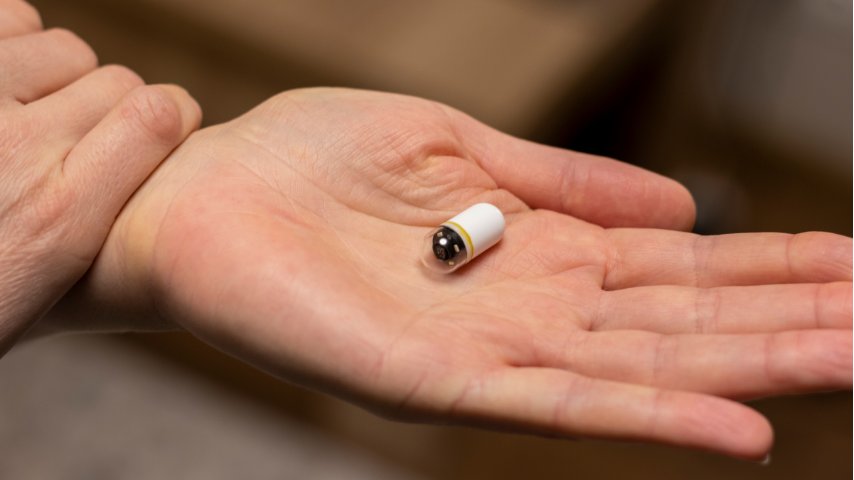
Instead of inserting a tube into the digestive tract, patients swallow a capsule about the size of a large vitamin pill.
Inside the capsule is a miniature camera, a battery, a light source, and a wireless transmitter.
As the capsule travels naturally through the digestive system, it captures thousands of images.
These images are transmitted to a recorder worn on the body.
The procedure is particularly useful because it allows doctors to examine the small intestine.
For decades, the small intestine was one of the most difficult areas of the digestive tract to visualize.
Traditional upper GI endoscopy reaches only the upper portion of the small intestine.
Colonoscopy reaches only a small section near the end of the small intestine.
Large portions remained difficult to access.
Capsule endoscopy changed that.
Today, it provides doctors with an unprecedented view of this previously hidden area.
Which Parts of the Digestive Tract Does Each Test Examine?
This is where the biggest difference lies.
A colonoscopy is designed to examine the large intestine and rectum.
A capsule endoscopy is designed primarily to examine the small intestine.
Think of the digestive tract as a long road.
A colonoscopy allows doctors to inspect one important section of that road very closely.
Capsule endoscopy allows them to travel through an entirely different section that is otherwise difficult to access.
Neither test replaces the other because they are looking at different areas.
This is one reason doctors sometimes recommend capsule endoscopy even after a normal colonoscopy.
The first test may have examined the colon thoroughly, while the second investigates the small intestine.
Why Might a Doctor Recommend a Colonoscopy?
Colonoscopy is often the first choice when symptoms suggest disease within the large intestine.
Doctors commonly recommend colonoscopy for patients experiencing:
- Blood in the stool
- Persistent diarrhea
- Changes in bowel habits
- Unexplained weight loss
- Abdominal pain
- Family history of colorectal cancer
- Positive stool screening tests
- Iron deficiency anemia
- Routine colorectal cancer screening
Colonoscopy is particularly valuable because colorectal cancer often develops from polyps that can be removed before they become cancerous.
This preventive capability has saved countless lives.
Why Might a Doctor Recommend Capsule Endoscopy?
Capsule endoscopy is usually recommended when doctors need information about the small intestine.
Common reasons include:
- Unexplained gastrointestinal bleeding
- Persistent iron deficiency anemia
- Suspected Crohn's disease
- Small intestinal tumors
- Polyps
- Celiac disease
- Persistent digestive symptoms with unclear causes
- Abnormal findings on imaging tests
Patients who continue experiencing symptoms despite normal endoscopy and colonoscopy results may benefit from capsule endoscopy because important abnormalities can sometimes hide within the small bowel.
Which Test Is More Comfortable?
From a patient comfort perspective, capsule endoscopy generally has the advantage.
Swallowing a capsule is significantly less invasive than undergoing a colonoscopy.
Patients usually do not require sedation.
They can often return to normal daily activities immediately after swallowing the capsule.
Most people do not feel the capsule moving through their digestive tract.
A colonoscopy, while generally safe and well tolerated, involves bowel preparation, sedation in many cases, and insertion of a flexible scope through the rectum.
Patients often require someone to accompany them home afterward.
However, it is important to remember that comfort alone should not determine which procedure is chosen.
The most appropriate test depends on the medical question being investigated.
Which Test Provides Better Images?
This is a common question.
The answer depends on what doctors are trying to evaluate.
Colonoscopy generally provides superior detail within the colon because the doctor controls the camera directly.
The physician can zoom in, wash away debris, inspect suspicious areas repeatedly, and take biopsies.
Capsule endoscopy captures excellent images but moves naturally through the digestive tract without direct control.
Doctors cannot pause, reposition, or revisit an area.
Because of this, colonoscopy often provides more detailed examination of the colon itself.
However, capsule endoscopy excels at visualizing large portions of the small intestine that colonoscopy simply cannot reach.
Can Both Tests Detect Cancer?
Yes.
Both procedures can help identify cancers within the areas they examine.
Colonoscopy is highly effective for detecting colorectal cancer and precancerous polyps.
In fact, it remains one of the most important cancer prevention tools available.
Capsule endoscopy can identify suspicious growths within the small intestine. To better understand can endoscopy detect cancer, it is important to know the strengths and limitations of each procedure.
Although small intestinal cancers are less common than colorectal cancer, they can occur and may be difficult to detect using conventional methods.
If capsule endoscopy identifies a suspicious lesion, additional procedures may be needed to confirm the diagnosis through biopsy.
Can Both Tests Detect Crohn's Disease?
Crohn's disease is one of the most common reasons doctors compare these two investigations.
Colonoscopy is often the first test performed because Crohn's disease frequently affects the colon and the terminal ileum, which is the end portion of the small intestine.
However, Crohn's disease can also affect areas deeper within the small intestine.
These areas may be beyond the reach of colonoscopy.
In such cases, capsule endoscopy can detect ulcers, inflammation, and other abnormalities that might otherwise remain hidden.
For patients with ongoing symptoms and inconclusive results, capsule endoscopy can provide valuable additional information.
Can Either Test Take Biopsies?
This is one of the biggest differences between the procedures.
Colonoscopy allows doctors to collect tissue samples immediately.
Biopsies are often essential for diagnosing inflammation, infections, cancer, and other conditions.
Capsule endoscopy cannot perform biopsies.
It can only capture images.
If abnormalities are identified, additional procedures may be required to obtain tissue samples for confirmation.
This limitation is important to understand because capsule endoscopy is primarily a diagnostic imaging tool.
What Are the Risks of Each Procedure?
Both procedures are considered safe.
Colonoscopy carries small risks including bleeding, reactions to sedation, and rarely perforation of the bowel wall.
Capsule endoscopy has very few complications.
The primary concern is capsule retention.
This occurs when the capsule becomes stuck in a narrowed section of the intestine.
Although uncommon, retention is more likely in patients with severe Crohn's disease, intestinal strictures, tumors, or scar tissue.
Doctors carefully assess risk factors before recommending the procedure.
Which Test Is Better for Unexplained Bleeding?
If bleeding originates from the colon, colonoscopy is generally the preferred test.
However, when upper endoscopy and colonoscopy fail to identify a source of bleeding, doctors often suspect the small intestine.
In these situations, capsule endoscopy frequently becomes the next step.
The ability to examine the entire small bowel makes it one of the most valuable tools for investigating unexplained gastrointestinal bleeding.
Do Some Patients Need Both Procedures?
Absolutely.
This is very common.
Digestive diseases do not always limit themselves to a single part of the digestive tract.
A patient may undergo colonoscopy to evaluate symptoms and then require capsule endoscopy to investigate areas beyond the colon.
These procedures are not competitors.
They are complementary tools.
Each provides information that the other cannot.
Together, they allow doctors to build a more complete picture of digestive health.
So, Which Test Reveals More About Your Gut?
The answer depends on which part of the gut needs to be examined.
If the concern involves the large intestine, colonoscopy reveals more information and allows treatment during the same procedure.
If the concern involves the small intestine, capsule endoscopy often reveals information that colonoscopy cannot provide.
Neither test is universally superior.
Each has been designed to answer specific clinical questions, and doctors may also consider endoscopy vs CT scan depending on the clinical situation.
The best test is the one that matches the patient's symptoms, medical history, and suspected diagnosis.
The Bottom Line
Capsule endoscopy and colonoscopy are both powerful tools that help doctors understand what is happening inside the digestive tract.
Colonoscopy remains the gold standard for examining the colon, detecting colorectal cancer, removing polyps, and obtaining biopsies.
Capsule endoscopy has revolutionized the evaluation of the small intestine by allowing doctors to visualize areas that were once difficult to access.
Rather than asking which test is better, it is often more helpful to ask which test is better for your particular situation.
Your gastroenterologist will recommend the investigation that is most likely to provide answers based on your symptoms, medical history, and whether there is an endoscopy need.
In many cases, these procedures work together to provide the clearest understanding of your digestive health.
If you are experiencing unexplained digestive symptoms, anemia, gastrointestinal bleeding, chronic abdominal pain, or suspected inflammatory bowel disease, consult a gastroenterologist to determine which investigation is right for you. Early diagnosis and appropriate testing can help identify the cause of your symptoms and guide the most effective treatment plan.
```