Capsule Endoscopy – The Tiny Camera Pill That Helps Doctors See What Other Tests Cannot
Medicine Made Simple
Capsule endoscopy is a simple, non-invasive procedure that uses a tiny wireless camera inside a capsule about the size of a vitamin pill to examine the digestive tract. After swallowing the capsule, it travels naturally through the digestive system while capturing thousands of images, particularly of the small intestine, an area that is difficult to reach with traditional endoscopy or colonoscopy. The procedure helps doctors identify conditions such as unexplained bleeding, Crohn's disease, celiac disease, tumors, and polyps. It requires no sedation, causes minimal discomfort, and allows patients to continue most normal activities during the examination.
Introduction
Imagine if your doctor could take a detailed journey through your digestive system without inserting a tube, making an incision, or requiring you to stay in the hospital.
It sounds like something from a science fiction movie.
But this technology already exists and is helping thousands of patients around the world find answers to digestive problems that would otherwise remain unexplained.
The procedure is called capsule endoscopy.
Many patients hear the term for the first time when their gastroenterologist recommends it. Understandably, they have questions.
What exactly is capsule endoscopy?
Why do I need it?
Is it painful?
How can a tiny capsule take pictures inside my body?
Most importantly, how can it help find the cause of symptoms that other tests have failed to explain?
In this edition of Medicine Made Simple, we will break down everything you need to know about capsule endoscopy in a way that is easy to understand, whether you are a patient, caregiver, or simply someone interested in learning about modern digestive healthcare.
Understanding the Digestive Tract
To understand why capsule endoscopy is important, it helps to understand how the digestive system works.
The digestive tract is a long tube that begins at the mouth and ends at the rectum.
After food is swallowed, it passes through the esophagus into the stomach. From there, it enters the small intestine, where most digestion and nutrient absorption take place. The remaining material then moves into the large intestine before leaving the body.
Doctors have several tools to examine parts of this system.
An upper gastrointestinal endoscopy allows them to look inside the esophagus, stomach, and the first part of the small intestine.
A colonoscopy allows them to examine the large intestine and rectum.
However, there is one section that has traditionally been difficult to evaluate.
That section is the small intestine.
The small intestine measures approximately six to seven meters in length. Because of its size and location, much of it cannot be easily reached using conventional endoscopy procedures.
For years, this created a major challenge in diagnosing conditions affecting this part of the digestive tract.
Capsule endoscopy was developed to solve that problem.
What Exactly Is Capsule Endoscopy?
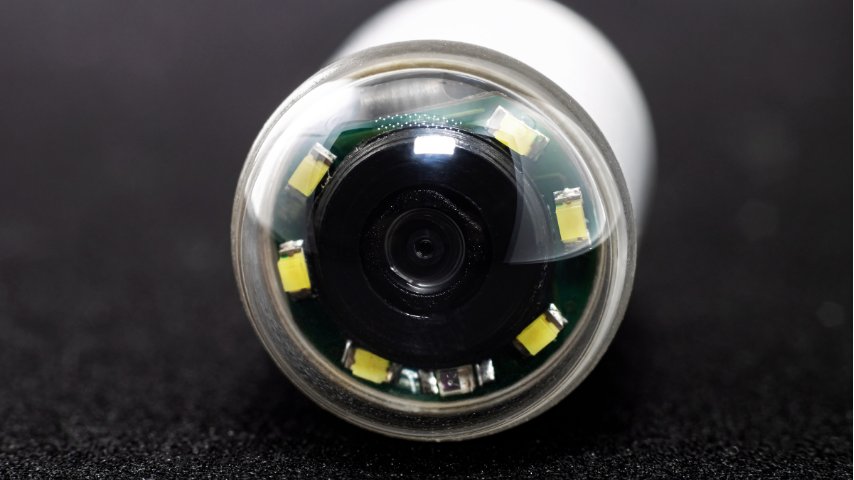
Capsule endoscopy is a diagnostic procedure that uses a tiny wireless camera enclosed within a capsule that is roughly the size of a large vitamin tablet.
The capsule contains several miniature components including a camera, a light source, a battery, and a wireless transmitter.
After swallowing the capsule with water, it begins its journey through the digestive tract.
As it travels naturally through the intestines, the camera continuously captures images of the digestive lining. These images are transmitted wirelessly to a recording device worn around the patient's waist.
Over several hours, the capsule captures thousands of high-quality images that allow doctors to examine areas of the digestive tract that are otherwise difficult to see.
Think of it as a miniature explorer travelling through your digestive system and sending back photographs along the way.
Why Was Capsule Endoscopy Developed?
For many years, patients with unexplained digestive symptoms often faced a frustrating situation.
Blood tests suggested something was wrong. Symptoms persisted. Yet endoscopy, colonoscopy, and imaging studies sometimes failed to identify the cause.
The reason was simple.
Many conditions were hiding within the small intestine.
Since this area was difficult to reach, doctors needed a better way to examine it.
Capsule endoscopy changed everything.
By allowing direct visualization of the small intestine, doctors gained access to a part of the digestive tract that had previously been challenging to investigate.
Today, capsule endoscopy is considered one of the most important advances in gastrointestinal diagnostics.
Why Might Your Doctor Recommend Capsule Endoscopy?
Capsule endoscopy is not performed for every digestive complaint.
Doctors typically recommend it when they need a closer look at the small intestine or when previous tests have not provided enough answers for patients with digestive symptoms with normal test result.
One of the most common reasons is unexplained gastrointestinal bleeding.
Some patients develop iron deficiency anemia or recurrent blood loss without any obvious source being found during standard investigations.
The small intestine is often the next place doctors look.
Capsule endoscopy is also frequently used when Crohn's disease is suspected.
Crohn's disease can affect the small intestine and may sometimes be missed on routine colonoscopy if inflammation is located deeper within the bowel.
Another important use is the detection of tumors and polyps.
Although cancers of the small intestine are relatively uncommon, they can occur and are often difficult to identify through conventional procedures.
Capsule endoscopy may also be used to investigate celiac disease, particularly when doctors want to assess damage to the lining of the small intestine.
In some situations, capsule endoscopy serves as a follow-up investigation after CT scans, MRI scans, or other imaging tests produce unclear findings. In certain cases, doctors may also consider endoscopy vs barium scan when deciding the most appropriate investigation.
Conditions That Capsule Endoscopy Can Help Diagnose
Because capsule endoscopy provides detailed images of the digestive tract, it can help identify several important conditions.
These include hidden gastrointestinal bleeding, Crohn's disease, ulcerative changes in the intestine, celiac disease, polyps, tumors, abnormal blood vessels, and certain inherited digestive disorders.
The procedure is especially valuable because many of these conditions affect parts of the small intestine that are difficult to examine using traditional methods.
What Happens Before the Procedure?
Preparation is an important part of capsule endoscopy.
The camera can only capture clear images if the digestive tract is relatively empty.
For this reason, patients are usually asked to stop eating and drinking for approximately 10 to 12 hours before the procedure.
Some doctors may also recommend a bowel preparation solution or a gentle laxative to improve visibility inside the small intestine.
Your healthcare team will provide detailed instructions based on your medical history and the reason for the examination.
It is important to follow these instructions carefully because good preparation significantly improves the quality of the images obtained.
What Happens During the Procedure?
One of the reasons patients appreciate capsule endoscopy is its simplicity.
When you arrive at the clinic, a technician will place sensors or a recording device on your body. This equipment receives the images transmitted by the capsule.
Once everything is ready, you simply swallow the capsule with a glass of water.
The process takes only a few seconds.
There is no need for sedation, injections, or hospital admission.
After swallowing the capsule, most patients are free to leave the clinic and continue their normal daily activities.
Many return to work, attend classes, or carry on with routine household activities.
The capsule continues travelling through the digestive tract while quietly capturing images.
Can You Feel the Capsule Moving?
This is one of the most common concerns patients have.
Fortunately, the answer is usually no.
Once swallowed, most people cannot feel the capsule at all.
The digestive tract naturally moves food, liquids, and medications through the body every day. The capsule simply travels along with these normal movements.
For the vast majority of patients, the procedure is completely painless.
Can You Eat During the Examination?
Most healthcare providers allow clear liquids a few hours after swallowing the capsule.
Light meals are often permitted later in the day.
The exact timing varies depending on the instructions provided by your doctor.
Following these recommendations helps ensure that image quality remains high throughout the examination.
What Happens After the Procedure?
The recording period usually lasts around eight hours.
After this time, you return to the clinic so the recording equipment can be removed.
The capsule itself remains inside the digestive tract and continues moving naturally.
You do not need to retrieve it.
The capsule is disposable and is typically passed during a bowel movement within one to three days.
Most patients never notice when this happens.
The images stored on the recorder are downloaded and reviewed by a gastroenterologist.
Because thousands of images must be examined carefully, results may take several days before they are available.
How Is Capsule Endoscopy Different from Traditional Endoscopy?
Many patients wonder whether capsule endoscopy replaces traditional upper GI endoscopy or colonoscopy.
The answer is no.
These procedures are designed to do different jobs.
Traditional endoscopy allows doctors to directly examine the digestive tract, take biopsies, remove polyps, and perform treatments.
Capsule endoscopy focuses primarily on visualization.
Its greatest strength is the ability to examine the small intestine.
Unlike traditional procedures, it requires no sedation and causes minimal disruption to daily life.
For many patients, capsule endoscopy and traditional endoscopy complement each other rather than compete with one another.
Benefits of Capsule Endoscopy
Capsule endoscopy offers several important advantages.
The procedure is non-invasive and generally painless. Most patients find it much more comfortable than conventional endoscopy procedures.
Because sedation is not required, patients can usually continue normal activities throughout the day.
The ability to visualize the small intestine is perhaps its greatest advantage. This allows doctors to investigate symptoms and conditions that might otherwise remain unexplained.
The procedure is also associated with minimal recovery time because there is no need for anesthesia or hospital observation.
Are There Any Risks?
Capsule endoscopy is considered extremely safe.
However, like all medical procedures, it is not entirely risk-free.
The most important potential complication is capsule retention.
This occurs when the capsule becomes trapped in a narrowed section of the intestine.
Such narrowing may result from Crohn's disease, tumors, scar tissue, or previous inflammation.
Fortunately, capsule retention is uncommon.
Doctors carefully assess patients before recommending the procedure and may use additional tests when there is concern about intestinal narrowing.
For most patients, the risk is very low.
Is Capsule Endoscopy Right for You?
The decision depends on your symptoms and medical history.
Patients with unexplained anemia, gastrointestinal bleeding, suspected Crohn's disease, persistent digestive symptoms, or abnormal imaging findings may benefit from capsule endoscopy. Your doctor will also look for signs you need an endoscopy before recommending the most appropriate test.
Your gastroenterologist will determine whether the procedure is appropriate based on your specific situation.
The goal is always to choose the investigation most likely to provide answers while minimizing discomfort and risk.
Conclusion
Capsule endoscopy represents one of the most remarkable advances in modern digestive healthcare.
By placing a tiny camera inside a swallowable capsule, doctors can now examine areas of the digestive tract that were once difficult to access.
The procedure is simple, comfortable, and highly effective for investigating conditions such as unexplained bleeding, Crohn's disease, celiac disease, tumors, and polyps.
For many patients, capsule endoscopy provides answers that other tests cannot, helping doctors diagnose conditions earlier and develop more effective treatment plans.
Sometimes the smallest technology can make the biggest difference.
If you have persistent digestive symptoms, unexplained anemia, gastrointestinal bleeding, or suspected small bowel disease, speak with a gastroenterologist to determine whether capsule endoscopy may be right for you. Early diagnosis can help identify underlying conditions and guide the most effective treatment plan.