Can Capsule Endoscopy Detect Crohn's Disease When Colonoscopy Misses It?
Medicine Made Simple
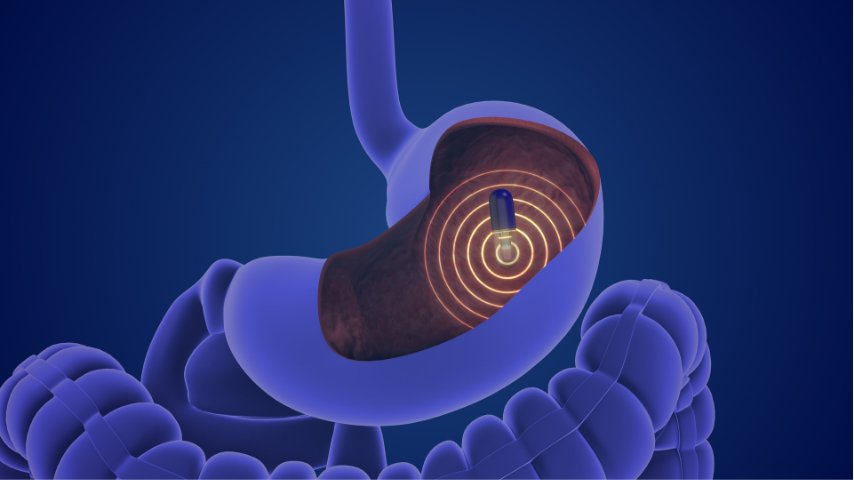
Capsule endoscopy is a non-invasive procedure that uses a tiny camera inside a swallowable capsule to capture images of the digestive tract, especially the small intestine. This area is difficult to examine using traditional endoscopy and colonoscopy. For patients with symptoms suggestive of Crohn's disease but normal colonoscopy results, capsule endoscopy can sometimes identify inflammation, ulcers, or early disease hidden within the small bowel. While it does not replace colonoscopy, capsule endoscopy has become an important tool in diagnosing Crohn's disease and helping doctors understand the full extent of intestinal inflammation.
Introduction
Imagine dealing with abdominal pain, diarrhea, fatigue, weight loss, and digestive discomfort for months or even years.
You visit multiple doctors. Blood tests suggest inflammation. Your symptoms seem to fit Crohn's disease. Yet when a colonoscopy is performed, the results come back normal or inconclusive.
At this point, many patients feel confused.
If the symptoms suggest Crohn's disease, why didn't the colonoscopy find it?
This situation is more common than many people realize.
Although colonoscopy is one of the most important tests used to diagnose Crohn's disease, it cannot examine every part of the digestive tract. Large portions of the small intestine remain beyond its reach.
This is where capsule endoscopy has changed the way doctors investigate inflammatory bowel disease.
For some patients, the tiny camera pill provides answers that traditional investigations cannot.
Understanding how Crohn's disease develops, where it occurs, and why it can sometimes escape detection helps explain why capsule endoscopy has become such a valuable diagnostic tool.
Understanding Crohn's Disease
Crohn's disease is a chronic inflammatory bowel disease, often referred to as IBD.
The condition occurs when the body's immune system mistakenly attacks parts of the digestive tract, causing ongoing inflammation.
Unlike infections that improve within days or weeks, Crohn's disease is a lifelong condition characterized by periods of active inflammation and periods of remission.
The exact cause remains unclear. Researchers believe genetics, environmental factors, immune system dysfunction, and changes in gut bacteria all play a role.
Crohn's disease can affect people of all ages, but it is frequently diagnosed in teenagers, young adults, and individuals under the age of forty.
Because the disease develops gradually in many patients, symptoms are sometimes mistaken for common digestive issues during the early stages.
Common Symptoms of Crohn's Disease
The symptoms of Crohn's disease vary depending on which part of the digestive tract is affected and how severe the inflammation has become.
Many patients experience recurring abdominal pain that may worsen after meals. Chronic diarrhea is another common symptom and can sometimes occur several times a day.
Fatigue is frequently reported and may result from ongoing inflammation, nutritional deficiencies, or anemia.
Some patients notice unexplained weight loss despite maintaining their usual eating habits. Others experience loss of appetite, bloating, nausea, or an urgent need to use the bathroom.
In more advanced cases, Crohn's disease can cause fever, anemia, intestinal narrowing, fistulas, and complications outside the digestive tract such as joint pain, skin conditions, or eye inflammation.
Because these symptoms overlap with many other digestive disorders, accurate diagnosis is essential.
Why Is Crohn's Disease Sometimes Difficult to Diagnose?
Many people assume that diagnosing Crohn's disease is straightforward.
In reality, it can be surprisingly challenging.
There is no single test that definitively diagnoses Crohn's disease in every patient.
Instead, doctors combine information from symptoms, physical examination, blood tests, stool tests, imaging studies, endoscopy, colonoscopy, and biopsy results.
The difficulty arises because Crohn's disease behaves differently from patient to patient.
Some individuals develop extensive inflammation involving multiple sections of the digestive tract. Others have very mild disease affecting only small areas of the intestine.
The location of the inflammation often determines how easily the condition can be detected.
This is where understanding the anatomy of the digestive tract becomes important.
Where Does Crohn's Disease Usually Occur?
One of the defining characteristics of Crohn's disease is that it can affect almost any part of the digestive tract.
Inflammation may occur in the mouth, esophagus, stomach, small intestine, colon, or rectum.
However, one of the most common locations is the small intestine, particularly the lower portion known as the ileum.
The challenge is that much of the small intestine lies beyond the reach of conventional diagnostic procedures.
This creates situations where patients experience genuine symptoms of Crohn's disease despite normal findings on standard tests, including digestive symptoms with normal test result.
What Can a Colonoscopy Actually See?
A colonoscopy is one of the most valuable tools for diagnosing digestive diseases.
During the procedure, a flexible camera is inserted through the rectum to examine the colon and, in many cases, the terminal ileum, which is the final section of the small intestine.
Doctors can directly observe inflammation, ulcers, bleeding, and abnormal tissue changes. They can also obtain biopsies, which are often crucial for confirming the diagnosis.
For many patients, colonoscopy successfully identifies Crohn's disease.
However, the procedure has limitations.
Although it provides excellent visualization of the colon and the end of the small intestine, it cannot travel through the entire length of the small bowel.
This means significant sections remain unseen.
Why Can Crohn's Disease Be Missed on Colonoscopy?
Many patients are surprised to learn that a normal colonoscopy does not automatically rule out Crohn's disease.
The main reason is location.
If inflammation occurs deeper within the small intestine, the colonoscope may never reach the affected area.
Imagine inspecting a long highway but only being able to view the first and last few kilometers.
Problems occurring in the middle could easily remain unnoticed.
This is essentially what happens when Crohn's disease affects portions of the small bowel beyond the reach of the colonoscope.
Another factor is disease severity.
Early Crohn's disease may produce subtle abnormalities that are difficult to detect. Tiny ulcers or isolated patches of inflammation may not be obvious during initial investigations.
In some patients, symptoms appear long before visible structural damage develops.
These situations often require additional testing based on the endoscopy need.
What Is Capsule Endoscopy?
Capsule endoscopy is a diagnostic procedure that allows doctors to examine the small intestine using a miniature wireless camera contained within a capsule.
The capsule is approximately the size of a large vitamin tablet.
After swallowing it with water, the capsule travels naturally through the digestive tract while capturing thousands of images.
These images are transmitted to a recorder worn on the body and later reviewed by a gastroenterologist.
Unlike colonoscopy, capsule endoscopy can visualize large portions of the small intestine that would otherwise be difficult to examine.
This ability makes it particularly valuable when Crohn's disease is suspected but previous investigations have not provided clear answers.
How Does Capsule Endoscopy Help Detect Crohn's Disease?
The greatest strength of capsule endoscopy lies in its ability to examine the entire small bowel lining.
As the capsule travels through the intestine, it captures detailed images of the intestinal surface.
Doctors can identify abnormalities commonly associated with Crohn's disease, including small ulcers, erosions, areas of inflammation, swelling, digestive bleeding causes, and changes in the intestinal lining.
Because the procedure visualizes regions beyond the reach of colonoscopy, it may reveal disease that would otherwise remain hidden.
For patients with ongoing symptoms and inconclusive investigations, this additional information can be extremely valuable.
In some cases, capsule endoscopy provides the first clear evidence that Crohn's disease is present.
When Might a Doctor Recommend Capsule Endoscopy?
Capsule endoscopy is not usually the first test performed when Crohn's disease is suspected.
Doctors generally begin with blood tests, stool studies, colonoscopy, and imaging investigations.
However, capsule endoscopy may be recommended when symptoms strongly suggest Crohn's disease but standard evaluations fail to provide definitive answers.
Patients with persistent abdominal pain, chronic diarrhea, unexplained weight loss, iron deficiency anemia, elevated inflammatory markers, or ongoing digestive symptoms despite normal colonoscopy findings may be candidates for the procedure.
The goal is to determine whether inflammation exists in portions of the small intestine that have not yet been examined.
How Accurate Is Capsule Endoscopy for Crohn's Disease?
Research has shown that capsule endoscopy can be highly sensitive for detecting early small bowel Crohn's disease.
In many cases, it identifies abnormalities before they become visible on other imaging studies.
This sensitivity makes it particularly useful when the diagnosis remains uncertain.
However, capsule endoscopy is not perfect.
Not every ulcer or abnormality seen during the procedure is caused by Crohn's disease. Certain medications, infections, and other conditions can sometimes produce similar findings.
For this reason, capsule endoscopy results must always be interpreted alongside symptoms, laboratory tests, imaging studies, and clinical evaluation.
The diagnosis of Crohn's disease depends on the complete picture rather than a single test result.
Why Doesn't Every Patient Undergo Capsule Endoscopy First?
Although capsule endoscopy is an excellent diagnostic tool, it has limitations.
Unlike colonoscopy, it cannot obtain biopsies.
Biopsy samples often provide critical information that helps confirm inflammation and exclude other diseases.
Capsule endoscopy also cannot treat abnormalities that are discovered during the examination.
Another important consideration is capsule retention.
Patients with severe intestinal narrowing caused by Crohn's disease may have an increased risk of the capsule becoming trapped within the intestine.
Doctors assess this risk carefully before recommending the procedure.
For these reasons, colonoscopy remains the first-line investigation in most situations, while capsule endoscopy serves as an important complementary test.
What Happens If Capsule Endoscopy Finds Evidence of Crohn's Disease?
Finding abnormalities suggestive of Crohn's disease is usually not the end of the diagnostic journey.
Instead, it often provides a critical piece of information that helps guide further management.
Your doctor may recommend additional imaging studies, specialized endoscopy procedures, or targeted biopsies.
The findings also help determine the location and extent of disease involvement, which influences treatment decisions.
Once the diagnosis is confirmed, treatment can begin with the goal of controlling inflammation, relieving symptoms, preventing complications, and improving quality of life.
What If Both Colonoscopy and Capsule Endoscopy Are Normal?
This is another common concern among patients.
A normal capsule endoscopy significantly reduces the likelihood of active Crohn's disease within the small intestine.
However, it does not automatically explain persistent symptoms.
Other digestive disorders can mimic Crohn's disease, including irritable bowel syndrome, food intolerances, celiac disease, infections, and functional gastrointestinal disorders.
Your doctor may recommend additional evaluation depending on your symptoms and medical history.
Importantly, normal results can be reassuring because they help exclude serious inflammatory disease.
The Bottom Line
Crohn's disease can be difficult to diagnose, particularly when inflammation is limited to areas of the small intestine that cannot be reached by traditional colonoscopy.
While colonoscopy remains one of the most important tools for evaluating inflammatory bowel disease, it does not visualize the entire small intestine. This means some patients may continue experiencing symptoms despite normal or inconclusive findings, including normal endoscopy with continued symptoms.
Capsule endoscopy has transformed the evaluation of suspected Crohn's disease by providing a detailed view of previously inaccessible portions of the small bowel. For patients with persistent symptoms and unanswered questions, the tiny camera pill can sometimes reveal inflammation that other tests have missed.
Although capsule endoscopy does not replace colonoscopy, it has become an invaluable complementary investigation that helps doctors achieve earlier and more accurate diagnoses.
If you have ongoing digestive symptoms, unexplained abdominal pain, chronic diarrhea, anemia, or suspected Crohn's disease despite normal colonoscopy findings, consult a gastroenterologist to determine whether capsule endoscopy may be appropriate. Early diagnosis can help prevent complications and ensure timely treatment.
References and Sources
American College of Gastroenterology
National Institute of Diabetes and Digestive and Kidney Diseases (NIDDK)