Can an Endoscopy Detect Cancer? Understanding What Doctors Can and Cannot See
Medicine Made Simple
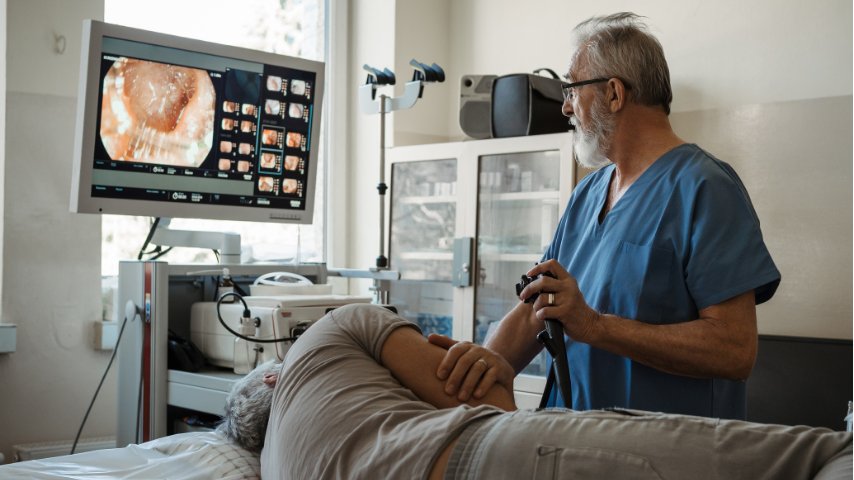
An upper gastrointestinal (GI) endoscopy is a procedure that allows doctors to examine the inside of the food pipe (esophagus), stomach, and the first part of the small intestine using a thin, flexible tube with a tiny camera attached to its tip. The procedure is usually performed under sedation, making it comfortable for most patients. Endoscopy helps doctors identify inflammation, ulcers, bleeding, abnormal growths, and early signs of cancer. It also allows tissue samples (biopsies) to be collected during the same procedure, which is often essential for confirming or ruling out cancer.
Introduction
Few medical procedures create as much anxiety as an endoscopy when the word "cancer" enters the conversation.
For many patients, the moment their doctor recommends an endoscopy, their mind immediately jumps to the worst-case scenario.
"Do they think I have cancer?"
"Can an endoscopy actually detect cancer?"
"If my endoscopy is normal, does that mean I definitely don't have cancer?"
These are understandable questions.
Cancer is one of the biggest fears people have when it comes to digestive symptoms. The challenge is that many digestive conditions can cause symptoms that look remarkably similar. Persistent heartburn, stomach pain, difficulty swallowing, nausea, unexplained weight loss, and anemia can all occur with common digestive disorders. They can also sometimes be warning signs of something more serious.
This is one reason endoscopy plays such an important role in digestive healthcare.
It helps doctors move beyond guesswork and look directly at what is happening inside the digestive tract.
But while endoscopy is a powerful tool, it is important to understand both what it can do and what it cannot do.
Why Cancer Can Be Difficult to Detect Early
One of the reasons digestive cancers are challenging is that they often develop slowly.
In the early stages, symptoms may be mild, vague, or completely absent.
A person may experience occasional heartburn and assume it's due to stress.
Someone else may notice mild indigestion after meals and blame their diet.
Others may feel perfectly healthy and have no symptoms at all.
This is why doctors pay close attention to symptoms that:
- Persist for weeks or months
- Continue despite treatment
- Gradually worsen over time
- Occur alongside weight loss or anemia
The goal is not to assume cancer is present.
The goal is to identify problems early, when treatment is often most effective.
How Does an Endoscopy Help Detect Cancer?
To understand why endoscopy is so valuable, it helps to understand what the procedure actually allows doctors to see.
During an upper GI endoscopy, a camera is passed through the mouth into the digestive tract.
This gives doctors a direct view of:
- The esophagus (food pipe)
- The stomach
- The first part of the small intestine
Unlike scans or blood tests, endoscopy allows doctors to examine the actual lining of these organs.
They can identify:
- Abnormal growths
- Suspicious lesions
- Ulcers
- Areas of inflammation
- Tissue changes that may indicate precancerous conditions
- Early cancers that may not appear on scans
This direct visualization is one of the biggest advantages of endoscopy.
It allows doctors to identify abnormalities while they are still small and potentially easier to treat.
Can an Endoscopy Detect All Types of Cancer?
This is where many misconceptions arise.
The simple answer is no.
Endoscopy can only examine the areas it reaches.
An upper GI endoscopy is primarily designed to evaluate:
- Esophageal cancer
- Stomach cancer
Different cancers require different investigations.
For example:
- Colon cancer is typically evaluated with a colonoscopy.
- Pancreatic cancer often requires CT scans, MRI scans, or endoscopic ultrasound.
- Liver cancers are usually investigated using imaging studies.
This is why doctors choose investigations based on the symptoms and the area of concern. In some situations, additional tests such as capsule endoscopy and colonoscopy comparisons may help determine the most appropriate evaluation method.
What Does Cancer Look Like During an Endoscopy?
Patients are often surprised to learn that cancer does not always appear as a large mass.
Sometimes the changes are subtle.
Doctors may notice:
- Small abnormal growths
- Irregular tissue patterns
- Unusual ulcer-like lesions
- Areas of thickened tissue
- Changes in color or texture
Experienced gastroenterologists are trained to recognize these abnormalities.
However, appearance alone is rarely enough to make a definitive diagnosis.
This brings us to one of the most important parts of the procedure.
Why Biopsies Are So Important
Many patients become anxious when they hear the doctor mention a biopsy.
The word itself often creates fear.
In reality, biopsies are a routine part of digestive medicine.
A biopsy simply means collecting a tiny sample of tissue for laboratory analysis.
Doctors perform biopsies for many reasons, including:
- Investigating inflammation
- Checking for infections
- Diagnosing celiac disease
- Evaluating ulcers
- Examining suspicious areas
- Confirming or ruling out cancer
The key point is this:
An endoscopy may suggest that an abnormality is present.
A biopsy helps determine exactly what that abnormality is.
Without a biopsy, it is often impossible to know whether an abnormal area is cancerous, precancerous, or completely benign.
Can an Endoscopy Detect Cancer Early?
One of the greatest strengths of endoscopy is its ability to detect cancer before symptoms become severe.
In some cases, endoscopy can identify:
- Precancerous changes
- Very small tumors
- Early-stage cancers
This is important because treatment outcomes are often significantly better when cancer is diagnosed early.
For example, conditions such as Barrett's esophagus can be monitored through endoscopy because they may increase the risk of developing esophageal cancer over time.
Detecting abnormal changes before cancer develops provides an opportunity for early intervention.
If My Endoscopy Is Normal, Does That Mean I Don't Have Cancer?
This is one of the most common patient questions.
A normal endoscopy is very reassuring.
It means that the doctor did not identify any visible abnormalities in the areas examined.
However, it does not automatically rule out every type of cancer.
Remember that endoscopy only examines specific parts of the digestive tract.
If symptoms suggest a problem outside those areas, additional investigations may still be required.
For example:
- A normal endoscopy does not rule out pancreatic cancer.
- A normal endoscopy does not rule out colon cancer.
- A normal endoscopy does not evaluate every part of the small intestine, where capsule endoscopy may sometimes provide additional visualization.
This is why doctors interpret endoscopy results alongside symptoms, blood tests, scans, and other findings.
Can Cancer Be Missed During an Endoscopy?
Patients occasionally ask whether cancer can be missed.
While modern endoscopy is highly effective, no medical test is perfect.
Several factors influence detection:
The Size of the Lesion
Very small abnormalities can be more challenging to identify.
The Location
Some areas are naturally more difficult to visualize than others.
Preparation Quality
Food or fluid in the stomach can sometimes affect visibility.
Disease Stage
Early changes may be subtle.
Fortunately, advances in endoscopic technology have significantly improved detection rates over the years.
High-definition imaging, enhanced visualization techniques, and improved training have made modern endoscopy more accurate than ever before.
What Symptoms Make Doctors Concerned About Cancer?
It's important to remember that these symptoms do not automatically mean cancer is present.
However, they often prompt further investigation.
Symptoms that may lead doctors to recommend an endoscopy include:
- Difficulty swallowing
- Persistent heartburn
- Unexplained weight loss
- Iron deficiency anemia
- Persistent stomach pain
- Ongoing nausea or vomiting
- Vomiting blood
- Black stools
- Loss of appetite
In many cases, these symptoms are caused by conditions such as acid reflux, ulcers, gastritis, or infections.
The purpose of endoscopy is to determine the actual cause.
What Happens If Something Suspicious Is Found?
Finding an abnormal area during an endoscopy does not automatically mean cancer.
Many abnormalities turn out to be:
- Inflammation
- Benign polyps
- Ulcers
- Scar tissue
- Infection-related changes
If a suspicious area is identified, the doctor will usually take a biopsy.
The tissue is then examined by a pathologist.
Only after this microscopic evaluation can a definitive diagnosis be made.
This waiting period can be stressful, but it is a necessary part of ensuring an accurate diagnosis. Patients may also wonder what happens after capsule endoscopy if additional small bowel evaluation is required.
Why Doctors Often Combine Endoscopy With Other Tests
Endoscopy is powerful, but it is only one piece of the diagnostic puzzle.
Doctors often combine it with:
- Blood tests
- CT scans
- MRI scans
- Ultrasound examinations
- Endoscopic ultrasound
- Colonoscopy
For example, if cancer is confirmed, a CT scan may be required to determine whether it has spread beyond its original location.
This information is essential for planning treatment.
Conclusion
Endoscopy is one of the most effective tools available for detecting cancers of the esophagus, stomach, and upper digestive tract. It allows doctors to directly examine the digestive lining, identify suspicious abnormalities, and obtain biopsies that help confirm or rule out cancer.
However, endoscopy is not a universal cancer test. It cannot evaluate every organ or every type of cancer, which is why additional investigations may sometimes be necessary. When considering further small bowel evaluation, doctors also assess capsule endoscopy safety before recommending the procedure.
If your doctor recommends an endoscopy, it does not automatically mean they suspect cancer. More often, it is a way to investigate symptoms thoroughly, rule out serious conditions, and provide clear answers.
For many patients, the procedure offers reassurance. For others, it provides an opportunity to identify problems early when treatment is most effective.
Either way, the goal is the same: replacing uncertainty with knowledge and helping patients move forward with confidence.
If you have persistent digestive symptoms such as difficulty swallowing, unexplained weight loss, ongoing heartburn, anemia, or stomach pain, speak with a gastroenterologist about whether an endoscopy may be appropriate. Early evaluation can provide answers, peace of mind, and, when necessary, timely treatment.
References and Sources
National Institute of Diabetes and Digestive and Kidney Diseases (NIDDK) – Upper GI Endoscopy