Barium Swallow Test: When Your Doctor Recommends It and Why
Medicine Made Simple Summary
A Barium Swallow Test is a simple imaging procedure used to examine the food pipe, throat, and upper part of the digestive system. During the test, you drink a special liquid called barium, which coats the inside of the swallowing passage and makes it visible on X-rays. This helps doctors detect problems like difficulty swallowing, acid reflux, narrowing, ulcers, or abnormal growths. The test is painless, does not require surgery, and provides important information when patients have trouble swallowing or unexplained upper digestive symptoms.
Understanding What a Barium Swallow Test Means
A Barium Swallow Test is a special X-ray procedure used to examine how food and liquids move from the mouth to the stomach. It mainly focuses on the food pipe, which is medically called the esophagus, along with the throat and sometimes the upper part of the stomach.
This test helps doctors understand whether swallowing is happening normally and whether there is any blockage, narrowing, or abnormal movement inside the food pipe.
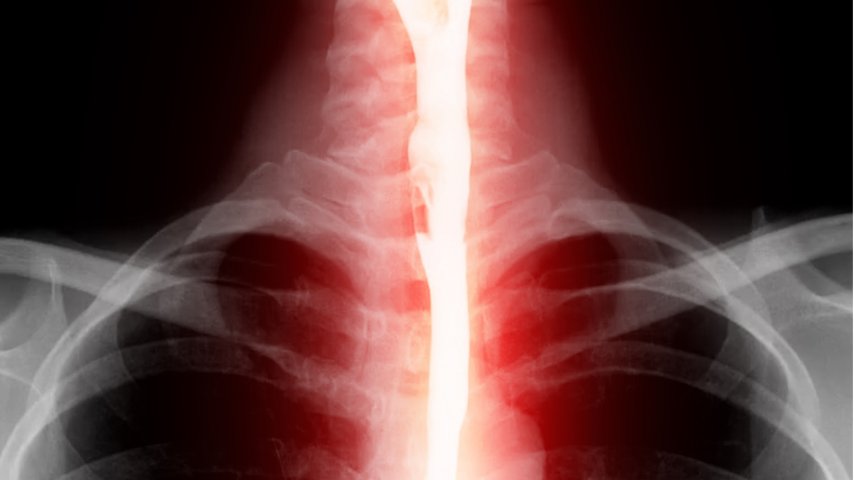
The word “barium” refers to a white chalky liquid that the patient drinks during the procedure. This liquid coats the inside lining of the throat and esophagus, making these structures clearly visible on X-ray images.
Since normal soft tissues are difficult to see on regular X-rays, the barium acts like a contrast material and highlights the passage so doctors can examine it properly.
Unlike endoscopy, no tube is passed into the body. The test is simple, non-invasive, and usually completed quickly.
It is often one of the first tests doctors recommend when a patient complains of endoscopy symptoms such as swallowing difficulties, persistent heartburn, or upper digestive discomfort.
Why Doctors Recommend a Barium Swallow Test
Doctors usually suggest this test when they need to understand why swallowing feels difficult, painful, or unusual.
One of the most common reasons is difficulty swallowing, also called dysphagia. Patients may feel like food gets stuck in the throat or chest, or they may need extra effort to swallow even soft foods.
Frequent acid reflux or long-term heartburn may also lead to this test. Doctors may want to check whether stomach acid has caused damage or narrowing in the food pipe.
Patients with unexplained chest discomfort, repeated choking while eating, chronic cough, hoarseness, or the feeling of a lump in the throat may also need a barium swallow.
The test can help identify strictures, ulcers, hiatal hernia, swallowing muscle problems, tumors, and conditions like achalasia where the food pipe does not move food properly.
Sometimes it is also used after surgery to check healing or before certain procedures to understand the anatomy better.
What Conditions Can a Barium Swallow Detect
A Barium Swallow Test is useful because it helps reveal both structural and movement-related problems in the upper digestive tract.
One common finding is narrowing of the esophagus, called a stricture. This may happen because of long-term acid reflux, inflammation, or scar tissue.
The test can also detect ulcers or abnormal growths in the food pipe.
A hiatal hernia, where part of the stomach pushes upward into the chest area, can often be seen clearly.
Doctors may also identify achalasia, a condition in which the lower part of the food pipe does not relax properly, making swallowing difficult. In such cases, esophageal manometry may be recommended alongside the barium swallow to measure the pressure and movement of the food pipe muscles more precisely.
Swallowing muscle problems can be seen when food or liquid does not move smoothly from the mouth to the stomach.
Sometimes the test helps detect aspiration, where food or liquid accidentally enters the airway instead of the food pipe.
It may also help identify early signs of tumors or cancers affecting the esophagus.
While the test does not confirm cancer directly, it helps show suspicious areas that may need further evaluation with endoscopy.
How a Barium Swallow Is Different from Endoscopy
Many patients ask whether a Barium Swallow Test is the same as an endoscopy. Both are used to check swallowing problems, but they work in very different ways.
In upper GI endoscopy, the doctor uses a thin flexible tube with a camera to look directly inside the food pipe and stomach. It allows biopsy and treatment if needed.
In a barium swallow, there is no camera and no tube inside the body. Instead, X-ray images are taken while the patient drinks the barium liquid.
This test is especially helpful for studying how swallowing happens in motion. It shows how food and liquid move, which is something regular endoscopy cannot fully assess.
Endoscopy gives a clearer direct view of the lining, while barium swallow helps evaluate movement and shape.
In many cases, both tests are used together because they provide different but equally important information.
Preparing for the Test
Preparation for a Barium Swallow Test is usually simple but important for accurate results.
Patients are often asked not to eat or drink for at least 6 to 8 hours before the test. This keeps the stomach and food pipe empty so the images are clearer.
Your doctor may give slightly different instructions depending on your symptoms and the exact type of imaging planned.
You should inform your doctor if you are pregnant or think you may be pregnant because the test involves X-rays.
It is also important to mention if you have severe constipation, bowel blockage, or difficulty swallowing liquids, as this may affect the safety of the test.
Most regular medicines can be continued, but your doctor may advise small changes if needed.
Since no sedation is usually required, patients can often come alone and return home immediately after the procedure.
What Happens on the Day of the Procedure
When you arrive at the hospital or imaging center, the radiology staff will explain the test and ask about your symptoms and medical history.
You may be asked to remove jewelry or metal objects because they can interfere with X-ray images.
The test is usually done in the radiology department, not in the endoscopy room.
You will be given the barium liquid to drink. It is thick, white, and chalky in taste. Some patients find the taste unusual, but it is generally easy to swallow.
Sometimes you may also be asked to swallow a fizzy tablet or crystals that create gas and improve visibility on X-rays.
The doctor or radiology technician will ask you to stand, sit, or lie in different positions while X-ray images are taken.
You may be asked to swallow several times so the movement of the liquid can be observed clearly.
The process is painless and usually takes around 20 to 30 minutes.
What Happens During the Test
As you swallow the barium, the X-ray machine captures live images called fluoroscopy.
This allows the doctor to watch the movement of the liquid in real time as it travels from the mouth through the throat, down the food pipe, and into the stomach.
The doctor looks for delays, narrowing, abnormal movement, reflux, or places where the barium gets stuck.
If swallowing is not smooth, the images help show exactly where the problem is happening.
Because the test records movement, it is especially useful for identifying muscle or nerve-related swallowing disorders.
Some patients may need a modified version called a video swallow study, especially if aspiration is suspected.
This is often done with speech and swallowing specialists.
The real-time imaging gives valuable information that helps guide further treatment.
Is the Barium Swallow Test Painful
The test is usually painless and does not require injections, sedation, or surgery.
Most patients feel comfortable throughout the procedure.
The only unusual part is drinking the barium liquid, which may feel thick and slightly unpleasant in taste.
Some people feel temporary bloating if fizzy tablets are used during the test.
Standing in different positions for X-rays may feel slightly awkward, but it is not painful.
Since no instruments are passed inside the body, the experience is much easier than many patients expect.
For people who are nervous about endoscopy, a barium swallow often feels like a much simpler first step. However, when further investigation is needed, doctors may recommend advanced GI endoscopy for a more detailed and precise evaluation of the digestive tract.
Recovery After the Test
Recovery after a Barium Swallow Test is very easy because there is no sedation and no invasive procedure.
Most patients return to normal daily activities immediately after the test.
You can usually eat and drink normally unless your doctor gives different instructions.
One important thing to know is that your stool may look white or pale for a day or two because of the barium passing through the body. This is normal.
Drinking plenty of water after the test helps clear the barium and reduces constipation.
Some patients may experience mild constipation for a short time, especially if they do not drink enough fluids.
If severe constipation or abdominal pain occurs, you should inform your doctor.
The doctor reviews the images and usually discusses the results during follow-up.
Possible Risks and Limitations
The Barium Swallow Test is considered very safe, but there are a few small risks and limitations.
The main concern is mild constipation caused by the barium if it does not pass easily from the body.
Rarely, patients with severe swallowing difficulty may accidentally inhale a small amount of barium into the airway, which is why careful supervision is important.
The test also involves a small amount of radiation from X-rays, but this is generally safe and medically necessary.
One limitation is that the test cannot take a biopsy or treat a problem directly. If an abnormal area is found, endoscopy may still be needed for confirmation.
Even with this limitation, it remains an excellent first test for many swallowing problems.
Why Early Testing Matters
Many people ignore swallowing problems because they think it is just acidity or temporary irritation.
However, difficulty swallowing should never be ignored, especially if it continues for weeks, gets worse, or is associated with weight loss, pain, or repeated choking.
Early testing helps identify problems before they become serious.
A narrowing caused by reflux can be treated more easily in the early stage. Swallowing disorders can be managed before nutrition becomes affected. Suspicious growths can be investigated before they become advanced.
The Barium Swallow Test gives doctors an important early view of what is happening and helps decide the next step quickly.
Ignoring symptoms often delays treatment and makes recovery more difficult.
Conclusion
The Barium Swallow Test is a simple but valuable procedure that helps doctors understand swallowing problems and upper digestive symptoms in a clear and non-invasive way.
By using a special contrast liquid and real-time X-ray imaging, the test can reveal narrowing, reflux, muscle problems, ulcers, and other important conditions affecting the food pipe and upper digestive tract.
It is painless, quick, and often used as the first step before more advanced procedures like endoscopy.
If your doctor recommends this test, it is usually because your symptoms need closer attention and early diagnosis can prevent bigger problems later.
Difficulty swallowing, repeated choking, long-term reflux, or chest discomfort should not be ignored.
Getting the right test at the right time can lead to faster treatment, better comfort, and long-term digestive health.
References and Sources
American College of Radiology – Barium Swallow Information
National Institute of Diabetes and Digestive and Kidney Diseases – Swallowing Disorders Information