Why Doctors Use Bronchoscopy to Treat Airway Narrowing Instead of Open Surgery
Medicine Made Simple
When the airway becomes narrow due to conditions such as tracheal stenosis, breathing can become difficult and uncomfortable. In the past, surgery was often required to treat airway narrowing. Today, doctors frequently use bronchoscopy, a minimally invasive procedure that allows them to examine and treat the airway without making large surgical cuts. Using a thin flexible camera inserted through the mouth or nose, doctors can widen narrowed airways, remove scar tissue, and even place stents if needed. Bronchoscopic treatments often involve faster recovery, fewer complications, and less discomfort compared to open surgery.
Understanding the Airway and How Breathing Works
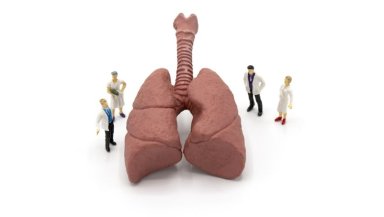
Every breath we take depends on a clear and open pathway that allows air to travel from the outside environment into the lungs. The airway begins at the nose and mouth, continues through the throat, and then enters the trachea, commonly known as the windpipe. The trachea divides into two main tubes called bronchi, which carry air into the lungs.
The trachea is supported by strong cartilage rings that help keep it open during breathing. This structure allows air to move freely in and out of the lungs without obstruction.
However, when the airway becomes narrow or partially blocked, airflow becomes restricted. Even a small reduction in airway diameter can create noticeable breathing problems because the body must work harder to move air through the narrowed passage.
Patients with airway narrowing often experience airway blockage symptoms such as breathlessness, noisy breathing, persistent coughing, or a tight feeling in the throat or chest.
To restore comfortable breathing, doctors need to widen the airway and allow air to move freely again.
What Causes Airway Narrowing
Airway narrowing can occur for several reasons. One of the most common causes is scar tissue formation in the trachea after prolonged intubation. Patients who required ventilator support in the intensive care unit often have a breathing tube placed inside the airway. Although this procedure saves lives, the pressure from the tube can sometimes irritate the airway lining and lead to scar tissue during healing.
Infections, trauma to the neck or airway, inflammatory diseases, and tumors can also cause narrowing of the airway.
In some cases, airway narrowing develops gradually and symptoms appear weeks or months after the initial injury or illness.
Regardless of the cause, the goal of treatment is to reopen the airway and restore smooth airflow to the lungs.
How Airway Narrowing Was Treated in the Past
Before the development of advanced bronchoscopic techniques, surgery was often the main treatment option for airway narrowing.
Surgical treatment usually involves removing the damaged portion of the airway and reconnecting the healthy ends. This procedure is known as tracheal resection and reconstruction.
Although surgery can be very effective, it is a major operation that requires general anesthesia, hospitalization, and a longer recovery period.
Patients undergoing airway surgery may need several weeks to recover fully, and the procedure carries risks associated with major surgery.
Because of these factors, doctors have increasingly explored less invasive treatment options.
What Bronchoscopy Is
Bronchoscopy is a procedure that allows doctors to examine and treat the inside of the airway without making surgical incisions.
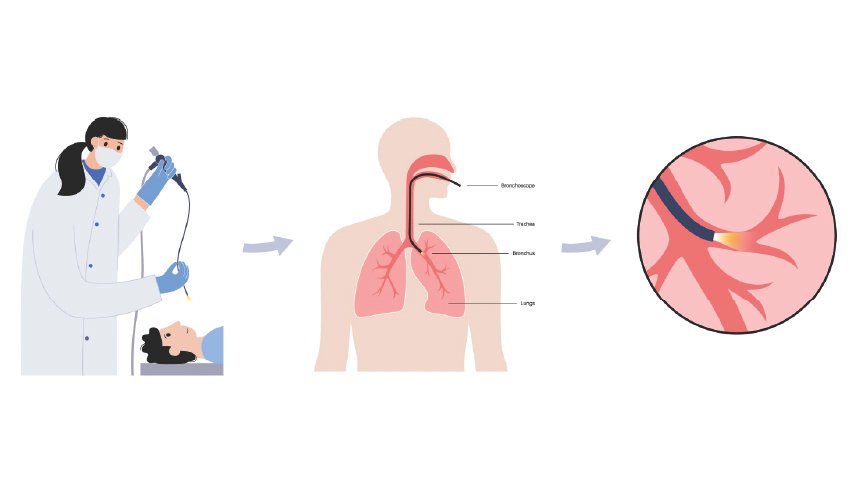
During bronchoscopy, a thin flexible tube with a camera and light at the tip is inserted through the nose or mouth and guided into the airway. This instrument, called a bronchoscope, transmits images to a monitor so doctors can see the airway clearly.
Bronchoscopy allows doctors to identify problems such as airway blockage symptoms, tumors, infections, bleeding, or mucus blockages.
In addition to diagnosis, bronchoscopy can also be used to perform treatments inside the airway.
These treatments are performed using specialized instruments passed through the bronchoscope.
How Bronchoscopy Can Treat Airway Narrowing
Bronchoscopy has become a powerful tool in treating airway diseases because it allows doctors to reach the affected area directly.
When airway narrowing is detected, several treatments can be performed through the bronchoscope.
One common procedure is bronchoscopic balloon dilatation, in which a small balloon is placed inside the narrowed airway and gently inflated. The balloon stretches the scar tissue and widens the airway.
Another option is laser therapy or electrocautery, which removes excess scar tissue that is blocking the airway.
Cryotherapy, a technique that uses controlled freezing, can also be used to treat abnormal airway tissue.
In some cases, doctors may place a small tube called a stent inside the airway. The stent acts like a scaffold that keeps the airway open and prevents it from collapsing.
All of these treatments can be performed through bronchoscopy without the need for large surgical incisions.
Why Doctors Often Prefer Bronchoscopy
One of the main reasons doctors prefer bronchoscopic treatments is that they are minimally invasive.
Because the bronchoscope enters the airway through the mouth or nose, there are no external surgical cuts. This greatly reduces the trauma to the body.
Patients usually recover faster compared with open surgery. Many bronchoscopic procedures are completed within a short time and patients may return home the same day or the next day.
Another advantage is that bronchoscopic treatments can often be repeated if necessary. If the airway becomes narrow again, doctors can perform additional procedures to maintain airway patency.
This flexibility makes bronchoscopy an attractive option for managing airway conditions.
When Surgery Is Still Needed
Although bronchoscopy offers many advantages, surgery may still be necessary in certain situations.
If the airway narrowing is very severe or involves a long segment of the trachea, bronchoscopic treatments alone may not provide lasting relief.
In these cases, surgical removal of the scarred portion of the airway may offer a more permanent solution.
Doctors carefully evaluate each patient before recommending surgery. The decision is based on factors such as the severity of the narrowing, the cause of the condition, and the patient’s overall health.
Often, bronchoscopic treatments are tried first before considering surgical options.
The Role of Interventional Pulmonology
Modern bronchoscopic airway treatments are part of a specialized field called interventional pulmonology.
Interventional pulmonologists are lung specialists who receive additional training in advanced airway procedures. These specialists use sophisticated tools and techniques to diagnose and treat complex airway diseases.
Procedures such as bronchoscopic balloon dilatation, tracheal stent placement, tumor debulking, and cryotherapy have significantly expanded the treatment options available for airway conditions.
These advances have helped many patients avoid major surgery while still achieving effective treatment.
What Patients Can Expect During Bronchoscopic Treatment
Bronchoscopic procedures are usually performed in a specialized procedure room or operating theater. Patients receive sedation or general anesthesia so that they remain comfortable during the procedure.
The bronchoscope is carefully inserted into the airway, and the doctor identifies the problem area using the camera.
Specialized instruments are then used to perform the necessary treatment, whether it involves dilation, tissue removal, or stent placement.
After the procedure, patients are monitored for a short period to ensure that breathing remains stable. Patients undergoing tracheal balloon dilatation recovery usually notice improvements within days.
Most patients recover quickly and can return to normal activities within a few days.
Benefits of Minimally Invasive Airway Care
Minimally invasive airway procedures offer several advantages compared with traditional surgery.
Patients often experience less pain and faster recovery. The risk of complications is generally lower because there are no large surgical incisions.
Hospital stays are usually shorter, which allows patients to return to daily life sooner.
Another important benefit is that bronchoscopic procedures can often be performed multiple times if needed. This allows doctors to manage airway conditions over time without subjecting patients to repeated major surgeries.
When Patients Should Seek Medical Advice
Persistent breathing difficulty, noisy breathing, or unexplained coughing should always be evaluated by a medical professional.
Patients who previously had an ICU stay, airway surgery, or severe respiratory illness should be particularly attentive to new breathing symptoms.
Early diagnosis of airway narrowing allows doctors to treat the condition before it becomes severe.
Consulting a pulmonologist or airway specialist ensures that appropriate diagnostic tests and treatments are considered.
Conclusion
Airway narrowing can significantly affect breathing and quality of life. While surgery was once the primary treatment for conditions such as tracheal stenosis, modern medical advances have introduced less invasive options.
Bronchoscopy allows doctors to diagnose and treat airway problems directly through the airway without making surgical incisions. Procedures such as balloon dilatation, laser therapy, and airway stenting can restore airflow and relieve symptoms.
Because bronchoscopic treatments often involve faster recovery and fewer complications, they are now commonly used as the first line of treatment for many airway conditions.
With proper evaluation and specialized care, many patients can achieve effective treatment and regain comfortable breathing without the need for major surgery. Stridor causes may be alleviated quickly with these interventions.
Call to Action
If you or a loved one are experiencing breathing difficulties, noisy breathing, or symptoms that may indicate airway narrowing, consult a pulmonologist or interventional pulmonology specialist. Early diagnosis and minimally invasive treatments such as bronchoscopy can help restore normal breathing and prevent complications.
References and Sources
Cleveland Clinic – Tracheal Stenosis and Airway Treatments