Why Do Some Airway Conditions Require a Stent? Understanding Severe Airway Narrowing
Medicine Made Simple
Breathing becomes difficult when the airway that carries air to the lungs becomes narrow or blocked. In some cases, medications or simple procedures may not be enough to keep the airway open. Doctors may then recommend placing an airway stent, which is a small tube inserted into the windpipe to hold the airway open and allow air to pass freely. Airway stents are placed using bronchoscopy, a minimally invasive procedure that does not require major surgery. Understanding why airway stents are used helps patients and families feel more confident when doctors recommend this treatment.
Understanding How the Airway Supports Breathing
Breathing is a process that happens automatically every moment of our lives. With every breath, air enters through the nose or mouth, travels down the throat, passes through the windpipe, and finally reaches the lungs where oxygen is absorbed into the bloodstream.
The windpipe, also known as the trachea, plays a critical role in this process. It acts as the main passage that carries air to the lungs. The trachea is supported by strong rings of cartilage that keep the airway open and stable during breathing.
When the airway remains open, air flows smoothly and breathing feels effortless. However, when the airway becomes narrow or blocked, airflow is restricted and breathing becomes more difficult.
This narrowing of the airway can occur in different parts of the respiratory system, including the trachea and the larger bronchial tubes that lead to the lungs.
In severe cases, doctors may use a medical device called an airway stent to keep the airway open.
What Severe Airway Narrowing Means
Airway narrowing happens when the diameter of the breathing passage becomes smaller than normal. This can happen because of swelling, scar tissue, tumors, or structural problems in the airway.
Even a small reduction in airway size can significantly affect breathing because airflow resistance increases sharply as the airway becomes narrower.
When the airway becomes severely narrow, the body must work harder to move air in and out of the lungs. This can lead to airway blockage symptoms such as breathlessness, noisy breathing, persistent coughing, and difficulty performing daily activities.
In some cases, the narrowing may become so severe that the airway begins to collapse or close during breathing.
At this stage, treatments such as medications or simple airway dilation may not provide lasting relief. This is when doctors may recommend placing an airway stent.
What an Airway Stent Is
An airway stent is a small tube that is placed inside the airway to keep it open. The stent acts like a scaffold that supports the airway walls and prevents them from collapsing or narrowing.
Airway stents are typically made from materials such as silicone vs metal airway stents. Once the stent is placed in the airway, it expands to hold the airway open and maintain a clear passage for airflow.
Stents are commonly used in conditions where the airway repeatedly narrows or when external pressure compresses the airway.
By maintaining the airway opening, the stent allows air to move freely between the lungs and the outside environment.
How Airway Stents Are Placed
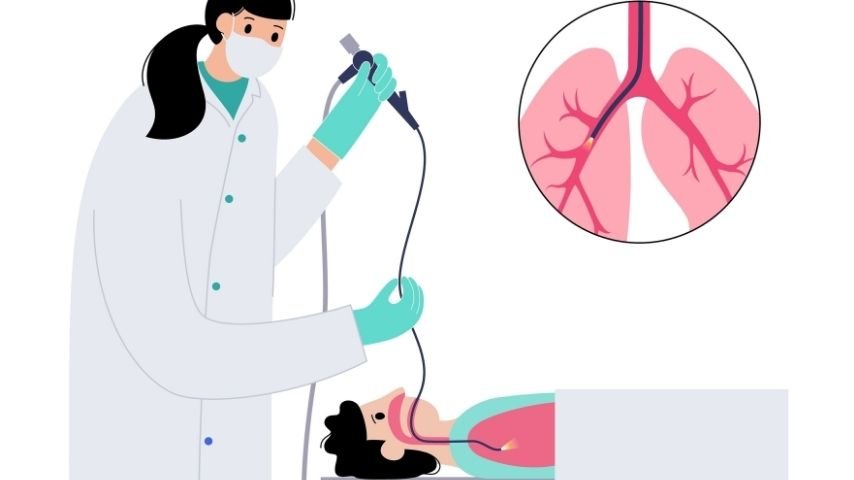
Airway stents are usually placed using a procedure called bronchoscopy.
During bronchoscopy, a doctor inserts a thin flexible tube with a camera through the mouth or nose and guides it into the airway. This instrument, called a bronchoscope, allows doctors to see the inside of the trachea and bronchial tubes on a monitor.
Using special instruments passed through the bronchoscope, the doctor carefully positions the stent inside the narrowed portion of the airway.
Once the stent is in place, it expands and supports the airway walls. The procedure does not require surgical incisions and is typically performed under sedation or general anesthesia.
Because the procedure is minimally invasive, recovery is often faster compared with open surgery.
Conditions That May Require an Airway Stent
Several medical conditions can cause severe airway narrowing that may require stent placement.
One common cause is tracheal stenosis, a condition in which scar tissue narrows the windpipe. This can develop after prolonged intubation during an ICU stay, where a breathing tube remains in the airway for an extended period.
Tumors inside the airway or pressing on the airway from nearby structures can also cause obstruction. In such cases, a stent helps restore airflow and improve breathing.
Infections and inflammatory conditions may lead to swelling or structural damage in the airway that causes narrowing.
Some patients develop airway collapse due to weakness of the airway walls. In these situations, a stent can provide structural support and prevent the airway from closing during breathing.
Each of these conditions affects airflow differently, but they all share a common problem: the airway becomes too narrow for normal breathing.
Symptoms That Suggest Severe Airway Narrowing
Patients with severe airway narrowing often experience symptoms that interfere with everyday life.
Shortness of breath is the most common symptom. Patients may notice difficulty breathing during physical activity or even while speaking.
Another common symptom is noisy breathing. A high-pitched sound called stridor may occur when air passes through a tight airway.
Persistent coughing is also common. Some patients feel a constant sensation of tightness in the throat or chest.
Because these symptoms can resemble asthma, airway narrowing is sometimes misdiagnosed initially. When symptoms do not improve with asthma treatments, doctors may investigate structural airway problems.
Why Other Treatments May Not Be Enough
Doctors usually begin treatment for airway narrowing with less invasive methods. Procedures such as balloon dilatation can stretch scar tissue and temporarily widen the airway.
In many patients, these treatments work well and provide long-lasting relief.
However, some airway conditions cause repeated narrowing even after dilation. In these cases, the airway may not remain open for long after the procedure.
When the airway repeatedly collapses or narrows again, doctors may recommend placing a stent to maintain a stable airway opening.
The stent provides continuous support that helps prevent the airway from closing again.
Benefits of Airway Stenting
Airway stents can significantly improve breathing for patients with severe airway narrowing.
By holding the airway open, the stent allows air to flow freely into the lungs. Many patients experience rapid improvement in breathing after the procedure.
Daily activities such as walking, talking, and climbing stairs often become easier once the airway obstruction is relieved.
Another advantage of airway stenting is that it is performed using bronchoscopy, which avoids large surgical incisions.
Because the procedure is minimally invasive, patients often recover more quickly compared with traditional surgery.
Are Airway Stents Permanent
Airway stents can be either temporary or long-term depending on the underlying condition.
In some cases, stents are placed temporarily while the airway heals after procedures such as dilation or tumor treatment.
In other situations, particularly when airway compression or structural weakness is present, the stent may remain in place for a longer period.
Doctors regularly monitor patients with airway stents to ensure the device continues to function properly.
If necessary, the stent can be adjusted, replaced, or removed during bronchoscopy.
Follow-Up Care After Stent Placement
Patients who receive airway stents usually require regular follow-up visits with their healthcare team.
These visits help ensure that the airway remains open and that the stent is functioning correctly.
Doctors may perform repeat bronchoscopy or imaging tests to monitor the airway. Patients are also advised to report any changes in breathing, coughing, or mucus production.
Proper follow-up care helps detect potential issues early and ensures the best possible outcome.
The Role of Interventional Pulmonology
Airway stenting is part of a specialized field known as interventional pulmonology. Interventional pulmonologists are lung specialists trained to perform advanced bronchoscopic procedures.
These specialists use modern technologies to diagnose and treat airway diseases using minimally invasive techniques.
Procedures such as balloon dilatation, tumor removal, airway stenting, and cryotherapy have significantly expanded the treatment options available for patients with airway conditions.
These advances allow many patients to receive effective treatment without the need for major surgery.
Conclusion
Severe airway narrowing can make breathing difficult and affect everyday life. Conditions such as tracheal stenosis, tumors, infections, and airway collapse can restrict airflow and lead to symptoms like breathlessness and noisy breathing.
When other treatments are not enough to keep the airway open, doctors may recommend placing an airway stent. This small tube acts as a support structure inside the airway, helping maintain a clear passage for airflow.
Airway stents are usually placed using bronchoscopy, a minimally invasive procedure that allows doctors to treat airway problems without major surgery.
With proper evaluation, treatment, and follow-up care, airway stenting can significantly improve breathing and quality of life for patients with severe airway narrowing.
If you or a loved one are experiencing persistent breathlessness, noisy breathing, or symptoms of airway narrowing that do not improve with routine treatment, consult a pulmonologist or airway specialist. Early evaluation can help identify severe airway narrowing and determine whether treatments such as airway stenting may help restore comfortable breathing.
References and Sources
Cleveland Clinic – Tracheal Stenosis and Airway Disorders