Peripheral Lung Nodules: Why Some Lung Spots Are Harder to Biopsy
Medicine Made Simple
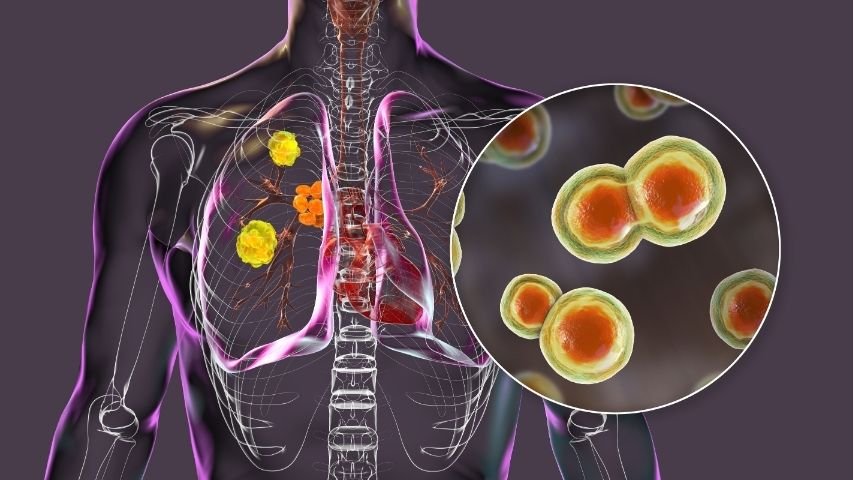
Peripheral lung nodules are small spots found in the outer regions of the lungs. They are often detected during CT scans and may develop due to infections, inflammation, or early lung cancer. While most nodules are harmless, some require a Lung nodules biopsy to confirm their cause. Because these nodules are located deep in the lung periphery, they can be hard to reach using traditional bronchoscopy. Advanced techniques such as navigation bronchoscopy and robotic bronchoscopy help doctors safely access these nodules and collect tissue samples without surgery.
Understanding What a Lung Nodule Is
The lungs are responsible for breathing and supplying oxygen to the body. They contain delicate airways that branch repeatedly into smaller tubes and tiny air sacs called alveoli, where oxygen exchange occurs.
During imaging tests like CT scans, doctors carefully look for abnormalities in lung tissue. One common finding is a lung nodule.
A lung nodule is a small, round, or oval spot that appears different from normal lung tissue. Most nodules are less than three centimeters in size and often discovered incidentally, for example, during imaging for persistent cough, chest discomfort, injury, or Lung Nodule Diagnosis during a lung cancer screening. Although finding a lung nodule can be concerning, most are benign and do not indicate cancer.
Why Lung Nodules Appear in the Lungs
Several factors can cause lung nodules. The most common are not cancer-related:
- Past infections can leave small areas of scar tissue that appear as nodules.
- Inflammatory conditions such as sarcoidosis can produce clusters of immune cells that appear as nodules.
- Benign tumors like hamartomas may form from normal lung tissue arranged abnormally.
In some cases, nodules can represent early lung cancer. Because imaging cannot always determine the cause, further evaluation may be needed.
What Doctors Mean by Peripheral Lung Nodules
The lungs are divided into central and peripheral regions. Central areas are near the main bronchial tubes, while peripheral areas are closer to the lung edges and chest wall.
Peripheral lung nodules form in these outer regions. Their location does not necessarily mean they are dangerous but makes them more challenging to evaluate using traditional bronchoscopy.
Why Peripheral Lung Nodules Are Harder to Reach
As airways branch deeper into the lungs, they become narrower and more complex.
Traditional bronchoscopy involves inserting a flexible tube through the mouth or nose to reach lung nodules. While effective for central nodules, it can struggle to reach peripheral nodules due to the small, winding airways.
Because of this, doctors previously relied on alternative Lung Nodule Biopsy Options to reach the target area.
Older Methods Used to Biopsy Peripheral Nodules
- CT-guided needle biopsy involves inserting a needle through the chest wall to reach the nodule. While effective, it carries risks like pneumothorax (air leaking around the lung).
- Surgical biopsy requires small chest incisions and general anesthesia. This is more invasive and requires longer recovery.
How Advanced Bronchoscopy Is Changing Lung Nodule Diagnosis
New bronchoscopy technologies make it easier to reach peripheral lung nodules.
- Navigation bronchoscopy uses CT-based maps to guide the bronchoscope through complex airways.
- Robotic bronchoscopy improves precision and stability, allowing doctors to access small, deep lung nodules safely.
These methods reduce the need for surgery and make diagnosis faster and safer.
How Navigation Bronchoscopy Helps Reach Peripheral Nodules
Navigation bronchoscopy creates a virtual 3D map of the lung airways using CT scan data.
During the procedure, the bronchoscope is guided through the airways while the system tracks its real-time position. This allows doctors to follow a precise path to the nodule.
Once the bronchoscope reaches the target, biopsy instruments collect tissue samples for laboratory analysis to determine the cause of the nodule.
Why Early Diagnosis of Peripheral Nodules Matters
Some peripheral nodules represent early-stage lung cancer. Detecting lung cancer early significantly improves treatment outcomes.
Early-stage lung cancer can often be treated with surgery, radiation, or targeted therapies, which offer better chances of recovery.
Advanced bronchoscopy allows for earlier, more accurate diagnosis by providing tissue samples without surgery.
What Patients Can Expect During Evaluation
When a peripheral lung nodule is found, doctors consider factors like nodule size, appearance, and the patient’s medical history.
- Some nodules may only need monitoring with follow-up imaging.
- Others may require biopsy using navigation bronchoscopy or CT-guided techniques.
Doctors explain the procedure, potential risks, and recovery process to help patients feel informed and comfortable.
Conclusion
Peripheral lung nodules are common findings on CT scans and are often harmless. However, because some may indicate early lung cancer or other diseases, a biopsy may be needed for accurate diagnosis.
Their outer lung location makes them harder to reach with traditional bronchoscopy, but navigation and robotic bronchoscopy now allow doctors to safely access these nodules. These minimally invasive procedures improve diagnostic accuracy and patient comfort.
If a CT scan identifies a lung nodule in the outer regions of your lung, consulting a pulmonologist can help determine whether advanced bronchoscopy techniques are the best option for further evaluation.