Why Do Lung Nodules or Shadows Lead to a Transbronchial Lung Biopsy?
Medicine Made Simple Summary
When scans show lung nodules or shadows, doctors may recommend a transbronchial lung biopsy to understand what those findings truly represent. Imaging tests can show abnormal areas but cannot explain their exact cause. A biopsy allows doctors to study lung tissue directly and determine whether the changes are due to infection, inflammation, scarring, or cancer. This step helps avoid guesswork and ensures the right treatment is chosen. Understanding why a biopsy is advised can reduce fear and help patients and families feel more confident about the next steps.
Why Lung Scans Often Raise More Questions Than Answers
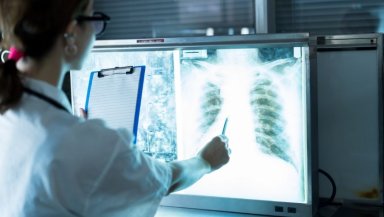
Chest X-rays and CT scans are excellent tools for seeing inside the chest, but they are limited in what they can explain. These scans show patterns, densities, and shapes, but they do not reveal what the tissue is made of or why it looks abnormal. When a report mentions lung nodules, shadows, opacities, or patches, it simply means something looks different from healthy lung tissue. It does not automatically mean something serious or life-threatening.
Many different lung conditions can look similar on imaging. Infections, inflammation, immune-related diseases, scarring, and even early cancers can all produce overlapping appearances. Because of this, scans are often the first step in investigation rather than the final answer. Doctors must then decide whether further testing is needed to understand what they are seeing, often following a structured Transbronchial Lung Biopsy Decision Guide when imaging alone is insufficient.
What Lung Nodules and Shadows Really Represent
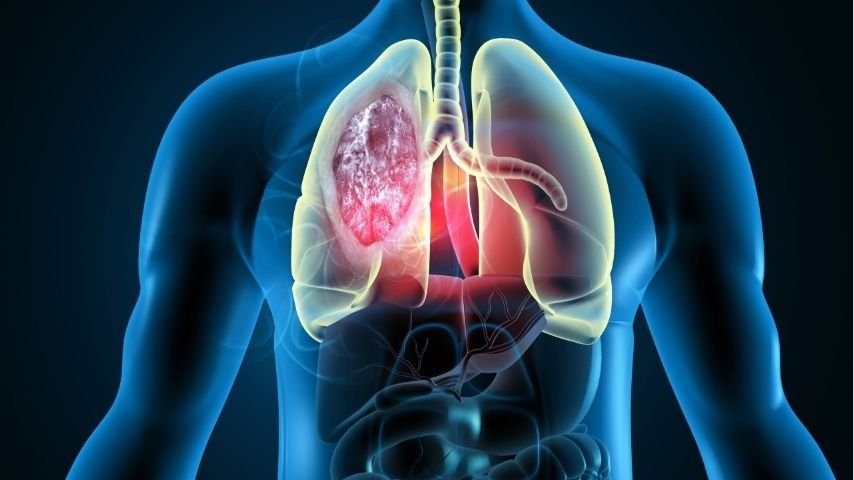
A lung nodule is usually described as a small, rounded spot seen on a scan. Shadows are a broader term used for areas that appear denser or whiter than normal lung tissue. These findings are actually very common, especially as people age or if they have had past lung infections. Old healed infections, exposure to pollution, mild inflammation, or scarring from previous illness can all leave marks that show up on scans.
The difficulty is that harmless and serious conditions can look very similar at first glance. A small cancer, a fungal infection, or an inflammatory condition may all appear as a nodule or shadow. Without looking at the tissue itself, doctors cannot be certain what they are dealing with. This uncertainty is the main reason further evaluation is often recommended.
Why Doctors Cannot Depend on Imaging Alone
Imaging tests show structure, not biology. They can show where something is and how big it appears, but they cannot show whether cells are infected, inflamed, scarred, or cancerous. For example, a shadow caused by pneumonia may look similar to a shadow caused by early lung cancer. Treating one as the other could delay proper care or expose the patient to unnecessary treatment.
Doctors aim to avoid assumptions in medicine, especially when the lungs are involved. Because breathing is vital and lung diseases can progress silently, clarity is important. A biopsy provides direct evidence and removes much of the uncertainty that imaging alone cannot resolve.
How Doctors Decide That a Biopsy Is Needed
Doctors do not recommend a biopsy based on a single scan finding alone. They consider several factors together. The size of the nodule or shadow matters, as larger or growing abnormalities are more concerning. The shape and edges are also important, since irregular borders may raise more suspicion than smooth ones. Location within the lung can also influence concern and biopsy choice.
Patient symptoms are another key factor. Persistent cough, unexplained breathlessness, fever, chest pain, or weight loss may increase the need for tissue diagnosis. A person’s medical history, including smoking history, immune system problems, exposure to tuberculosis or fungal infections, and previous cancers, also plays a role. When these factors suggest that imaging alone is not enough, a biopsy becomes a reasonable next step.
Why a Transbronchial Lung Biopsy Is Often Recommended
A transbronchial lung biopsy allows doctors to collect tissue samples from inside the lungs using a bronchoscope. This approach avoids making cuts through the chest wall and is less invasive than surgical biopsy. It is particularly useful when nodules or shadows are located near the airways or when abnormalities are spread throughout the lung tissue rather than confined to the outer edges.
Doctors choose this method because it offers a balance between diagnostic accuracy and patient safety. It allows meaningful tissue sampling while keeping recovery time short for most patients. In many cases, it provides enough information to make a confident diagnosis without resorting to more invasive procedures.
What the Biopsy Tissue Tells Doctors
The tissue collected during a transbronchial lung biopsy is examined carefully under a microscope. Pathologists look for signs of infection, inflammation, immune-related changes, scarring, or cancer cells. Additional tests can identify bacteria, tuberculosis, fungi, or specific patterns linked to autoimmune lung diseases, contributing to strong Transbronchial Lung Biopsy Accuracy in reaching a clear diagnosis.
This detailed analysis helps doctors move from suspicion to certainty. Instead of guessing which treatment might work, they can choose therapies based on confirmed findings. This precision improves outcomes and reduces unnecessary treatments.
Why Not All Lung Nodules Are Just Watched
Some lung nodules are small, stable, and low risk. These may only require follow-up scans over time to ensure they do not change. However, other nodules raise concern because they are larger, growing, irregular in shape, or present in higher-risk patients.
Waiting in such cases can delay diagnosis and treatment. Doctors must balance the risk of doing too much against the risk of doing too little. When the risk of missing something serious outweighs the small risk of biopsy, tissue sampling becomes the safer option.
Addressing the Common Fear of Cancer
When patients hear that a biopsy is needed, many immediately think of cancer. This fear is natural, but it is important to understand that biopsies are often done to rule out cancer rather than confirm it. Many biopsies show infections, inflammatory conditions, or benign changes.
For many patients, biopsy results bring relief rather than bad news. Knowing exactly what is causing the lung changes allows doctors to reassure patients or begin appropriate treatment without delay. Understanding this can reduce emotional distress during the waiting period.
Why Doctors Do Not Treat First and Investigate Later
Some patients wonder why doctors do not simply try antibiotics or other treatments first. Treating without a diagnosis can be risky. For example, giving steroids for inflammation when an infection is present can worsen the illness. Treating cancer as an infection can delay life-saving therapy.
A biopsy helps ensure that treatment is accurate and safe. It prevents trial-and-error medicine and supports targeted care based on evidence rather than assumption.
How the Location of Lung Abnormalities Influences Biopsy Choice
The position of nodules or shadows within the lung plays a major role in deciding how to biopsy them. Abnormalities near the airways are often accessible through transbronchial biopsy. Diffuse shadows affecting large areas of lung tissue also benefit from this approach.
Very small nodules near the outer edge of the lung may require different biopsy methods. Doctors choose the safest and most effective technique based on anatomy and risk, tailoring the approach to each patient.
The Emotional Experience of Abnormal Scan Results
Seeing abnormal findings on a lung scan can be emotionally overwhelming. Many patients search online and encounter worst-case scenarios that increase anxiety. The period between an abnormal scan and a clear diagnosis is often the most stressful.
Doctors recommend biopsy to shorten this period of uncertainty. Clear answers, even when difficult, are usually easier to cope with than prolonged doubt. Honest communication and understanding the purpose of biopsy can help patients navigate this emotional phase.
The Role of Family in the Decision-Making Process
Family members often react strongly to the idea of a lung biopsy. They may assume the situation is severe or urgent. Helping families understand that biopsy is a diagnostic tool rather than a diagnosis itself can reduce fear and improve support.
When families understand the reasoning behind the test, they are better able to support the patient calmly and constructively. Shared understanding strengthens emotional resilience during evaluation.
Why Timing Matters After Abnormal Lung Findings
Delaying a recommended biopsy can delay diagnosis and treatment. Many lung conditions are more manageable when identified early. Doctors do not recommend biopsy casually. When advised, it is because the potential benefit of clarity outweighs the small risks involved.
Timely evaluation allows doctors to plan care appropriately, whether that means treatment, monitoring, or reassurance.
What Happens If a Biopsy Is Not Done
Without biopsy, doctors may be forced to monitor abnormalities without clear understanding or treat based on assumptions. Both approaches carry risks. Monitoring may allow serious disease to progress unnoticed, while incorrect treatment can cause harm.
Even when biopsy results are not fully conclusive, they often narrow down possibilities and guide next steps. Information itself is valuable in medical decision-making.
Why Understanding This Process Reduces Fear
Fear often comes from uncertainty and misunderstanding. When patients understand why lung nodules or shadows lead to a transbronchial lung biopsy, the recommendation feels logical rather than alarming. Knowledge restores a sense of control and partnership in care.
Medicine becomes less frightening when it is explained clearly and honestly.
Conclusion
If your scan shows lung nodules or shadows and a transbronchial lung biopsy has been recommended, ask your doctor what they are trying to learn from the tissue sample. Understanding the reason behind the test helps you make informed decisions and approach the next steps with confidence rather than fear.
References and Sources
Cleveland Clinic – Lung Nodules and Diagnosis
MedlinePlus – Lung Biopsy Overview