Lung Nodule Found on CT Scan? Why Doctors Sometimes Recommend a Transbronchial Lung Biopsy
Medicine Made Simple
A lung nodule is a small spot that appears on a CT scan of the lungs. Many people discover it by chance during a scan done for another reason. While most lung nodules are harmless, doctors often need more information to understand what caused the spot. One way to find out is through a procedure called a transbronchial lung biopsy. During this test, doctors use a thin camera called a bronchoscope to collect a tiny tissue sample from the lung. Examining this sample helps doctors identify infections, inflammation, or cancer and decide the right treatment.
Understanding What a Lung Nodule Is
Many people feel anxious when a doctor says that a CT scan has found a “spot” on the lung. This spot is called a lung nodule. It is a small round or oval area that appears different from normal lung tissue on imaging.
A lung nodule is usually less than three centimeters in size. Anything larger may be called a lung mass. These nodules can be solid or partially solid. They may appear smooth, irregular, or calcified depending on their cause.
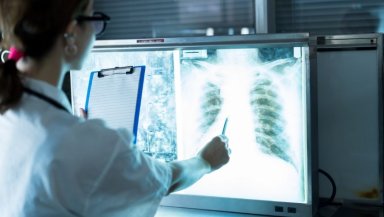
In most cases, lung nodules are discovered accidentally. A CT scan may have been done for chest pain, cough, or a routine health check. The scan picks up small details that are not visible on a standard chest X-ray. As a result, doctors today find lung nodules more often than before. The important thing to understand is that most lung nodules are not cancer. In fact, many are harmless scars or signs of past infections, which is explained further in this Lung Nodules Guide.
Why Lung Nodules Appear in the First Place
The lungs constantly interact with the outside world through the air we breathe. Because of this, they can develop small changes over time.
Several conditions can cause lung nodules.
Past infections are one of the most common reasons. Diseases such as tuberculosis or fungal infections can leave small scars in the lungs that appear as nodules.
Inflammatory conditions can also create nodules. Some autoimmune diseases cause inflammation in lung tissue that appears as small spots.
Benign tumors may sometimes form in lung tissue. These growths are not cancerous but can appear as nodules on scans.
Early lung cancer is another possibility, especially in older individuals or people with a history of smoking. However, many nodules turn out to be harmless after proper testing. Because CT scans cannot always show exactly what the nodule is made of, doctors sometimes need additional tests for a definitive Lung Nodule Diagnosis.
When Doctors Become Concerned About a Lung Nodule
Not every lung nodule requires immediate testing or biopsy. Doctors look at several factors before deciding the next step.
The size of the nodule is important. Very small nodules often require only monitoring with repeat scans over time.
The shape and edges of the nodule also matter. Smooth nodules are often benign. Irregular or spiky edges may need closer evaluation.
Growth over time is another important clue. If a nodule changes in size on repeat scans, doctors may investigate further.
Patient risk factors also guide decision making. A history of smoking, previous cancer, or certain environmental exposures may increase the need for further testing and evaluating Lung Nodule Biopsy Options.
When imaging alone cannot provide a clear answer, doctors may recommend collecting a small tissue sample from the lung. This is called a biopsy.
What Is a Transbronchial Lung Biopsy
A transbronchial lung biopsy is a procedure used to collect a small piece of lung tissue for examination.
Doctors perform this test using a bronchoscope. This is a thin, flexible tube with a camera and light at the tip. The bronchoscope is gently passed through the nose or mouth and guided into the airways of the lungs.
Because the bronchoscope travels through the natural breathing passages, there are no external cuts or surgical incisions.
Once the bronchoscope reaches the area near the lung nodule, special instruments are used to collect a tiny tissue sample. This sample is then sent to a laboratory where pathologists examine it under a microscope.
The results help doctors understand exactly what the nodule is.
How the Procedure Is Performed
Before the procedure, patients usually receive local anesthesia to numb the throat and mild sedation to help them relax.
The bronchoscope is inserted gently through the nose or mouth. The doctor carefully guides it through the windpipe and into the branching airways of the lungs.
Modern imaging techniques such as fluoroscopy or ultrasound guidance help doctors reach the correct location and improve Bronchoscopic Lung Biopsy Accuracy.
Once the bronchoscope is close to the lung nodule, biopsy tools are passed through the tube to collect small tissue samples.
The entire procedure usually takes about 30 to 60 minutes.
Afterward, patients are observed for a few hours before going home.
Two Ways Doctors Collect Lung Tissue During This Biopsy
There are two main techniques used during a transbronchial lung biopsy.
Forceps Biopsy
In this method, tiny forceps or pinchers are used to collect small pieces of lung tissue. The forceps pass through the bronchoscope and gently take a sample from the lung.
This method has been used for many years and is still commonly performed.
However, the samples collected are usually small.
Cryobiopsy
Cryobiopsy is a newer technique. It uses a special probe that freezes the tissue for a few seconds.
The frozen tissue sticks to the probe and can be removed as a larger sample.
Because the sample is bigger, cryobiopsy often provides more detailed information for diagnosis.
Why Doctors Recommend a Biopsy Instead of Just Monitoring
Some lung nodules can simply be monitored with repeat CT scans. Others need immediate investigation.
A biopsy may be recommended when the nodule has suspicious features, when the patient has high risk factors, or when the nodule continues to grow.
Doctors may also recommend a biopsy if symptoms such as persistent cough, weight loss, or unexplained fever are present.
The goal of the biopsy is not only to detect cancer. It can also help diagnose infections, inflammatory lung diseases, or rare lung conditions.
Early and accurate diagnosis helps doctors choose the right treatment quickly.
Is the Procedure Safe
A transbronchial lung biopsy is considered a minimally invasive procedure.
Most patients tolerate it well and can return home the same day.
However, like any medical procedure, it carries some risks.
Minor bleeding can occur because lung tissue contains many blood vessels.
Another possible complication is pneumothorax, which means a small air leak causing partial lung collapse. This happens in a small percentage of patients and is usually treatable.
Doctors monitor patients carefully after the procedure to ensure there are no complications.
What Happens After the Biopsy
Once the tissue sample is collected, it is sent to a pathology laboratory.
Specialists examine the cells under a microscope to determine the cause of the nodule.
Results may take a few days to a week depending on the tests required.
Possible findings include infections, benign growths, inflammatory conditions, or cancer.
Your doctor will discuss the results and explain the next steps.
In many cases, the biopsy brings reassurance because the nodule turns out to be harmless.
Recovery After the Procedure
Most patients recover quickly after a transbronchial lung biopsy.
Some people may experience mild throat discomfort or cough for a short period.
Doctors usually recommend avoiding heavy physical activity for a day or two.
Patients should contact their doctor if they develop chest pain, difficulty breathing, or significant bleeding after the procedure.
Follow-up appointments are scheduled to review biopsy results and plan further care if needed.
When to Speak to a Lung Specialist
Finding a lung nodule can be stressful, but it does not automatically mean something serious.
Consulting an experienced pulmonologist or interventional pulmonology specialist can help clarify the situation.
These specialists use advanced diagnostic tools such as bronchoscopy, cryobiopsy, and imaging guidance to safely investigate lung nodules.
Early evaluation ensures that conditions are diagnosed accurately and treated at the right time.
Conclusion
A lung nodule on a CT scan can raise many questions and worries. However, most nodules are harmless and often discovered by chance.
When imaging alone cannot determine the cause, doctors may recommend a transbronchial lung biopsy. This minimally invasive procedure allows doctors to safely collect lung tissue through the airways and examine it under a microscope.
The results provide clear answers and guide the next steps in care.
Early diagnosis helps rule out serious conditions and ensures that patients receive the most appropriate treatment if needed.
Conclusion
If a CT scan has revealed a lung nodule, speaking with an experienced pulmonology team can help you understand the next steps. Advanced diagnostic procedures such as bronchoscopy and transbronchial lung biopsy can provide accurate answers and guide the right treatment plan. Consult a lung specialist to evaluate your scan and discuss whether further testing is necessary.
References and Sources