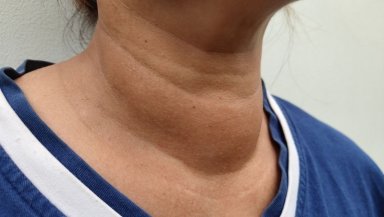
Can a Thyroid Goiter Go Away on Its Own? What Patients Are Asking

Medicine Made Simple
Thyroid Artery Embolization (TAE), also known as Thyroid Embolization, is a non-surgical procedure used to shrink an enlarged thyroid gland, also known as a goiter. Doctors insert a thin tube through a blood vessel and guide it to the thyroid. Tiny particles are released to block blood flow to the enlarged part of the gland. Without enough blood, the goiter gradually shrinks over time. This helps reduce neck swelling, pressure, and discomfort while avoiding major surgery, making it a modern option for patients who want effective treatment with faster recovery and relief from goiter symptoms.
Why this question is so common
Many people who notice a swelling in their neck or are diagnosed with a goiter immediately wonder if it will go away on its own. This is a natural question, especially when the swelling is not painful or does not interfere with daily life in the beginning.
The confusion often comes from the fact that not all goiters behave the same way. Some remain stable for years, while others grow slowly over time. Because the early stages are often mild, people hope that the condition might resolve without treatment.
Understanding how goiters behave helps answer this question clearly and removes unnecessary uncertainty.
What exactly is happening inside the thyroid
A goiter is not just a simple swelling. It is the result of the thyroid gland reacting to certain conditions in the body. The thyroid enlarges when it is trying to compensate for something, such as hormone imbalance, iodine deficiency, or the presence of nodules.
This means the swelling is a response, not a random event. As long as the underlying cause remains active, the thyroid may continue to stay enlarged or even grow further.
Because of this, most goiters do not simply disappear on their own without addressing the cause behind them.
Situations where a goiter may reduce naturally
There are a few situations where a goiter may reduce in size without direct medical intervention. These cases are less common but important to understand.
If the goiter is caused by a temporary imbalance, such as mild inflammation or short-term hormonal changes, the gland may return to normal once the condition resolves.
In some cases, improving iodine intake through diet can help reduce a goiter, especially in areas where iodine deficiency is common.
However, these situations are limited. Most goiters that become noticeable or continue to grow do not shrink significantly on their own.
Why most goiters do not go away without treatment
The main reason goiters persist is that the underlying cause is ongoing. Hormonal imbalances, nodules, and autoimmune conditions are not temporary in most cases. They require proper evaluation and management.
As the thyroid continues to respond to these conditions, it remains enlarged. In some cases, it may grow slowly over time, making the swelling more visible.
Even if the growth is slow, it does not mean the condition is improving. It simply means the body is adapting gradually.
This is why waiting for a goiter to disappear on its own is not usually effective, and patients often question whether a goiter is dangerous.
What happens if you ignore a goiter
Ignoring a goiter does not always lead to immediate problems, but it can allow the condition to progress. As the gland enlarges, it may begin to cause physical discomfort.
Pressure in the neck can increase, leading to difficulty swallowing or a feeling of tightness. In larger goiters, breathing may also be affected, especially when lying down.
If the goiter is linked to hormone imbalance, symptoms related to thyroid function may also develop or worsen over time.
Ignoring these changes can delay treatment and make the condition harder to manage later.
How doctors decide whether to treat or monitor
Not all goiters require immediate treatment. In some cases, doctors may recommend monitoring the condition over time, especially if the swelling is small and not causing symptoms.
Regular check-ups help track changes in size and function. If the goiter remains stable, no active treatment may be needed.
However, if the goiter grows, causes discomfort, or affects hormone levels, treatment becomes necessary.
This decision is based on a combination of symptoms, size, and underlying cause.
Treatment options when a goiter does not shrink
When a goiter does not go away on its own, treatment focuses on reducing its size and managing symptoms. The approach depends on the cause and severity of the condition.
Medications may be used to correct hormone imbalances. In some cases, they help stabilize the condition but may not significantly reduce the size of the goiter.
For larger goiters or those causing discomfort, procedures may be recommended. Thyroid artery embolization is one such option that reduces the size of the gland without removing it.
Surgery may be considered in more advanced cases, especially when the goiter is very large or causing significant pressure.
How thyroid artery embolization helps
Thyroid artery embolization works by reducing the blood supply to the enlarged thyroid tissue. The thyroid depends on blood flow to maintain its size and function.
When this blood supply is reduced, the gland begins to shrink gradually. This process takes time, but it leads to a steady reduction in size and symptoms.
Unlike surgery, TAE does not involve removing the thyroid. This means fewer risks, no large scars, and a shorter recovery period.
It is especially helpful for patients who want a less invasive option or are not suitable for surgery.
Emotional side of waiting and uncertainty
Waiting to see if a goiter will go away can be stressful. Many people feel unsure about whether they are making the right decision by delaying treatment.
There may also be anxiety about the swelling becoming more visible or causing future complications.
Getting clear information from a doctor helps reduce this uncertainty. Understanding what is happening in your body allows you to make confident decisions.
Why early evaluation matters
Even if you hope that a goiter will resolve on its own, it is important to get it evaluated. Simple tests can identify the cause and determine whether monitoring or treatment is needed.
Early evaluation provides clarity. It helps avoid unnecessary worry and ensures that any changes are managed properly.
It also gives you access to more treatment options before the condition becomes more advanced.
Looking at the bigger picture
A goiter is not just a cosmetic issue. It reflects changes in how the thyroid is functioning. Ignoring it may delay necessary care and allow symptoms to develop.
Understanding that most goiters do not go away on their own helps set realistic expectations. It encourages timely action and better health management.
Conclusion
A thyroid goiter rarely goes away on its own, especially if it is noticeable or continues to grow. While some mild cases may improve, most require monitoring or treatment. If you notice neck swelling or changes in your throat, consult a doctor for proper evaluation. Treatments like thyroid artery embolization offer effective, non-surgical ways to reduce goiter size and improve comfort. Taking action early helps you stay in control of your health and avoid complications.
References and Sources