Laparoscopic vs Open Cholecystectomy: Pros, Cons, and Recovery Expectations
Medicine Made Simple Summary
Gallbladder removal can be done using either laparoscopic or open surgery. Laparoscopic cholecystectomy uses small cuts, a camera, and fine instruments, leading to less pain and faster recovery. Open cholecystectomy uses one larger cut and is usually reserved for complex cases. Both procedures remove the gallbladder completely and are done under general anesthesia. Most patients today undergo laparoscopic surgery because it allows quicker healing, shorter hospital stays, and an earlier return to normal activities.
Why There Are Two Ways to Remove the Gallbladder
Gallbladder removal is a common surgery, but not all patients are treated the same way. Over the years, surgical techniques have improved. Earlier, gallbladder removal was done only through open surgery. With advances in technology, laparoscopic surgery became possible and is now the preferred method in most cases.
Both procedures aim to remove the gallbladder safely. The main difference lies in how the laparoscopic cholecystectomy surgeon reaches the gallbladder and how the body heals afterward.
What Is Laparoscopic Cholecystectomy
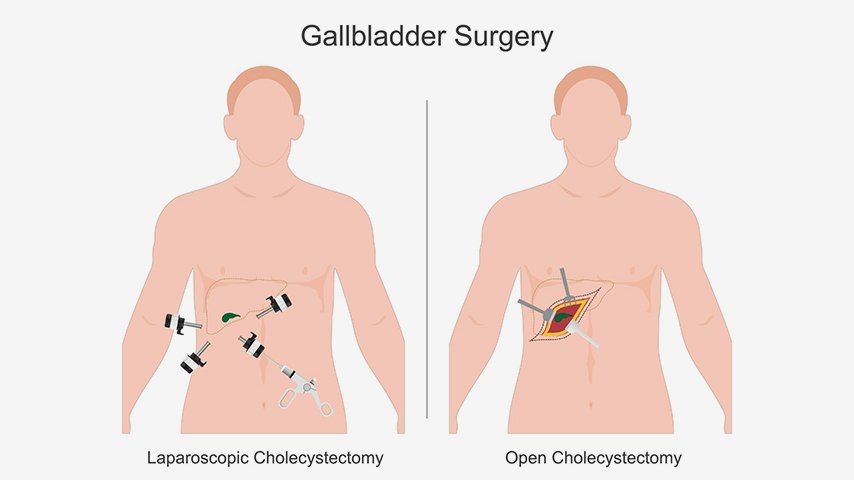
Laparoscopic cholecystectomy is a minimally invasive procedure. The surgeon makes three or four small cuts in the abdomen. A camera is inserted through one cut, allowing the surgeon to see the gallbladder on a screen. Special instruments are used to remove the gallbladder through these small openings.
Because the cuts are small, there is less damage to muscles and tissues. This results in less pain, smaller scars, and faster recovery.
What Is Open Cholecystectomy
Open cholecystectomy involves one larger cut, usually made on the right side of the abdomen. Through this opening, the surgeon directly removes the gallbladder.
This method provides a clear and wide view of the gallbladder and nearby organs. It is usually chosen when the gallbladder is severely inflamed, infected, or when gallbladder surgery complications make laparoscopic surgery unsafe.
Although effective, open surgery requires more healing time because the incision is larger and involves deeper muscle layers.
Why Laparoscopic Surgery Is Usually Preferred
Laparoscopic cholecystectomy has become the standard choice for gallbladder removal for most patients. Smaller cuts mean less pain after surgery. Patients usually need fewer pain medicines and feel comfortable moving sooner.
Another advantage is quicker recovery. Most patients are able to walk within hours and go home the same day or the next day. Daily activities can be resumed much earlier compared to open surgery.
Scarring is minimal, which is important for many patients, especially younger individuals.
When Open Surgery Becomes Necessary
Despite its advantages, laparoscopic surgery is not suitable for everyone. Open surgery may be required if there is severe infection, heavy scarring from previous surgeries, or unusual anatomy.
Sometimes, a surgery planned as laparoscopic may need to be converted to open surgery for safety reasons. This decision is made during the operation and is done to prevent complications.
Conversion to open surgery is not a failure. It is a careful medical decision to ensure the best outcome.
Comparison of Pain After Surgery
Pain levels differ between the two procedures. Laparoscopic surgery usually causes mild to moderate pain that improves within a few days. Shoulder pain may occur due to gas used during surgery but resolves quickly.
Open surgery causes more discomfort because of the larger incision. Pain may last longer and require stronger pain medicines initially.
Less pain allows patients who undergo laparoscopic surgery to move earlier, which helps recovery.
Hospital Stay Differences
Most patients undergoing laparoscopic cholecystectomy are discharged within 24 hours. Some even go home the same day.
Open cholecystectomy usually requires a longer hospital stay. Patients may stay for several days to allow proper pain control and monitoring of wound healing.
A shorter hospital stay reduces disruption to daily life and lowers the risk of hospital-related infections.
Recovery Time and Return to Normal Life
Recovery after laparoscopic surgery is faster. Many patients return to office work within a week. Physical activity is gradually increased, and full recovery typically occurs within two to three weeks.
Open surgery requires a longer recovery period. Patients may need several weeks before returning to work or normal activities. Heavy lifting is avoided for a longer time to protect the healing incision.
Faster recovery is one of the biggest reasons laparoscopic surgery is preferred when possible.
Risk of Complications
Both procedures are considered safe when performed by experienced surgeons. The overall goal is to remove the gallbladder without harming nearby structures.
Laparoscopic surgery has a lower risk of wound infection due to smaller cuts. Open surgery has a slightly higher risk of wound-related issues because of the larger incision.
Serious complications are uncommon in both methods. The choice of procedure focuses on safety rather than speed.
Scars and Cosmetic Outcome
Laparoscopic surgery leaves small scars that often fade over time. They are usually barely noticeable after healing.
Open surgery leaves a larger scar on the abdomen. While this scar heals well, it is more visible and may take longer to fade.
For many patients, the cosmetic outcome is an important consideration.
Effectiveness of Both Procedures
Both laparoscopic and open cholecystectomy are equally effective in removing the gallbladder and stopping gallstone-related symptoms.
Once the gallbladder is removed, gallstones do not return. The difference lies in recovery experience, not in treatment success.
Doctors choose the safest method for each patient rather than focusing only on technique.
Living Without a Gallbladder After Either Surgery
Life after gallbladder removal is similar regardless of the surgical method used. The liver continues to produce bile, and digestion adapts over time.
Some patients may notice temporary changes in digestion, especially after fatty meals. These changes usually improve within weeks.
Long-term lifestyle restrictions are rarely needed.
How Doctors Decide Which Surgery Is Best
Doctors consider several factors when choosing the surgical approach. These include severity of symptoms, scan findings, previous surgeries, and overall health.
Most patients are suitable for laparoscopic surgery. Open surgery is chosen only when it offers greater safety.
Discussing these options with the surgeon helps patients understand why a specific approach is recommended.
Conclusion
Both laparoscopic and open cholecystectomy are safe and effective ways to remove the gallbladder. Laparoscopic surgery is preferred in most cases because it causes less pain, leaves smaller scars, and allows faster recovery. Open surgery remains important for complex situations where safety is the priority. Understanding the differences between these procedures helps patients and families feel more confident and prepared when gallbladder removal is advised.