What Is Endobronchial Ultrasound (EBUS)? A Simple Guide for Patients With Lung Nodules or Suspected Lung Cancer
Medicine Made Simple
Endobronchial Ultrasound, commonly called EBUS, is a medical procedure used by doctors to examine the lungs and nearby lymph nodes without performing surgery. It combines bronchoscopy, which allows doctors to look inside the airways using a thin flexible tube, with ultrasound imaging that shows structures beyond the airway walls. This helps doctors locate abnormal lymph nodes or lung lesions and take small tissue samples for testing. EBUS is often used when a lung nodule or suspected lung cancer is found on a CT scan. The procedure helps doctors confirm a diagnosis and determine the stage of disease.
Understanding Why Tests Like EBUS Are Needed
When doctors evaluate lung health, imaging tests such as chest X-rays or CT scans are often the first step. These scans can show abnormalities inside the lungs, such as nodules, enlarged lymph nodes, or suspicious masses. However, imaging tests alone cannot always determine exactly what the abnormality is. A CT scan can show that something unusual is present, but it cannot always confirm whether it is infection, inflammation, or cancer. To make an accurate diagnosis, doctors often need to examine a small sample of tissue from the suspicious area. This process is called a biopsy. Traditionally, obtaining tissue from deep areas of the chest sometimes required invasive surgical procedures. Advances in medical technology have made it possible to obtain these samples using less invasive methods. One of the most important of these techniques is Endobronchial Ultrasound, which offers high EBUS accuracy for lung cancer during the diagnostic phase.
What Is Endobronchial Ultrasound (EBUS)?
Endobronchial Ultrasound, often shortened to EBUS, is a specialized diagnostic procedure used to examine structures within the lungs and the surrounding chest area.
The procedure combines two technologies. The first is bronchoscopy, which involves inserting a thin flexible tube through the mouth or nose into the airways. The second is ultrasound imaging, which uses sound waves to create pictures of structures inside the body.
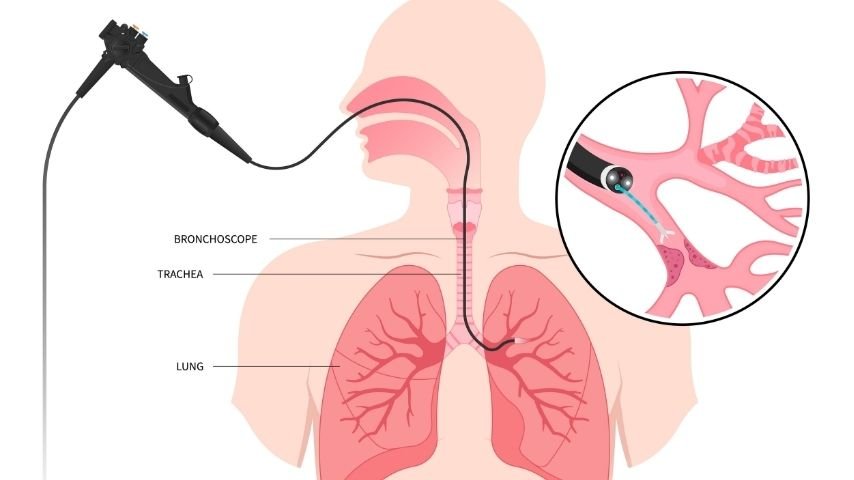
The bronchoscope used in EBUS has a small ultrasound probe attached to its tip. As the doctor moves the scope through the airways, the ultrasound probe creates images of tissues and lymph nodes located just outside the airway walls.
These images help doctors locate abnormal areas and guide a tiny needle to collect tissue samples.
Suggested Image: Illustration of bronchoscope with ultrasound probe inside airway.
Why Doctors Recommend EBUS
Doctors usually recommend EBUS when imaging tests show something unusual in the lungs or surrounding lymph nodes.
One common reason for performing EBUS is the detection of EBUS for lung nodules on a CT scan. A lung nodule is a small round spot in the lung that appears on imaging.
Many lung nodules are harmless and may be caused by previous infections or inflammation. However, some nodules may represent early lung cancer.
EBUS allows doctors to examine nearby lymph nodes and obtain tissue samples to determine whether cancer cells are present.
The procedure is also commonly used to stage lung cancer. Staging means determining how far the disease has spread.
Accurate staging helps doctors decide which treatment options are most appropriate.
Understanding the Role of Lymph Nodes in Lung Disease
Lymph nodes are small structures that are part of the body’s immune system. They help filter harmful substances and fight infection.
Many lymph nodes are located in the chest, particularly around the lungs and airways.
When lung diseases such as infection or cancer develop, nearby lymph nodes may become enlarged.
Examining these lymph nodes can provide important clues about the cause of the disease.
EBUS allows doctors to reach these lymph nodes safely and collect samples without needing open chest surgery.
Suggested Image: Diagram showing lymph nodes surrounding the lungs.
Conditions That May Be Diagnosed Using EBUS
EBUS is commonly used to diagnose several lung-related conditions.
One of the most important uses of EBUS is diagnosing lung cancer. By examining lymph nodes and lung tissue, doctors can confirm whether cancer cells are present.
The procedure is also useful for staging lung cancer. Determining whether cancer has spread to nearby lymph nodes helps guide treatment decisions.
EBUS may also help diagnose other conditions affecting the lungs and lymph nodes. These may include infections such as tuberculosis or inflammatory diseases such as sarcoidosis.
In some cases, EBUS is used to evaluate unexplained enlarged lymph nodes in the chest.
How the EBUS Procedure Is Performed
The EBUS procedure is usually performed by a pulmonologist, a doctor who specializes in lung diseases.
Before the procedure begins, the patient is given medication to help them relax and remain comfortable. In many cases, moderate sedation or anesthesia is used to minimize any potential EBUS Pain.
The doctor gently inserts the bronchoscope through the mouth and into the airways of the lungs.
The ultrasound probe at the tip of the scope produces images of tissues surrounding the airway walls. These images appear on a monitor and allow the doctor to see lymph nodes and other structures.
Once the abnormal area is identified, a thin needle is passed through the bronchoscope to collect a small tissue sample.
The collected tissue is then sent to a laboratory for examination under a microscope.
Suggested Image: Step-by-step illustration of EBUS procedure.
How Long the Procedure Takes
The EBUS procedure usually takes between thirty minutes and one hour.
During this time, doctors carefully examine the airways and surrounding lymph nodes and collect tissue samples.
Because the procedure is minimally invasive, there are no large incisions involved.
After the procedure, patients are observed for a short period while the effects of sedation wear off.
Most patients are able to go home on the same day.
What Patients May Feel During the Procedure
Patients are often concerned about discomfort during medical procedures. EBUS is generally well tolerated because sedation helps keep the patient relaxed.
During the procedure, the patient does not usually feel pain. Some people may feel mild pressure in the throat or chest, but this sensation is typically brief.
After the procedure, a mild sore throat or hoarseness may occur. These symptoms usually resolve within a day or two.
Recovery After EBUS
Recovery from EBUS is usually quick because the procedure does not involve surgical incisions.
Patients are typically advised to rest for the remainder of the day after the procedure.
Eating and drinking may be delayed for a short time until the effects of throat numbing medication wear off.
Most individuals can return to normal daily activities the following day.
Doctors will contact the patient once laboratory results from the biopsy are available.
Suggested Image: Illustration showing patient recovering after bronchoscopy procedure.
Advantages of EBUS Compared With Surgical Biopsy
One of the major advantages of EBUS is that it allows doctors to obtain tissue samples without performing open surgery.
Traditional surgical biopsy procedures may require incisions in the chest and longer recovery times.
EBUS uses natural airway pathways to reach the area being examined, which reduces the risk of complications.
Because the procedure is less invasive, patients often experience shorter recovery times and fewer side effects.
This makes EBUS an important tool for diagnosing lung diseases quickly and safely.
Understanding the Importance of Early Diagnosis
When abnormalities such as lung nodules are detected early, doctors have a better chance of identifying the cause and recommending appropriate treatment.
EBUS plays an important role in this process because it helps doctors confirm diagnoses and determine the stage of certain diseases.
Early and accurate diagnosis allows healthcare teams to develop treatment plans that are tailored to each patient’s condition.
Advances in diagnostic technology continue to improve the ability to detect and treat lung diseases effectively.
Suggested Image: Diagram showing early detection of lung disease.
When to Speak With a Doctor
If imaging tests such as CT scans reveal lung nodules or enlarged lymph nodes, doctors may recommend further evaluation.
EBUS is often one of the safest and most effective ways to obtain the information needed for diagnosis.
Discussing the procedure with a pulmonologist can help patients understand why the test is recommended and what results may reveal.
Understanding the purpose of the test can help reduce anxiety and ensure that patients are well prepared.
Conclusion
If a lung nodule or abnormal lymph node has been detected on a scan, consulting a lung specialist can help determine whether additional testing such as Endobronchial Ultrasound may be required. Early evaluation allows doctors to accurately diagnose lung conditions and guide the next steps in treatment.