Lung Nodule Found on CT Scan: Why Doctors May Recommend an EBUS Test
Medicine Made Simple
A lung nodule is a small round or oval spot that appears in the lungs during imaging tests such as a CT scan. Many lung nodules are harmless and may form after infections, inflammation, or scar tissue in the lungs. However, some nodules may represent early lung cancer or other lung diseases. When a CT scan detects a lung nodule or enlarged lymph nodes, doctors may recommend additional tests to understand the cause. One such test is Endobronchial Ultrasound, or EBUS, a minimally invasive procedure that allows doctors to examine lymph nodes and collect tissue samples for accurate diagnosis.
Understanding What a Lung Nodule Is
Hearing that a lung nodule has been detected on a CT scan can cause concern for many people. The word “nodule” may sound serious, and patients often worry that it may mean cancer.
However, lung nodules are actually quite common. A lung nodule is simply a small round spot or shadow seen on imaging tests of the lungs. These nodules are usually less than three centimeters in size. If a spot is larger than this, doctors may refer to it as a lung mass.
Most lung nodules are benign, which means they are not cancerous. They may be caused by past infections, inflammation, or scar tissue in the lungs. Sometimes the body forms these small nodules as part of the healing process after an infection.
Even though most nodules are harmless, doctors still evaluate them carefully to rule out serious conditions.
Why Lung Nodules Are Often Found on CT Scans
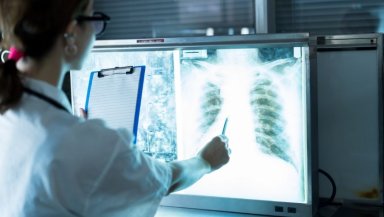
Advances in medical imaging have made CT scans widely used in modern healthcare. These scans produce detailed images of the lungs and chest.
Because CT scans are very sensitive, they can detect even very small abnormalities that may not cause any symptoms.
In many cases, lung nodules are discovered incidentally. This means they are found when a CT scan is performed for another reason, such as evaluating chest pain, persistent cough, or other medical conditions.
Some CT scans are also performed as part of lung cancer screening programs for individuals who have a higher risk of developing lung cancer, such as long-term smokers.
As a result, doctors now identify lung nodules more frequently than in the past.
Possible Causes of Lung Nodules
There are several reasons why lung nodules may appear on imaging tests.
One common cause is infection. When the body fights infections such as tuberculosis or fungal infections, small areas of inflammation may develop in the lungs. After the infection heals, these areas can appear as nodules on scans.
Another possible cause is noncancerous growths known as benign tumors.
Inflammatory conditions such as sarcoidosis may also cause nodules or enlarged lymph nodes.
In some cases, however, lung nodules may represent early lung cancer. This is why doctors often recommend further evaluation when a nodule is detected.
The size, shape, and location of the nodule help doctors decide whether additional tests are needed.
How Doctors Evaluate Lung Nodules
When a lung nodule is discovered, doctors analyze several features of the nodule to assess the risk.
One important factor is size. Smaller nodules are usually less likely to be cancerous, while larger nodules may require closer investigation.
Doctors also examine the shape and edges of the nodule. Smooth and round nodules are often benign, while irregular or spiculated nodules may require further testing.
Another factor is the patient’s medical history. Smoking history, age, previous infections, and exposure to environmental toxins may influence the level of concern.
In some cases, doctors may recommend follow-up CT scans over time to monitor whether the nodule changes in size.
If the nodule appears suspicious or if lymph nodes near the lungs are enlarged, doctors may recommend a biopsy.
Why Doctors May Recommend a Biopsy
A CT scan can show that an abnormal area is present, but it cannot confirm exactly what type of cells are inside that area.
To determine whether the nodule is benign or cancerous, doctors may need to obtain a small sample of tissue. This process is known as a biopsy, and a specialist may suggest an EBUS vs CT guided lung biopsy comparison to decide which approach is best for your specific case. During a biopsy, doctors collect a small number of cells from the suspicious area. These cells are then examined under a microscope by specialists known as pathologists.
The results of this examination help determine whether the nodule is cancerous, infected, or caused by inflammation.
Several biopsy methods are available, and one of the most commonly used techniques for evaluating lymph nodes near the lungs is Endobronchial Ultrasound.
What Is Endobronchial Ultrasound (EBUS)?
Endobronchial Ultrasound, or EBUS, is a minimally invasive procedure that allows doctors to examine structures inside and around the lungs.
The procedure uses a bronchoscope, which is a thin flexible tube inserted through the mouth into the airways.
At the tip of the bronchoscope is a small ultrasound probe that produces images of tissues outside the airway walls.
These images allow doctors to see lymph nodes and structures located around the lungs.
Using these images as guidance, doctors can insert a small needle through the bronchoscope to collect tissue samples from lymph nodes or other suspicious areas.
Why EBUS Is Often Recommended for Lung Nodules
When a CT scan shows a lung nodule along with enlarged lymph nodes in the chest, EBUS for lung nodules evaluation may be recommended.
The procedure allows doctors to sample lymph nodes located near the airways. These lymph nodes can contain important information about whether a lung disease has spread.
For example, if cancer cells from a lung tumor spread to nearby lymph nodes, doctors can detect them through EBUS biopsy.
This information helps determine the stage of lung cancer and guides treatment decisions.
EBUS may also help diagnose infections or inflammatory conditions that cause enlarged lymph nodes.
What Happens During the EBUS Procedure
EBUS is usually performed by a lung specialist known as a pulmonologist.
Before the procedure begins, patients receive sedation or anesthesia to help them relax. Because of this, most patients report that EBUS Pain is minimal or non-existent during the actual test.
The bronchoscope is gently inserted through the mouth into the airways.
The ultrasound probe produces images of lymph nodes and surrounding tissues, which appear on a monitor.
Once the abnormal area is identified, the doctor inserts a thin needle through the bronchoscope to collect tissue samples.
The procedure typically takes about thirty to sixty minutes.
Recovery After an EBUS Test
Recovery after EBUS is usually quick because the procedure does not involve surgical incisions.
Patients are observed for a short time after the procedure while the effects of sedation wear off.
Some individuals may experience mild throat soreness or hoarseness, but these symptoms usually resolve within a day.
Most patients are able to return home on the same day and resume normal activities shortly afterward.
When the Results Are Available
The tissue samples collected during EBUS are sent to a pathology laboratory.
Specialists examine the samples under a microscope to determine whether cancer cells, infection, or inflammation is present. A high level of EBUS accuracy for lung cancer makes this a reliable method for confirming a diagnosis.
In some cases, additional laboratory tests may be performed to identify specific types of cancer or genetic markers.
Results are usually available within several days.
Once the results are ready, the doctor discusses the findings with the patient and explains the next steps.
Why Early Diagnosis Is Important
Finding a lung nodule does not necessarily mean cancer. Many nodules turn out to be benign.
However, early evaluation helps doctors determine the cause and begin treatment if needed.
If a nodule represents early lung cancer, diagnosing it early may allow for more effective treatment.
Procedures such as EBUS help doctors obtain accurate information while avoiding more invasive surgical biopsies.
Conclusion
If a CT scan has revealed a lung nodule or enlarged lymph nodes, consulting a lung specialist can help determine the next steps in diagnosis. Procedures such as Endobronchial Ultrasound may provide the detailed information needed to accurately diagnose lung conditions and guide appropriate treatment.