Choosing the Right Hospital for CT-Guided Lung Biopsy: What Patients Should Look For
Medicine Made Simple
A CT-guided lung biopsy is an important procedure used to diagnose lung nodules seen on CT scans. During the procedure, doctors use CT imaging to guide a thin needle through the chest wall into the lung to collect a small tissue sample. Because the accuracy and safety of the procedure depend on imaging technology and medical expertise, choosing the right hospital is important. Hospitals with experienced radiologists, advanced imaging equipment, and strong lung care programs are better equipped to perform this procedure safely and obtain accurate diagnostic results.
Why Choosing the Right Hospital Matters
When a CT scan detects a lung nodule, doctors may recommend a CT-guided lung biopsy to determine the cause of the abnormality.
The biopsy helps doctors identify whether the nodule is benign, caused by infection, or related to lung cancer.
Although the procedure itself is minimally invasive, it requires precise imaging and experienced specialists.
The accuracy of the biopsy and the safety of the procedure depend on the hospital’s equipment, expertise, and clinical protocols.
Selecting the right hospital can help ensure that the biopsy is performed safely and that the tissue sample obtained provides reliable diagnostic information.
Understanding Who Performs CT-Guided Lung Biopsy
CT-guided lung biopsies are typically performed by doctors called interventional radiologists.
Interventional radiologists specialize in using imaging technologies such as CT scans, ultrasound, and fluoroscopy to guide minimally invasive procedures.
These specialists are trained to navigate delicate areas of the body using imaging guidance.
In the case of lung biopsy, they carefully plan the needle pathway to reach the lung nodule while avoiding important structures such as blood vessels and ribs.
Hospitals with experienced interventional radiologists often achieve higher accuracy and lower complication rates during CT-guided biopsies.
Importance of Advanced CT Imaging Technology
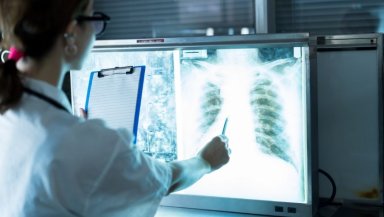
CT imaging plays a critical role in guiding the biopsy needle to the correct location.
Hospitals equipped with modern CT scanners can produce highly detailed images of the lungs and surrounding structures.
These detailed images help doctors identify the safest pathway for the biopsy needle and confirm its position during the procedure.
Advanced imaging technology also allows doctors to make small adjustments in needle placement if needed.
This precision improves the chances of obtaining a high-quality tissue sample from the lung nodule.
Availability of Comprehensive Lung Care Programs
Hospitals with comprehensive lung care programs often provide coordinated evaluation and treatment for lung conditions.
These programs typically involve collaboration between pulmonologists, radiologists, thoracic surgeons, oncologists, and pathologists.
This multidisciplinary approach allows specialists to review imaging findings, biopsy results, and treatment options together.
For patients with lung nodules, this team-based approach ensures that the diagnosis and treatment plan are carefully evaluated by multiple experts.
Hospitals with strong lung care programs can often provide more complete and coordinated care.
Experience in Performing Lung Biopsies
Experience is an important factor when selecting a hospital for CT-guided lung biopsy.
Hospitals that perform a large number of lung biopsies often develop greater expertise in handling different types of lung nodules.
Experienced teams are skilled in planning needle pathways, minimizing complications, and obtaining adequate tissue samples.
Patients may consider asking their healthcare provider how frequently CT-guided lung biopsies are performed at the hospital.
Facilities with experienced teams often have well-established protocols that improve patient safety and diagnostic success.
Safety Measures and Monitoring Systems
Patient safety is a critical aspect of any medical procedure.
Hospitals performing CT-guided lung biopsies should have dedicated procedure rooms with monitoring equipment.
During the biopsy, medical staff monitor the patient’s heart rate, breathing, oxygen levels, and blood pressure.
After the procedure, patients are usually observed in a recovery area for several hours.
Doctors may perform a chest X-ray to check for pneumothorax, a condition in which air leaks into the space around the lung.
Hospitals with strong safety protocols are better prepared to detect and manage potential complications.
Quality of Pathology Services
The tissue sample collected during a lung biopsy must be carefully analyzed by a pathology laboratory.
Pathologists examine the sample under a microscope to determine the cause of the lung nodule.
Hospitals with advanced pathology services can perform additional tests that help identify specific characteristics of lung diseases.
For example, molecular testing may be used to detect genetic changes in cancer cells.
These tests help doctors choose the most effective treatments if cancer is diagnosed.
High-quality pathology services play an important role in ensuring accurate diagnosis.
Patient Communication and Education
Hospitals that prioritize patient communication help patients feel more comfortable during the diagnostic process.
Before the procedure, healthcare providers should clearly explain why the biopsy is needed and how it will be performed.
Patients should have the opportunity to ask questions about the procedure, possible risks, and recovery process.
Clear communication helps patients understand what to expect and reduces anxiety about the procedure.
Hospitals that emphasize patient education often provide written instructions and support resources for patients and families.
Importance of Follow-Up Care
A lung biopsy is only one step in the process of diagnosing and managing lung conditions.
After the biopsy, patients usually return for follow-up appointments to review the results.
Hospitals with integrated lung care services can provide ongoing evaluation and treatment if necessary.
If the biopsy shows infection or inflammation, doctors may prescribe medications.
If cancer is detected, patients may be referred to specialists such as oncologists or thoracic surgeons for further care.
Hospitals that offer comprehensive follow-up services help ensure that patients receive appropriate treatment without unnecessary delays.
Questions Patients May Consider Asking
When selecting a hospital for CT-guided lung biopsy, patients may find it helpful to ask a few questions.
These questions may include whether the hospital has experienced interventional radiologists, how frequently the procedure is performed, and what safety measures are in place.
Patients may also ask about the hospital’s pathology services and whether multidisciplinary lung care teams are available.
Understanding these factors can help patients make informed decisions about where to receive care.
Conclusion
CT-guided lung biopsy is a valuable diagnostic procedure used to evaluate lung nodules and other abnormal findings in the lungs. Because the procedure relies on precise imaging and experienced specialists, choosing the right hospital is an important step in ensuring accurate diagnosis and patient safety.
Hospitals with advanced CT imaging technology, experienced interventional radiologists, comprehensive lung care programs, and strong safety protocols are well equipped to perform this procedure.
If your doctor recommends a CT-guided lung biopsy, discussing hospital options with your healthcare team can help you choose a facility that provides the highest quality care and supports you throughout the diagnostic process.