Bleeding or Lung Collapse: How Common Are the Risks of a Transbronchial Lung Biopsy?
Medicine Made Simple
A transbronchial lung biopsy is a procedure used to collect a small piece of lung tissue using a bronchoscope. Doctors often recommend it to diagnose lung nodules, infections, or inflammatory lung diseases. Like any medical procedure, it carries some risks. The two most commonly discussed risks are bleeding and pneumothorax, which is a temporary collapse of part of the lung. Fortunately, these complications are uncommon and are usually mild when they occur. Modern bronchoscopy techniques and careful monitoring make the procedure safe for most patients. Understanding these risks helps patients feel more prepared and confident before undergoing the test.
Why Doctors Perform a Transbronchial Lung Biopsy
When a CT scan shows an abnormal spot in the lungs, doctors often need more information to determine the cause. Imaging tests can reveal the presence of a lung nodules biopsy or abnormal tissue, but they cannot always explain what it is.
A biopsy allows doctors to examine a small piece of lung tissue under a microscope. This can help identify infections, inflammatory diseases, scarring, or cancer.
One of the most common methods used today is the transbronchial lung biopsy. It is performed during bronchoscopy and does not require surgical cuts on the chest.
The bronchoscope travels through the natural airway passages to reach the lungs. This makes the procedure minimally invasive compared to traditional surgical biopsies.
Why Patients Worry About Complications
Hearing the word biopsy can make many patients anxious. Questions often arise about whether the procedure is dangerous or whether complications are common.
Online discussions show that the two biggest concerns are bleeding from the lung and lung collapse after the procedure.
These risks are real, but it is important to understand how often they actually occur and how doctors manage them.
Most patients complete the procedure without any major complications.
Understanding Bleeding During a Lung Biopsy
The lungs contain many small blood vessels that help carry oxygen throughout the body. Because of this, taking a tissue sample can sometimes cause minor bleeding.
In most cases, this bleeding is small and stops on its own during the procedure.
Doctors performing bronchoscopy are trained to manage bleeding immediately if it occurs. They may use medications, cold saline, or special tools through the bronchoscope to stop the bleeding.
Minor bleeding may cause a patient to cough up a small amount of blood after the procedure. This usually settles within a few hours.
Significant bleeding is uncommon.
What Is Pneumothorax or Lung Collapse
Another possible complication is pneumothorax. This occurs when air leaks into the space between the lung and the chest wall.
This air pressure can cause part of the lung to collapse temporarily.
A pneumothorax can occur when the biopsy tool creates a small opening in the lung tissue. Air may escape through this opening into the surrounding space.
Most cases are small and resolve without treatment.
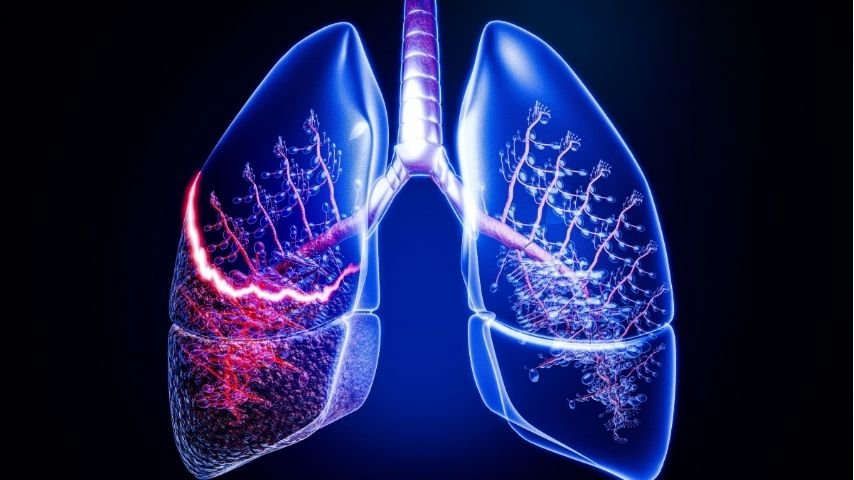
Suggested image: Illustration showing pneumothorax around the lung.
How Common Are These Complications
For most patients, the risk of serious complications from a transbronchial lung biopsy is low.
Minor bleeding can occur in a small percentage of procedures. However, it is usually controlled during bronchoscopy.
Pneumothorax occurs in only a small number of patients. When it does occur, doctors detect it quickly through monitoring or a chest X-ray.
In rare situations, a small tube may be placed in the chest to remove the trapped air and allow the lung to expand again.
Advances in imaging guidance and bronchoscopy technology have made these complications even less common.
Why Doctors Still Recommend the Procedure
Although complications can occur, the benefits of obtaining an accurate diagnosis often outweigh the risks.
Without a biopsy, doctors may not be able to determine whether a lung nodule is benign, infectious, or cancerous.
A clear diagnosis helps doctors choose the correct treatment plan.
For example, infections may require antibiotics, inflammatory diseases may require medications, and cancer may require specialized treatment.
Getting the correct diagnosis early can make a significant difference in patient outcomes.
How Doctors Reduce the Risk of Complications
Several safety measures are used to minimize the risks during bronchoscopy. Patients are carefully evaluated during transbronchial lung biopsy preparation, where doctors review medications, blood tests, and imaging scans.
Blood-thinning medications may be temporarily stopped before the biopsy to reduce bleeding risk.
During the procedure, imaging guidance such as fluoroscopy or ultrasound helps doctors reach the correct location safely.
Continuous monitoring of oxygen levels, heart rate, and breathing ensures patient safety throughout the procedure.
What Patients Should Expect After the Procedure
After the biopsy, patients are usually observed for a few hours.
Doctors monitor for symptoms such as breathing difficulty, chest discomfort, or excessive bleeding.
A chest X-ray may be performed in some cases to ensure the lung has not collapsed.
Most patients go home the same day.
Some mild throat irritation or cough may occur for a short period.
Patients are usually advised to avoid strenuous activity for a day or two.
When to Seek Medical Attention
Although complications are uncommon, patients should be aware of warning signs after the procedure.
Severe chest pain, difficulty breathing, persistent heavy bleeding, or fever should be reported to a doctor immediately, especially if they have inconclusive lung biopsy results from previous tests.
These symptoms are rare but require prompt medical evaluation.
Conclusion
A transbronchial lung biopsy is an important diagnostic tool that helps doctors understand lung abnormalities.
The two most commonly discussed risks are bleeding and pneumothorax. Fortunately, these complications are uncommon and usually manageable.
Modern bronchoscopy techniques, experienced specialists, and careful monitoring make the procedure safe for most patients.
Understanding the risks and benefits can help patients approach the procedure with greater confidence and less anxiety.
If your doctor has recommended a transbronchial lung biopsy, discussing the procedure with an experienced pulmonologist can help you understand the risks and benefits. Early diagnosis of lung conditions allows doctors to provide the most appropriate treatment and care.
References and Sources