How Does a Hand Transplant Surgery Actually Work? Step-by-Step Explained
Medicine Made Simple
A hand transplant is a complex surgery where doctors attach a donor hand from a deceased person to someone who has lost their hand. During the operation, surgeons carefully connect bones, blood vessels, muscles, tendons, nerves, and skin so the new hand can survive and function. The surgery can take many hours and requires a large medical team. Recovery does not happen immediately. Patients need lifelong medicines to prevent rejection and months to years of rehabilitation to improve movement and feeling. Understanding each step helps patients and families prepare for this life-changing procedure.
Understanding What a Hand Transplant Means
A hand transplant is one of the most advanced surgeries in modern medicine. It is performed for people who have lost one or both hands due to accidents, burns, severe infections, cancer, or other serious medical conditions. The goal is not only to replace the missing hand but also to improve independence, daily function, and emotional well-being.
Unlike a prosthetic hand, which is an external artificial device, a hand transplant uses a real donor hand from a deceased person. This gives the possibility of natural movement, warmth, and even touch over time. For many patients, this offers hope that feels much deeper than simply wearing a prosthetic device.
However, a hand transplant is not a simple solution. It is a major surgery with serious responsibilities and several Hand Transplant Challenges. The operation is long, recovery is slow, and patients must take lifelong medicines to protect the transplanted hand. This is why doctors carefully select who is suitable for this procedure.
Understanding how the surgery works step by step helps patients and families make informed decisions instead of relying on fear or confusion.
Step 1: Finding the Right Patient
Not everyone who loses a hand can have a hand transplant.
Doctors first evaluate whether the patient is medically and emotionally suitable. This process is very strict because the surgery carries major long-term responsibilities and focuses heavily on Hand Transplant Eligibility.
The patient must usually be physically healthy enough for major surgery and lifelong immunosuppressant medicines. Serious heart disease, uncontrolled diabetes, active infections, smoking, or poor medication habits may make transplant unsafe.
Mental health is also important. Patients must understand that recovery takes years, not weeks. They must be ready for daily therapy, regular hospital visits, and lifelong follow-up. Strong family support is often necessary because rehabilitation can be exhausting.
Doctors also look at the level of hand loss. Some amputations are more suitable for transplant than others depending on how much arm structure remains for connection.
This careful selection improves safety and increases the chance of long-term success.
Step 2: Finding the Right Donor Hand
Once a patient is approved, the next challenge is finding the right donor.
The donor hand must come from a deceased person whose family agrees to donation. This is often more emotionally difficult than donating internal organs because hands are visible and strongly connected to identity.
Doctors cannot use just any donor hand. Several factors must match.
Blood type must be compatible to reduce rejection risk. Hand size should be similar for proper function and appearance. Skin color, gender, age, and tissue compatibility are also important.
The closer the match, the better the medical and cosmetic outcome.
Because these conditions are strict, patients may wait a long time for a suitable donor. Some wait months, while others may wait years.
This part of the process requires patience because surgery cannot begin until the right donor becomes available.
Step 3: Preparing for Surgery
When a suitable donor is found, things move very quickly.
The patient is contacted immediately and admitted to the hospital. A final medical evaluation is done to confirm the patient is healthy enough for surgery at that moment. Blood tests, scans, and surgical planning happen quickly because donor tissue must be transplanted within a limited time.
At the same time, the surgical team prepares both the donor hand and the patient’s arm.
This is not a one-surgeon procedure. It requires plastic surgeons, orthopedic surgeons, transplant specialists, anesthesiologists, nurses, and rehabilitation experts working together.
The surgery is carefully planned before the first cut is made. Every structure must be connected in the correct order for the hand to survive.
This planning is one reason hand transplantation is only done in highly specialized hospitals.
Step 4: Connecting the Bones
The first physical step during surgery is joining the bones.
Surgeons prepare the patient’s arm and the donor hand by carefully cleaning and shaping the bone ends. They then align the bones and fix them together using metal plates and screws.
This creates the structural foundation of the new hand.
Without strong bone connection, the hand cannot support movement or daily use. It must be stable enough to handle therapy and long-term function.
This step may sound simple, but precision is very important. Even small alignment problems can affect hand movement later.
Once the bones are fixed properly, surgeons move to the next critical stage—restoring blood flow.
Step 5: Connecting Arteries and Veins
The next step is restoring circulation.
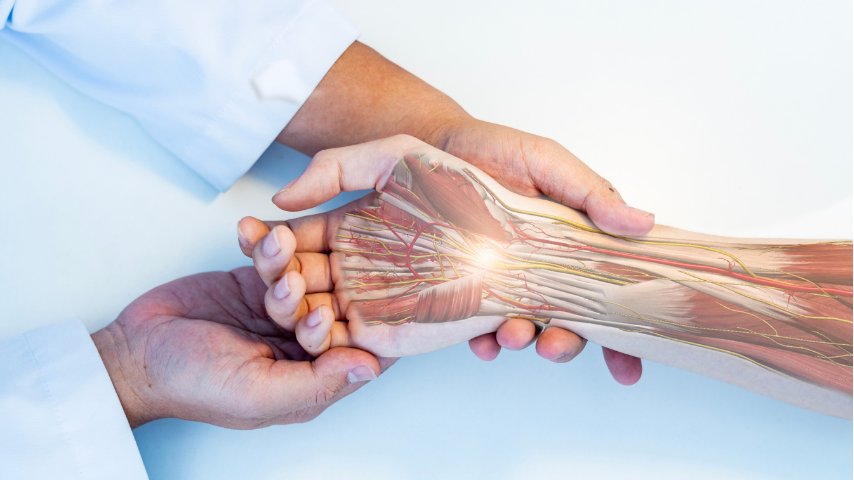
Surgeons carefully connect arteries and veins so blood can flow into the donor hand and return back to the body. This is one of the most urgent parts of surgery because the hand must receive oxygen quickly to survive.
Without healthy blood flow, the transplant can fail.
Doctors use microscopes and delicate surgical tools because these blood vessels are small and fragile. The moment blood begins flowing into the donor hand is one of the most important points in the operation.
The hand begins to warm up and change color as circulation returns.
This is the moment when the transplant starts becoming living tissue again rather than simply a donor limb.
Once blood flow is stable, surgeons continue with the structures needed for movement.
Step 6: Repairing Muscles and Tendons
Muscles create movement, but tendons are what connect muscles to bones and allow fingers to bend and straighten.
Surgeons carefully reconnect these structures so the patient can eventually move the hand. This includes finger flexion, extension, grip strength, wrist control, and overall coordination.
This step is very detailed because hand movement depends on many small muscles working together in balance.
Even after perfect surgical repair, movement does not return immediately. These structures need healing time, and patients must later train them through therapy.
Still, this step creates the physical possibility of future function.
Without proper tendon and muscle repair, the hand may survive but remain limited in daily use.
Step 7: Repairing the Nerves
This is often the most important part for patients because nerves control both movement and sensation.
Surgeons connect the patient’s nerves to the nerves in the donor hand. This allows the possibility of feeling touch, temperature, pain, and fine movement over time.
However, nerves do not work immediately.
They grow slowly, often about one millimeter per day. This means sensation recovery takes months or even years depending on how far the nerves must travel.
Patients may wake up after surgery with a warm, healthy hand but no feeling yet. This is normal.
Over time, nerves may reconnect and the patient may begin to feel pressure, warmth, touch, and movement.
This slow nerve recovery is what makes hand transplantation different from simply attaching a limb.
Step 8: Closing the Skin and Protecting the Hand
After bones, blood vessels, muscles, tendons, and nerves are repaired, surgeons close the skin and protect the new hand.
The hand is placed carefully in dressings and splints to support healing and prevent unnecessary movement. Swelling must be controlled, and blood flow must be monitored closely.
The patient is then moved to intensive care or a specialized recovery unit where doctors watch for early signs of rejection or circulation problems.
The first days after surgery are extremely important.
Even a technically perfect surgery can face complications if blood flow becomes poor or the immune system reacts aggressively.
This early monitoring helps doctors act quickly if problems appear.
Step 9: Preventing Rejection
After surgery, the body may see the donor hand as foreign and try to attack it. This is called rejection.
To prevent this, patients must begin immunosuppressants after hand transplant immediately.
These medicines reduce the immune system’s attack on the transplanted hand and help protect the new tissue. They are not temporary medicines. They must be taken for life.
Doctors monitor patients closely with blood tests, skin checks, and sometimes tissue biopsies to detect rejection early.
Signs of rejection may include swelling, rash, pain, skin color changes, or reduced function.
Early treatment can often control rejection, but strict medication discipline is essential.
This is one reason doctors do not recommend hand transplantation for everyone.
Step 10: Rehabilitation Begins
Many people think surgery is the hardest part, but rehabilitation is often the longer and more difficult journey.
Hand therapy starts soon after surgery. Patients work with specialized therapists almost daily in the beginning.
They practice movement, grip strength, finger coordination, wrist control, and daily tasks like eating, dressing, writing, and holding objects.
The brain must also learn how to use the new hand. This is called retraining because the brain must understand new nerve signals coming from the transplanted limb.
Therapy may continue for years.
Progress is often slow. Feeling a warm cup or buttoning a shirt may take months, but these small milestones are major victories.
Rehabilitation is not optional. It is part of the transplant itself.
What Patients Can Realistically Expect
A hand transplant can improve life greatly, but it is important to have realistic expectations.
Not every patient regains full movement or complete sensation. Some patients recover excellent function, while others achieve only partial improvement.
Success depends on age, health, therapy commitment, nerve healing, medication discipline, and emotional readiness.
The goal is not perfection. The goal is meaningful independence.
Being able to hold a child’s hand, eat without assistance, return to work, or regain confidence can be life-changing even without perfect hand function.
Doctors focus on quality of life, not perfect surgical results.
This honest understanding helps patients prepare emotionally for the journey ahead.
Conclusion
Hand transplant surgery is one of the most remarkable procedures in modern medicine, but it is far more than a single operation.
It begins with careful patient selection, donor matching, and a highly complex surgery where bones, blood vessels, muscles, tendons, and nerves are connected step by step. After surgery, lifelong medicines and years of rehabilitation are needed to protect and train the new hand.
The procedure offers the possibility of movement, feeling, and emotional healing, but it also demands patience, discipline, and strong support.
For the right patient, a hand transplant can restore much more than function. It can restore confidence, independence, and hope.
Understanding the full process helps patients and families make this decision with clarity and confidence.
If you or your loved one is considering a hand transplant, do not focus only on the surgery. Speak with your surgeon about the full journey, including donor matching, lifelong medicines, and rehabilitation. The best decision is one made with complete understanding and realistic expectations for the future.

Dr Selva Seetharaman S
Aesthetics, Plastic, Cosmetic and Reconstructive Surgery, Hand Transplant
HOD & Senior Consultant
Chennai, PerumbakkamChennai, Adyar