How Accurate Is Mediastinal Cryobiopsy for Diagnosing Lung Diseases?
Medicine Made Simple
Mediastinal cryobiopsy is an advanced diagnostic procedure used to obtain tissue samples from lymph nodes located in the mediastinum, the central area of the chest between the lungs. Doctors often recommend this procedure when imaging tests such as CT scans or PET scans show enlarged lymph nodes but cannot determine the exact cause. Unlike traditional needle biopsy, cryobiopsy freezes and removes a slightly larger piece of tissue, which helps preserve the structure of the lymph node. This allows pathologists to examine the sample more clearly and can improve diagnostic accuracy for diseases such as sarcoidosis, lymphoma, infections, and lung cancer.
Why Accurate Diagnosis Is Important in Lung Diseases
When doctors detect abnormalities in the chest, such as enlarged lymph nodes or suspicious masses, the most important step is determining the exact cause. Many different diseases can affect the lungs and mediastinal lymph nodes. These conditions may appear similar on imaging tests but require very different treatments.
For example, enlarged mediastinal lymph nodes could be caused by:
- Sarcoidosis
- Tuberculosis or other infections
- Lymphoma
- Spread of lung cancer
- Inflammatory or autoimmune diseases
Because treatment for each of these conditions is different, doctors must confirm the diagnosis before starting therapy. Imaging tests such as CT scans provide valuable information about the size and location of abnormalities, but they cannot always identify the exact disease. Identifying the symptoms needing lymph node removal or biopsy, such as persistent cough or night sweats, helps doctors decide when to move from imaging to tissue sampling.
Understanding the Mediastinum and Its Lymph Nodes
The mediastinum is the central compartment of the chest located between the lungs. It contains several important organs and structures including the heart, trachea, esophagus, major blood vessels, nerves, and groups of lymph nodes.
Mediastinal lymph nodes are part of the immune system and help the body detect infections, inflammation, and abnormal cells. When these lymph nodes encounter infections or abnormal processes, they may enlarge.
Doctors often evaluate these lymph nodes when reviewing chest CT scans or PET scans. Enlargement of mediastinal lymph nodes may signal an underlying condition that requires further investigation.
Because many diseases affect the mediastinum, obtaining a tissue sample from these lymph nodes can provide valuable diagnostic information.
Suggested image: Medical illustration labeling mediastinal lymph node stations.
Why Imaging Tests Alone Are Sometimes Not Enough
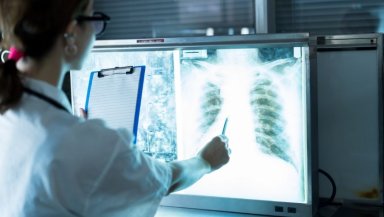
Modern imaging technologies such as CT scans and PET scans have greatly improved the ability to detect abnormalities inside the chest. These tests can reveal enlarged lymph nodes, masses, and areas of inflammation.
However, imaging has limitations.
A CT scan can show:
- The size of lymph nodes
- Their location within the mediastinum
- Whether multiple lymph nodes are involved
A PET scan can detect areas where cells are more metabolically active, which may suggest inflammation or cancer.
Despite these advantages, imaging cannot determine the exact type of cells present inside the lymph node. Several different diseases may produce similar imaging findings.
For example, lymph nodes enlarged due to sarcoidosis may appear similar to those affected by lymphoma or infection on imaging scans.
Because of this limitation, doctors often recommend a biopsy so the tissue can be examined under a microscope.
What Mediastinal Cryobiopsy Is
Mediastinal cryobiopsy is a technique used to obtain tissue samples from lymph nodes in the mediastinum. The procedure is usually performed during bronchoscopy, a minimally invasive procedure that allows doctors to access the lungs through the airways.
During bronchoscopy, a flexible tube called a bronchoscope is inserted through the nose or mouth and guided into the lungs.
Doctors often use endobronchial ultrasound (EBUS) during this procedure. The ultrasound probe helps visualize lymph nodes located outside the airway walls.
Once the lymph node is located, a specialized instrument called a cryoprobe is used to obtain the tissue sample.
The cryoprobe rapidly cools to very low temperatures. When the probe touches the tissue, the tissue freezes and sticks to the probe. The frozen tissue can then be removed as a small but intact sample.
Because the tissue is frozen before removal, the structure of the lymph node remains well preserved.
Suggested image: Illustration showing cryoprobe sampling mediastinal lymph node.
How Cryobiopsy Improves Tissue Sampling
One of the main advantages of mediastinal cryobiopsy is the size and quality of the tissue sample obtained.
Traditional needle biopsy techniques collect small fragments of tissue or clusters of cells. These samples are often sufficient for diagnosing many conditions. However, the small size of the sample can sometimes make diagnosis challenging.
Cryobiopsy offers several benefits:
- Larger tissue samples
- Better preservation of tissue architecture
- Improved ability for pathologists to examine the lymph node structure
The preserved structure of the tissue can be particularly important when diagnosing diseases that affect the architecture of lymph nodes.
For example, lymphoma often requires examination of the lymph node’s structural pattern to confirm the diagnosis.
Diagnostic Accuracy Compared to Traditional Methods
Studies in interventional pulmonology have shown that mediastinal cryobiopsy can improve diagnostic yield in certain situations.
Diagnostic yield refers to the ability of a procedure to obtain enough tissue for a definitive diagnosis.
Traditional needle biopsy techniques already provide good diagnostic accuracy for many conditions, particularly for staging lung cancer.
However, cryobiopsy may provide additional benefits in cases where:
- Needle biopsy samples are insufficient
- Larger tissue samples are required
- Structural analysis of lymph nodes is necessary
In these situations, cryobiopsy can increase the likelihood of obtaining a definitive diagnosis without the need for surgical biopsy.
Diseases Where Cryobiopsy May Be Particularly Helpful
Mediastinal cryobiopsy can be useful for diagnosing several diseases affecting lymph nodes in the chest.
Some of these include:
Sarcoidosis
This inflammatory disease forms clusters of immune cells called granulomas. Larger tissue samples help confirm the presence of these granulomas.
Lymphoma
Lymphoma diagnosis often requires examination of the lymph node’s architecture. Cryobiopsy samples can provide more detailed structural information.
Metastatic cancer
When cancer spreads to lymph nodes, larger tissue samples may help identify the type of cancer and guide treatment decisions.
Infections
Certain infections may require tissue samples for laboratory testing to identify the responsible microorganisms.
Reducing the Need for Surgical Biopsy
Before minimally invasive bronchoscopy techniques became widely available, obtaining mediastinal lymph node tissue often required surgery.
One common surgical procedure was mediastinoscopy. This involves making an incision at the base of the neck and inserting surgical instruments into the mediastinum.
Although mediastinoscopy is effective, it requires general anesthesia and involves longer recovery.
Cryobiopsy performed during bronchoscopy may help reduce the need for such surgical procedures in some patients. By obtaining larger tissue samples through the airways, doctors can often reach a diagnosis without surgery.
What Patients May Experience During the Procedure
Patients undergoing mediastinal cryobiopsy usually receive sedation to help them relax during the procedure. To ensure a smooth experience, hospital preparation for lymph node surgery or advanced biopsies includes fasting and reviewing medication history. The throat is numbed with local anesthetic, and the bronchoscope is gently inserted through the airway.
Using ultrasound guidance, the doctor locates the lymph node and performs the biopsy using the cryoprobe.
Most patients do not feel pain during the procedure. The entire process typically takes between 30 and 60 minutes.
After the procedure:
- Patients are monitored for a short period
- Most patients go home the same day
Conclusion
Accurate diagnosis is essential when evaluating diseases affecting mediastinal lymph nodes. Imaging tests such as CT scans and PET scans can detect abnormalities but cannot always determine the exact cause.
Mediastinal cryobiopsy provides a minimally invasive way to obtain larger and better-preserved tissue samples from lymph nodes in the chest. These samples allow pathologists to analyze the tissue more thoroughly and improve diagnostic accuracy for diseases such as sarcoidosis, lymphoma, infections, and lung cancer.
If your doctor has recommended further evaluation of mediastinal lymph nodes, consulting an interventional pulmonology specialist can help determine whether cryobiopsy or another biopsy method is most appropriate for your condition.