CT Scan Found a Lung Nodule? When Doctors Recommend a CT-Guided Lung Biopsy

Medicine Made Simple
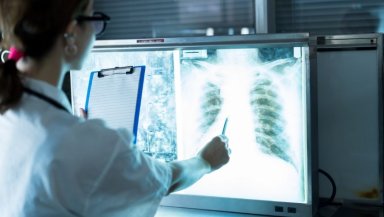
A CT scan of the chest sometimes shows a small spot in the lung called a lung nodule. Many lung nodules are harmless and may form because of previous infections, inflammation, or scar tissue. However, some nodules may need further testing to determine their exact cause. When a nodule appears suspicious or shows certain features on imaging, doctors may recommend a CT-guided lung biopsy. In this procedure, a thin needle is guided into the lung using CT imaging to collect a small tissue sample. The sample is then examined in a laboratory to identify whether the nodule is benign or cancerous.
Understanding What a Lung Nodule Is
The lungs are essential organs that allow the body to breathe by exchanging oxygen and carbon dioxide. When doctors perform imaging tests such as chest CT scans, they carefully examine the lung tissue to look for abnormalities.
One of the most common findings during a CT scan is a lung nodule. A lung nodule is a small round or oval-shaped spot that appears different from the surrounding lung tissue.
Most lung nodules are small and measure less than three centimeters in diameter. Larger abnormal areas are usually referred to as lung masses.
Lung nodules are quite common and are often discovered unexpectedly. A person may undergo a CT scan for reasons such as persistent cough, chest pain, injury, or lung cancer screening, and the scan may reveal a nodule.
Although hearing about a lung nodule may cause concern, it is important to know that most nodules are not cancer.
Common Causes of Lung Nodules
There are several reasons why lung nodules may appear in the lungs. Many nodules develop because of infections that occurred in the past.
Certain infections, such as tuberculosis or fungal infections, may leave small scars in the lungs after they heal. These scars can appear as nodules on imaging tests.
Inflammatory conditions such as sarcoidosis can also produce nodules in lung tissue. In these conditions, clusters of immune cells form small lumps in different parts of the body, including the lungs.
Benign tumors, such as hamartomas, may also appear as lung nodules. These growths are noncancerous and usually grow slowly.
However, in some cases, a lung nodule may represent early lung cancer or cancer that has spread from another part of the body.
Because CT scans cannot always determine the exact cause of a nodule, doctors sometimes recommend additional testing.
How Doctors Evaluate Lung Nodules on a CT Scan
When a lung nodule is detected on a CT scan, doctors carefully evaluate several features to determine whether it requires further investigation.
One important factor is the size of the nodule. Very small nodules are often monitored with follow-up scans rather than biopsied immediately.
Doctors also look at the shape and edges of the nodule. Nodules with smooth, well-defined edges are often benign, while nodules with irregular or spiky edges may require closer evaluation.
The location of the nodule within the lung is also considered. Nodules located near the outer edges of the lungs may require different biopsy techniques than those near the central airways.
Doctors may also review previous imaging studies to see whether the nodule has changed in size over time.
When Doctors Recommend a CT-Guided Lung Biopsy
In many cases, lung nodules are monitored with periodic imaging rather than immediately biopsied.
However, doctors may recommend a CT-guided lung biopsy when certain features raise concern about the possibility of cancer.
For example, a biopsy may be recommended if the nodule grows over time or if it has an irregular appearance on imaging.
Patients with risk factors such as smoking history, older age, or exposure to environmental toxins may also require further testing.
If imaging tests suggest that a nodule could represent cancer, obtaining a tissue sample becomes important.
A CT-guided lung biopsy allows doctors to collect this sample and examine it in a laboratory.
What a CT-Guided Lung Biopsy Is
A CT-guided lung biopsy is a minimally invasive procedure used to obtain a small tissue sample from a lung nodule.
The procedure uses CT imaging to guide a thin needle through the chest wall and into the lung.
The CT scanner provides detailed images that help doctors determine the safest and most accurate path for the needle.
Once the needle reaches the nodule, a small sample of tissue is removed.
This tissue sample is then sent to a pathology laboratory where specialists examine it under a microscope.
How the Procedure Is Performed
CT-guided lung biopsy is usually performed in a radiology department within a hospital.
During the procedure, the patient lies on a CT scanning table. The position may vary depending on the location of the lung nodule.
The doctor first performs a CT scan to identify the exact position of the nodule.
The skin over the biopsy site is cleaned and numbed using local anesthesia. This helps reduce discomfort during the procedure.
A thin biopsy needle is then inserted through the chest wall and guided toward the lung nodule using CT images.
Once the needle reaches the correct position, the doctor removes a small sample of tissue.
The needle is then removed and a small bandage is applied to the skin.
What Patients May Feel During the Procedure
Most patients tolerate CT-guided lung biopsy well.
Because local anesthesia is used, patients may feel pressure rather than sharp pain during the needle insertion.
Patients are usually asked to remain still and may be asked to hold their breath briefly while the doctor positions the needle.
The entire procedure usually takes less than one hour.
Medical staff monitor the patient throughout the procedure to ensure safety and comfort.
Possible Risks and Complications
CT-guided lung biopsy is generally safe, but like all medical procedures it carries some risks.
The most common complication is pneumothorax, which occurs when air leaks into the space between the lung and chest wall. This can cause the lung to partially collapse.
In many cases, small pneumothorax resolves on its own without treatment. In more significant cases, doctors may place a small chest tube to remove the air.
Minor bleeding may occur at the biopsy site or within the lung. This usually stops on its own.
Doctors monitor patients after the procedure to ensure that no complications develop.
Recovery After CT-Guided Lung Biopsy
After the procedure, patients are usually monitored in a recovery area for several hours.
Doctors may perform a follow-up chest X-ray to ensure that the lung has not collapsed.
Most patients are able to go home the same day.
Patients are usually advised to avoid strenuous activities for a short period after the biopsy.
Mild soreness at the biopsy site or mild coughing may occur but usually improves quickly.
Doctors provide instructions about symptoms that should be reported, such as chest pain or difficulty breathing.
How Biopsy Results Help Doctors Plan Treatment
The tissue sample collected during the biopsy is sent to a pathology laboratory.
Pathologists examine the cells under a microscope to determine the cause of the lung nodule.
The results may show that the nodule is benign and does not require treatment.
If the biopsy reveals infection or inflammation, doctors may prescribe medications.
If cancer is detected, the biopsy results help doctors determine the type of cancer and plan the most appropriate treatment.
Additional tests may also be performed on the tissue to identify genetic features that guide targeted therapy.
Conclusion
Finding a lung nodule on a CT scan can be concerning, but most nodules are harmless and may simply require monitoring. When imaging tests show features that raise concern, doctors may recommend a CT-guided lung biopsy to obtain a tissue sample and determine the exact cause.
This minimally invasive procedure allows doctors to reach lung nodules located near the outer areas of the lungs and collect tissue safely using CT imaging guidance.
If your CT scan has detected a lung nodule and your doctor recommends further testing, discussing CT-guided lung biopsy with your healthcare team can help you understand the procedure and take the next step toward an accurate diagnosis.