Cryobiopsy vs Forceps Biopsy: Two Modern Ways Doctors Take Lung Tissue Samples
Medicine Made Simple
When doctors need to diagnose a lung disease, they sometimes collect a small tissue sample from the lung. This procedure is called a transbronchial lung biopsy and is performed during bronchoscopy. Two main techniques are used to collect the tissue: forceps biopsy and cryobiopsy. Forceps biopsy uses small pinchers to take a tiny tissue sample, while cryobiopsy uses a freezing probe that removes a larger piece of tissue. Both techniques help doctors diagnose lung conditions, but they differ in how the sample is collected and the amount of tissue obtained. Understanding these methods helps patients know what to expect during the procedure.
Why Lung Tissue Samples Are Sometimes Needed
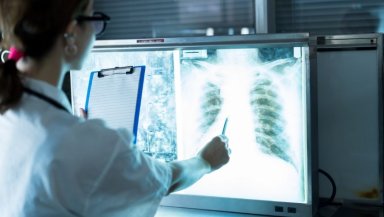
Imaging tests such as chest X-rays and CT scans provide detailed pictures of the lungs. These scans can show abnormalities such as lung nodules, scarring, inflammation, or suspicious growths.
However, images alone cannot always determine the exact cause of these changes.
A tissue sample allows doctors to examine lung cells under a microscope. This helps identify infections, inflammatory diseases, and cancers.
Bronchoscopy is one of the most common ways doctors collect these samples.
What Is Bronchoscopy
Bronchoscopy is a minimally invasive procedure used to examine the airways and lungs.
A thin flexible tube called a bronchoscope is passed through the nose or mouth and guided into the lungs.
The bronchoscope has a camera that allows doctors to see the airway passages clearly.
Special tools can be inserted through the bronchoscope to collect tissue samples.
Suggested image: Illustration showing bronchoscope entering the lungs.
What Is a Forceps Biopsy
Forceps biopsy is the traditional method used during transbronchial lung biopsy.
Tiny forceps, which look like miniature pinchers, are passed through the bronchoscope.
These forceps gently grasp a small piece of lung tissue and remove it.
The sample is then sent to a pathology laboratory for examination.
Forceps biopsy has been used for many years and remains widely available.
However, the tissue pieces obtained are usually very small.
What Is Cryobiopsy
Cryobiopsy is a newer technique that has become increasingly popular in lung diagnostics.
Instead of using pinchers, doctors use a special cryoprobe that freezes lung tissue for a few seconds.
The frozen tissue sticks to the probe and is removed as a slightly larger sample.
Because the tissue sample is larger and less damaged during removal, it often provides clearer information for pathologists.
Suggested image: Diagram showing cryobiopsy probe freezing lung tissue.
Key Differences Between the Two Techniques
The main difference between cryobiopsy and forceps biopsy lies in how the tissue is collected.
Forceps biopsy removes a small piece of tissue by pinching it.
Cryobiopsy removes tissue by freezing and extracting it.
Cryobiopsy samples are usually larger and better preserved. This can sometimes improve diagnostic accuracy, especially in certain lung diseases.
However, mediastinal cryobiopsy risks may carry a slightly higher risk of bleeding compared to forceps biopsy.
Because of this, doctors carefully select which technique to use based on the patient's condition.
When Doctors Prefer Forceps Biopsy
Forceps biopsy is often used when the abnormality is located within the airways or when a smaller tissue sample is sufficient for diagnosis.
It is also commonly used in routine bronchoscopy procedures and in situations where minimizing bleeding risk is important.
Many hospitals continue to rely on this technique because it is well established and widely available.
When Cryobiopsy May Be Recommended
Cryobiopsy is often preferred when doctors need a larger tissue sample.
This technique is particularly useful in diagnosing certain interstitial lung diseases where a bigger sample provides more accurate information.
Cryobiopsy has become an important tool in specialized pulmonary centers that focus on advanced lung diagnostics.
Safety of Both Techniques
Both cryobiopsy and forceps biopsy are considered safe when performed by experienced specialists.
Doctors monitor patients carefully during the procedure.
Minor bleeding may occur but is usually controlled during bronchoscopy.
In rare cases, complications such as pneumothorax may occur.
Careful patient selection and modern bronchoscopy equipment help reduce these risks, particularly when considering mediastinal cryobiopsy vs surgery for diagnostic purposes.
What Patients Experience During the Procedure
Patients undergoing bronchoscopy biopsy usually receive sedation and throat numbing medication.
This helps them remain comfortable during the procedure.
Most patients feel only mild discomfort or coughing.
The procedure usually takes less than an hour.
Patients are typically able to return home the same day.
Conclusion
Forceps biopsy and cryobiopsy are two important techniques used during transbronchial lung biopsy.
Both methods allow doctors to collect lung tissue safely through bronchoscopy.
Forceps biopsy is the traditional technique that removes small tissue samples, while cryobiopsy uses freezing technology to obtain larger samples.
The choice of technique depends on the type of lung condition being investigated and the patient’s overall health.
Advances in bronchoscopy continue to improve the accuracy and safety of lung diagnosis.
If you have been advised to undergo a bronchoscopy lung biopsy, discussing the available techniques with your pulmonologist can help you understand which method is best for your condition. Accurate diagnosis is the first step toward effective treatment.
References and Sources