Cryobiopsy for Lung Disease: Why Many Pulmonologists Are Choosing This Advanced Biopsy Technique
Medicine Made Simple
Cryobiopsy is a modern method used during bronchoscopy to collect a sample of lung tissue for diagnosis. Doctors perform the procedure by inserting a thin flexible camera called a bronchoscope through the nose or mouth into the lungs. Instead of using small pinchers to remove tissue, cryobiopsy uses a special probe that freezes the lung tissue for a few seconds. The frozen tissue sticks to the probe and can be removed as a larger sample. Because the sample is bigger and better preserved, it often helps doctors diagnose lung diseases more accurately, especially conditions affecting the structure of the lung tissue.
Why Lung Diseases Sometimes Require a Biopsy
Many lung diseases cause symptoms such as cough, breathlessness, fatigue, or chest discomfort. However, these symptoms are common and may occur in many different conditions.
For example, infections, inflammation, autoimmune diseases, and cancer can all produce similar symptoms. Even imaging tests such as CT scans may show abnormalities that look similar.
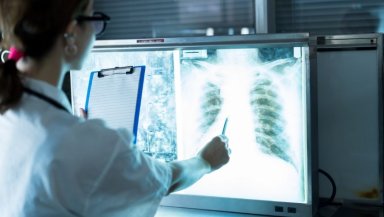
Doctors may see small lung nodules, scarring, or cloudy areas on a CT scan. While these images provide important clues, they do not always reveal the exact cause of the problem.
To reach a clear diagnosis, doctors sometimes need to study lung tissue under a microscope. This is where a lung biopsy becomes important.
A biopsy allows doctors to examine the cells and tissue structure directly. This information helps identify the disease and determine the most appropriate treatment.
Traditional Lung Biopsy Methods
Before cryobiopsy became widely used, doctors relied mainly on two types of lung biopsy.
The first was forceps biopsy during bronchoscopy. In this method, small pinchers are used to collect tiny tissue samples from the lung.
The second option was surgical lung biopsy. This requires small incisions in the chest and is performed in an operating room under general anesthesia.
While surgical biopsy provides larger samples, it is more invasive and requires longer recovery.
Forceps biopsy is less invasive but often produces very small tissue samples.
Cryobiopsy was developed to combine the advantages of both approaches.
How Cryobiopsy Works
Cryobiopsy is performed during bronchoscopy. The procedure usually takes place in a specialized bronchoscopy suite.
Patients receive sedation and local anesthesia so they remain comfortable during the procedure.
A bronchoscope is inserted through the nose or mouth and guided into the lungs.
Once the bronchoscope reaches the area of interest, doctors introduce a cryoprobe through the bronchoscope.
The tip of the probe rapidly cools to extremely low temperatures when activated.
When the probe touches lung tissue, the tissue freezes within a few seconds.
The frozen tissue sticks to the probe and can be gently removed.
This technique allows doctors to obtain a larger and more intact piece of lung tissue compared to traditional biopsy tools.
Why Larger Tissue Samples Are Important
Many lung diseases affect the overall structure of lung tissue rather than just individual cells. For example, interstitial lung diseases cause inflammation and scarring in the spaces between air sacs. Diagnosing these diseases requires doctors to study the architecture of the tissue. Small tissue fragments may not provide enough information to identify these patterns. Cryobiopsy produces larger samples that preserve the natural structure of the tissue. This makes it easier for pathologists to identify the disease. As a result, the cryobiopsy vs forceps biopsy accuracy is generally higher for certain lung conditions.
Conditions Where Cryobiopsy Is Particularly Helpful
Cryobiopsy has become especially valuable in diagnosing interstitial lung diseases.
These conditions include diseases such as pulmonary fibrosis and other inflammatory lung disorders.
In these diseases, the pattern of tissue damage is very important for diagnosis.
Cryobiopsy samples allow pathologists to examine these patterns more clearly.
The procedure can also help diagnose infections, tumors, and other lung abnormalities when imaging alone is not sufficient.
Safety of Cryobiopsy
Although cryobiopsy removes larger tissue samples, the procedure is generally safe when performed by trained specialists. Doctors carefully monitor patients during bronchoscopy. The most common mediastinal cryobiopsy risks include minor bleeding or pneumothorax, which is a temporary collapse of part of the lung. These complications are uncommon and can usually be managed quickly if they occur. Advances in bronchoscopy technology and training have made the procedure safer over time.
What Patients Experience During the Procedure
Most patients receive sedation during bronchoscopy. This helps them relax and remain comfortable.
The throat and airways are numbed with local anesthetic to reduce coughing.
Patients may feel mild pressure or the urge to cough when the bronchoscope is inserted, but significant pain is rare.
The procedure usually takes between thirty minutes and one hour.
Afterward, patients are monitored for a few hours before going home.
The Future of Lung Diagnosis
Cryobiopsy represents an important step forward in the diagnosis of lung diseases.
It allows doctors to obtain larger tissue samples without the need for surgery in many cases.
As more hospitals develop specialized interventional pulmonology programs, the use of mediastinal cryobiopsy is becoming more widely available.
This advancement helps doctors diagnose complex lung diseases earlier and more accurately.
Conclusion
Cryobiopsy is an advanced bronchoscopy technique that allows doctors to collect larger and better-preserved lung tissue samples. This helps improve diagnostic accuracy, particularly for complex lung diseases such as interstitial lung disease.
Although the procedure may sound intimidating, it is minimally invasive and usually performed safely under sedation.
If your doctor recommends cryobiopsy, discussing the procedure with a pulmonologist can help you understand how it may assist in identifying your lung condition and guiding the right treatment plan.