







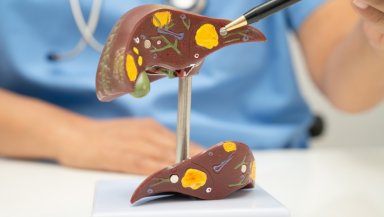
Outpatient exams and tests can be completed within 3 to 7 days; more complex cases may require additional time to meet with specialists.


Table of Contents 
Introduction
Liver transplant evaluation is a multi-day, multidisciplinary assessment (medical, surgical, and psychological) designed to determine if transplantation is a safe, appropriate, and effective treatment for patients with end-stage liver disease, including assessing liver transplant eligibility. It is a comprehensive clinical assessment designed to ensure that a transplant is the safest and most effective option for the patient.
A multidisciplinary team thoroughly evaluates each case to determine whether a transplant is the most appropriate treatment option at Gleneagles Hospitals. This type of evaluation helps in patient safety and improves long-term transplant outcomes.
This article outlines the purpose of liver transplant evaluation, its methodology, and patients' expectations throughout the assessment process.
Understanding Liver Transplant Evaluation
During this process, the medical team looks beyond the liver alone. Experts examine the entire body to determine any underlying conditions that might impede surgery or recovery. The evaluation also serves as an educational opportunity for the patient and their family, allowing them to learn about the risks, benefits, and major lifestyle changes that may occur after a successful transplant.
Why Is a Liver Transplant Evaluation Done?
The primary goal of assessment is to ensure that the transplant will significantly improve the patient's quality of life and survival. The specific reasons for this extensive work-up include:
- Confirming the Diagnosis: To make sure that a transplant is the most effective treatment, clinicians need to determine the severity of liver disease or the stage of liver cancer (including hepatocellular carcinoma).
- Assessing Surgical Fitness: The team will determine whether a patient's heart, lungs, and other organs are fit to withstand a long, complex surgery.
- Cancer Staging: The imaging can be used to establish whether or not the tumour is already spread to other organs (metastasis).
- Identifying Obstacles: The potential complications, be it active infections or severe vascular obstructions, are identified during the analysis and must be eliminated before transplant.
- Donor Matching: Blood tests are used to determine the patient's blood group compatibility and clinical suitability, and to match them to a deceased or living donor with the same blood type and donor suitability.
Key Components of the Evaluation
This testing process typically takes several days to a week and encompasses a wide variety of tests.
Advanced Imaging: The surgeon evaluates the liver with high-definition pictures. Either a CT scan or an MRI provides an in-depth analysis of the tumours, the size of the liver and the condition of the portal vein and hepatic artery. This helps to outline the surgical connections.
Cardiac and Pulmonary Testing: Major surgery places a strain on the heart and lungs during major surgery. An echocardiogram, an ECG, and even a stress test are typically performed on the patient to ensure that the heart can withstand the surgery. Chest X-ray and spirometry (lungs) are used to assess respiratory health.
Extensive Blood Work: Laboratory tests examine liver/ kidney function, blood clotting markers, and any viral infections. As part of tracking the activity of liver cancer cells, the team also monitors tumour markers such as Alpha-fetoprotein (AFP).
Specialised Screenings: The team might need additional tests, including a colonoscopy, a dental examination to rule out any hidden infection, or a bone density test, depending on the patient's medical history and age.
Your health matters – get expert advice today.
Who Is Eligible for a Liver Transplant?
In general, a patient is a good candidate if he or she has end-stage liver disease or localised liver cancer that is no longer treatable with existing treatments. At Gleneagles Hospitals, candidates must meet specific criteria:
- The disease is chronic and has a severe effect on the quality of life.
- The liver cancer must meet specific size and number criteria (commonly known as the Milan Criteria) to minimise the risk of recurrence.
- The patient adheres to a healthy lifestyle, including complete alcohol and tobacco abstinence.
Who May Not Be Suitable?
While transplant medicine has come a long way, there are factors in some patients that make the procedure too risky or ineffective. This includes:
- Extrahepatic Cancer: If liver cancer has spread to other regions of the body, such as the lungs or bones, a transplant is typically not recommended.
- Severe Systemic Infection: Uncontrolled sepsis or active infection must be treated before surgery.
- Irreversible Organ Failure: Advanced heart or lung disease that is incurable may not allow a transplant.
- Active Substance Abuse: Prolonged use of alcohol or prohibited substances is a primary reason for disqualification.
- Severe Psychiatric Issues: Conditions that do not allow a patient to adhere to a rigid medication and follow-up schedule can be problematic.
What Happens After the Liver Transplant Evaluation?
After the assessment, all clinical results are reviewed by a multidisciplinary selection committee to discuss whether a transplant is the best option. In some cases, the care team can suggest other forms of treatment for liver failure before surgery.
The Prioritisation and Waiting List: After the patient is granted medical and insurance clearances, they are listed on the national deceased-donor transplant waiting list. A patient's position on this list depends on their blood type and Model for End-Stage Liver Disease (MELD) score. The MELD score is calculated from blood tests that measure the severity of liver dysfunction; a higher score indicates a more urgent need, placing the patient higher on the list.
Requirements While Waiting: Patients undergoing a deceased-donor transplant have to be reachable at all times, 24 hours a day, and capable of arriving at the hospital within four hours of a call. MELD score monitoring is repeated at intervals determined by disease severity, often more frequently than every 6 months.
The Living Donor Option: Patients may find a matched living donor, potentially reducing or eliminating their waiting period. A medical team then analyses the donor to ensure they can safely donate a portion of their liver for transplantation.
Conclusion
The liver transplant evaluation is a critical step toward a successful life-saving surgery. Gleneagles Hospitals' interdisciplinary staff can effectively evaluate both the physiological and psychological aspects of each patient, ensuring that each patient receives a treatment plan tailored to their specific needs. Although this procedure is lengthy and involves several tests and consultations, it provides clarity and confidence in moving forward.
For individuals dealing with liver cancer or end-stage disease, the analysis is not merely an obstacle - it is the beginning of a new phase of treatment and recovery.

Dr Shailesh Shrikhande
Director & Head - Surgical Oncology
MS,MD,FRCS (England)-Honorary,FRCS (Edinburgh)-Honorary,FACS-Honorary,FASA-Honorary
Frequently Asked Questions
Does a liver cancer diagnosis automatically mean a transplant is needed?
No. Many liver tumours are treated with resection, ablation, or chemoembolization. A transplant is normally an option when these treatments cannot be used, or the liver is also cirrhotic.
Can I have a transplant if I have a history of alcohol use?
Yes, a documented record of abstinence is necessary (at least six months), as well as a psychological assessment to confirm the commitment to not drinking.
What is the most important test in the evaluation?
There is no single "most important" test. Imaging to determine anatomy, blood work to determine function, and heart/ lung tests to determine fitness all combine to give the complete picture of safety.
Will I be placed on the waiting list immediately after the evaluation?
The test results are reviewed by a multidisciplinary committee. If accepted, the patient is added to the national registry (for deceased donors), or the matching procedure begins for live donors.

